

I went through three pairs of shoes in one season—each giving me heel blisters. I thought I had “blister-prone feet.” I was wrong. I had a shoe-fit problem I didn’t know how to diagnose.
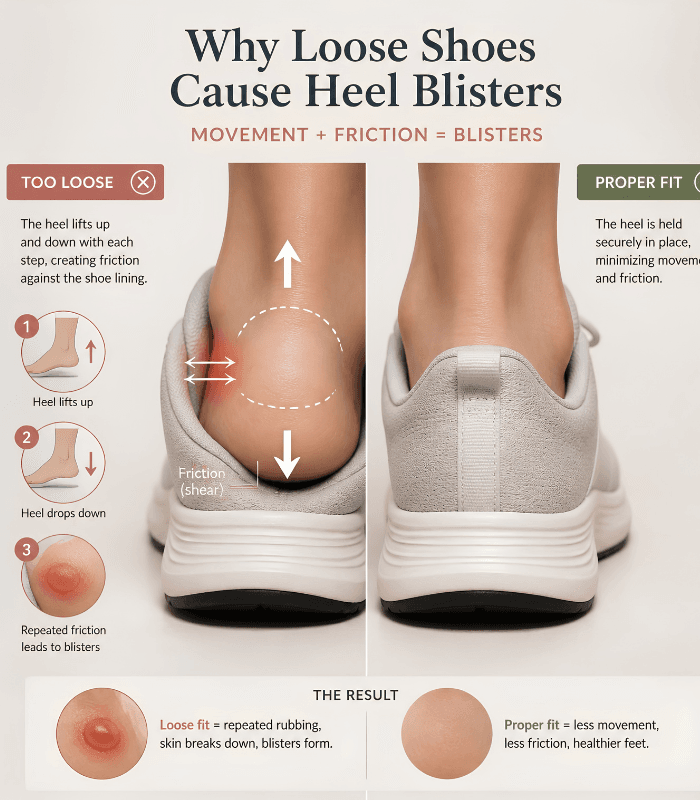
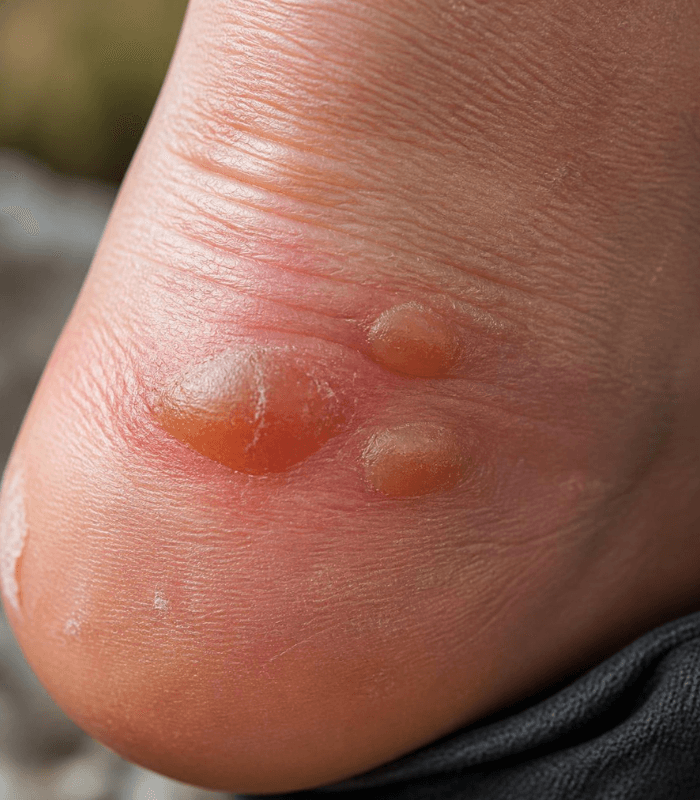
A loose shoe lets your foot slide during walking. Repeated sliding separates skin layers. Your body fills the gap with fluid. That’s a blister.
Critical detail: blisters form from internal shear force, not just rubbing. Taping after you feel heat? Too late. You need to stop shear force before friction reaches painful levels.
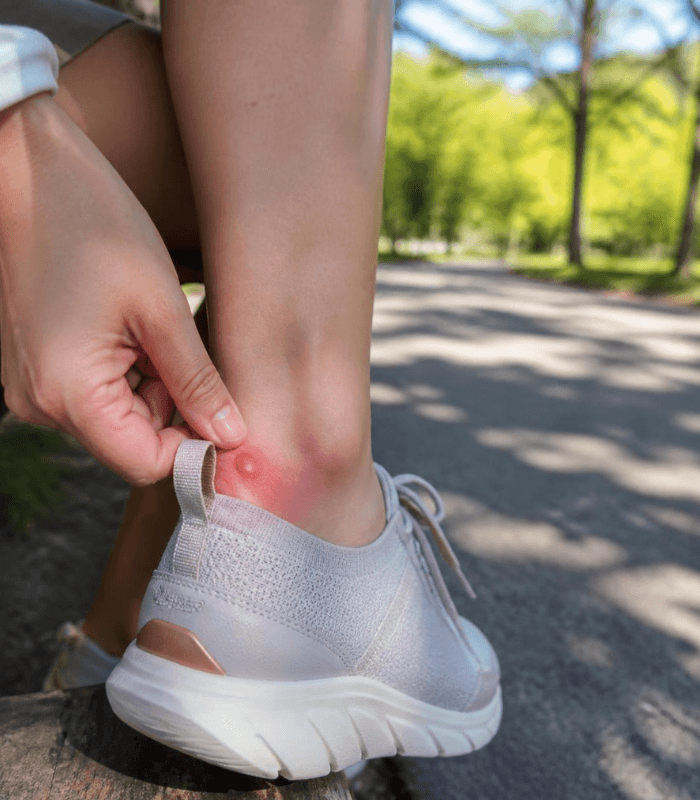
Back of heel blisters are most common because your heel moves up and down with every step. Loose heel cup + vertical movement = massive shear force. Dress shoes, trainers, hiking boots—same mechanism.
“Most people blame their feet for blisters. The truth? They blame the wrong thing.” — Rebecca Rushton, Blister Research Specialist
Fix #1: Get Proper Fit Before You Buy
Stand when measured. Feet spread under body weight. I bought sizes 9.5, 10, and 10.5—each causing blisters—before someone told me to stand during fitting.
Walk around the store for 5 minutes. Shoes that pinch or rub there will do the same thing worse outside.
Check heel cup stability. A loose heel cup causes recurring heel blisters from new shoes. People keep buying different sizes thinking size is the problem. Often it’s shoe shape. Some hiking boot brands left me blister-free only when I switched to firmer heel support brands. Shoe design matters as much as fit.
Fix #2: Gradual Break-In With Short Wear Sessions
Don’t wear new shoes for 4-5 hours on day one. You’ll end up with blisters by day two.
Day 1: 30-45 minutes at home only.
Day 2-5: Add 20-30 minutes daily, alternating with a trusted pair.
Your skin needs time to toughen. Jumping into full-day wear guarantees blisters. Short sessions let skin adapt and the shoe soften together.
Fix #3: Pre-Emptive Hotspot Protection
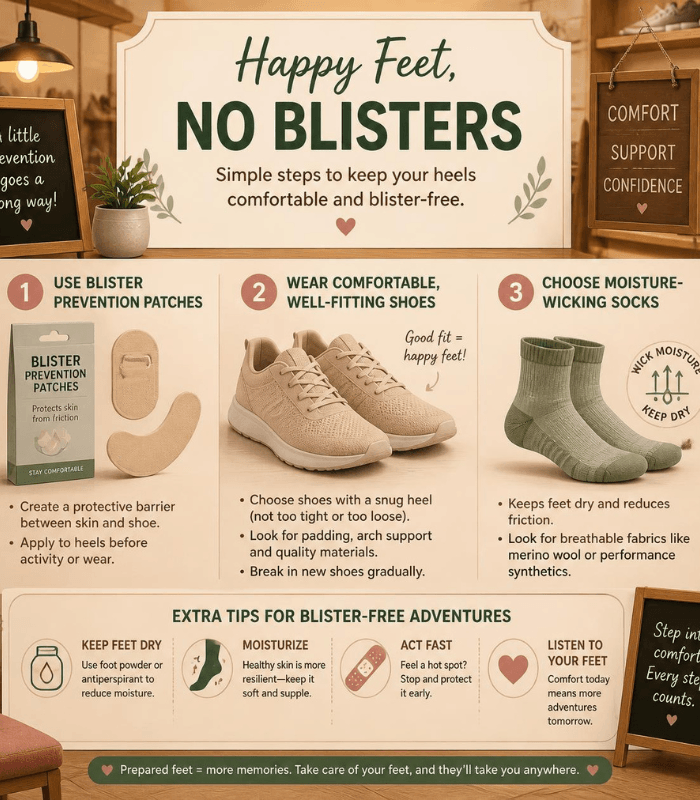
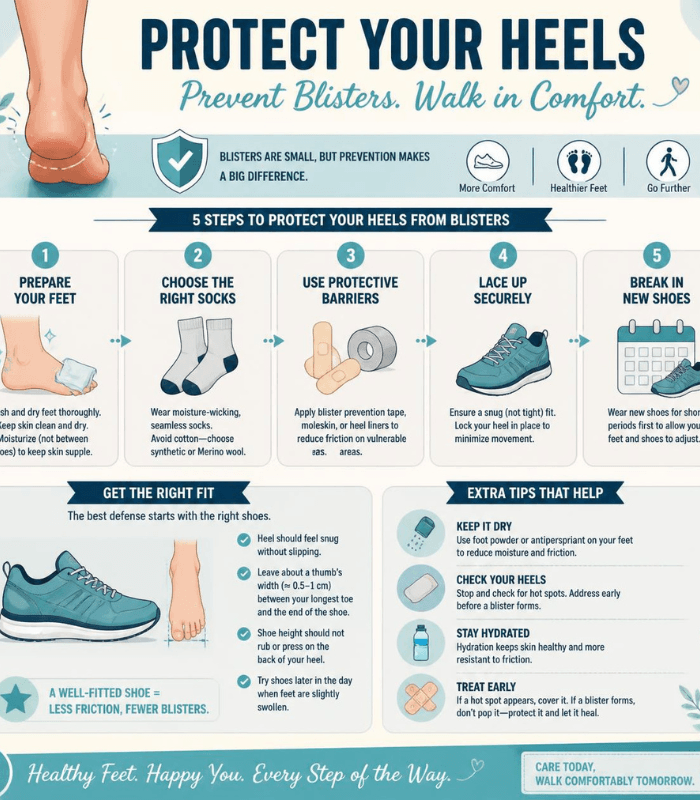
Apply moleskin or blister patches before your first full wear session. Don’t wait until you feel a hot spot—internal damage is already starting by then.
Moleskin spreads friction across a wider surface. Blister patches reduce friction coefficient. Both work when applied pre-emptively. Applied after pain starts? Too late.
Fix #4: Control Friction With Socks and Heel-Lock Lacing
Avoid cotton socks. Cotton absorbs sweat, softening skin. Switch to merino wool or synthetic blends.
Use heel-lock lacing: Thread through top eyelets, create loops, cross over and thread through opposite loops, tie. This anchors your heel and stops sliding.
These two changes prevent most blisters from new shoes.
The System That Works
Most people treat blisters after they happen. Instead, they bounce between shoe brands and sizes thinking the problem is their feet.
The real problem? Preventable shear force damage. Once you know that:
- Fit stops shear from starting
- Gradual break-in lets skin adapt
- Pre-emptive protection works better than reaction
- Proper socks and lacing reduce friction
Someone who knows the mechanism can wear heels, boots, sneakers, cleats—without blisters. They’re not luckier. They just know what matters.