
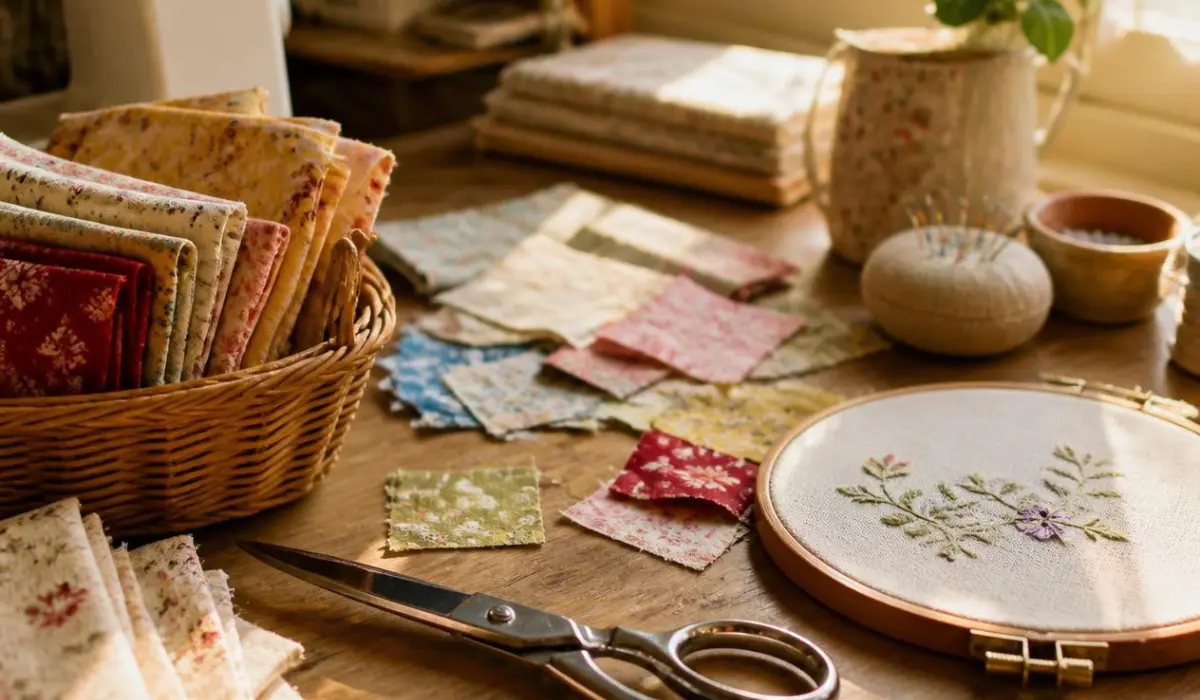
Applique is a sewing technique where you attach a piece of fabric onto a base fabric to create a design, usually finishing the edges with a stitch (by hand or machine). The word comes from the French appliquer — “to apply” or “to put on.” So when someone asks what does applique mean, the honest short answer is: it’s decoration made by layering fabric shapes, not by drawing, printing, or filling in with thread.
The first time someone asked me “wait, what is applique?” I actually struggled to explain it in one sentence — I’d just been doing it for years without thinking about the word. So here’s the simple version I wish I’d had:
You’ve definitely seen it before, even if you didn’t know the name. A quilt with a flower sewn onto it. A varsity jacket with a stitched-on letter. My daughter’s baby onesie with a little fox shape I made her — all applique.
I’m going to walk you through what it actually is, the different types (I’ve done all four, with varying levels of success the first few tries), the tools you actually need, and the basic steps.
Table of Contents
What Are Appliques, Exactly?
Appliques are the individual fabric shapes you’re attaching — the flower, the letter, the fox on that onesie. The word does double duty: it’s the technique itself (“I’m going to applique this shape onto the fabric”) and the object (“this applique came out crooked, I’m redoing it”).
A few things that separate applique from other decorative sewing, based on what’s actually different when you’re doing it:
- It uses real fabric, not just thread, so you get texture and can mix colors and patterns in a way thread alone can’t do.
- The edges always get finished somehow — stitched, satin-stitched, or fused — or the fabric frays apart in the wash. I learned this the hard way on a project I didn’t stabilize properly.
- It can be done entirely by hand, entirely on a sewing machine, or run automatically as part of a digitized embroidery design.
What Is Applique Embroidery?
Applique embroidery specifically means machine-embroidered applique — an embroidery machine stitches a placement outline, you add the fabric, and the machine finishes the edge with a satin or zigzag border, all from a digitized design file. This is what I use for almost everything now, because it’s consistent in a way my hand-guided sewing machine work never quite was.
Regular embroidery is built entirely from thread. Applique embroidery uses fabric for the body of the design and thread only to secure and finish the edges — which is also why a large applique shape stitches out in a fraction of the time a fully thread-filled version would take.
Types of Applique (I’ve Tried All Four)
1. Hand Applique
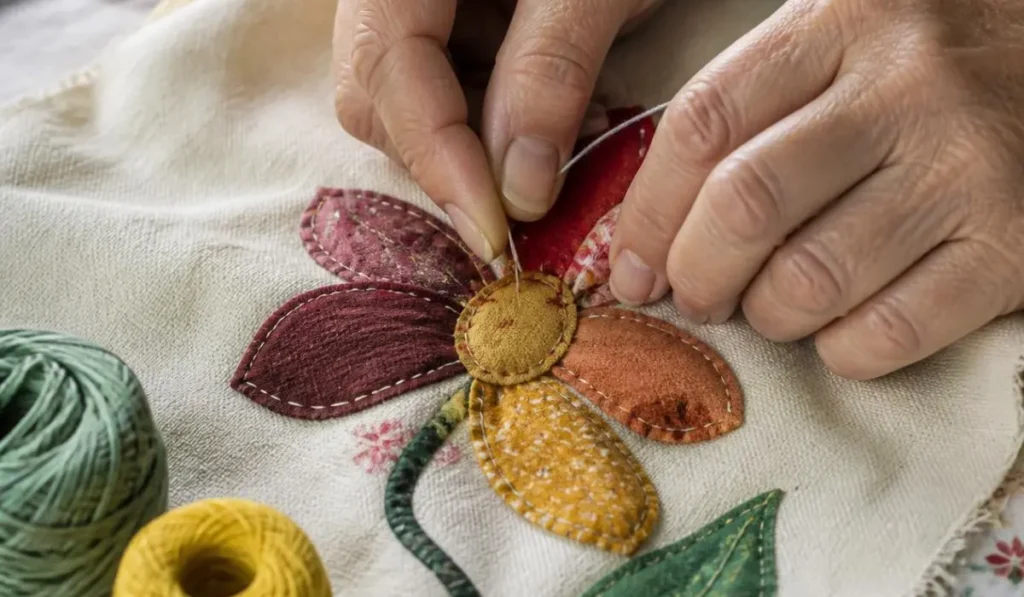
Fabric shapes are hand-sewn onto the base fabric with a needle and thread, usually with a small hidden stitch so it barely shows. It’s slow — my first hand-appliqued quilt block took me almost an hour — but it gives a soft, flexible finish that traditional quilters still prefer for a reason.
2. Machine Applique
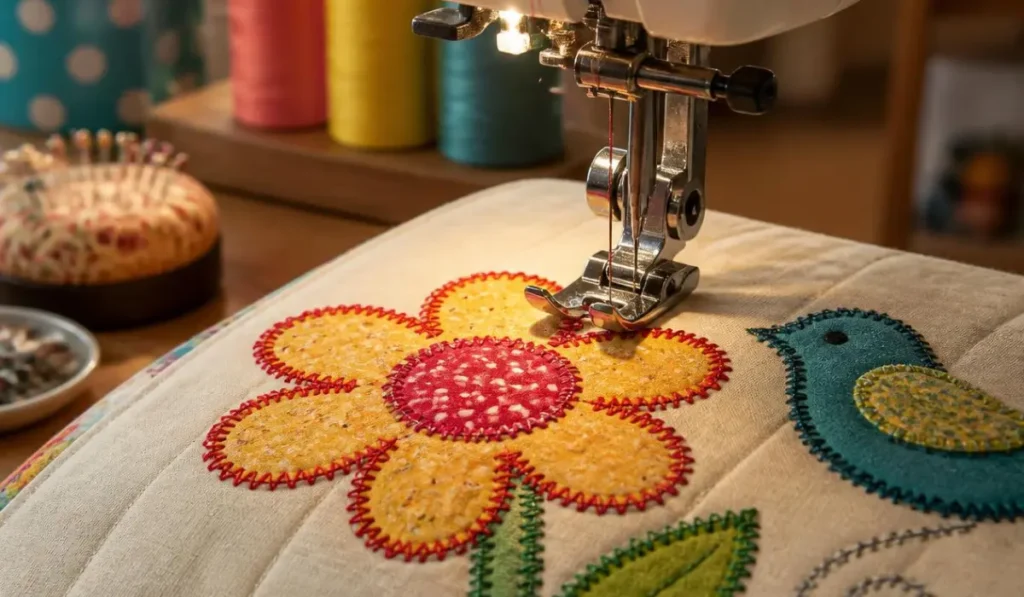
Fabric is stitched down with a regular sewing machine: a straight tack-down stitch, then a satin or zigzag border. Much faster than hand applique, and more durable for things that get worn or washed a lot, like bags and kids’ clothes.
3. Embroidery (Machine-Embroidered) Applique
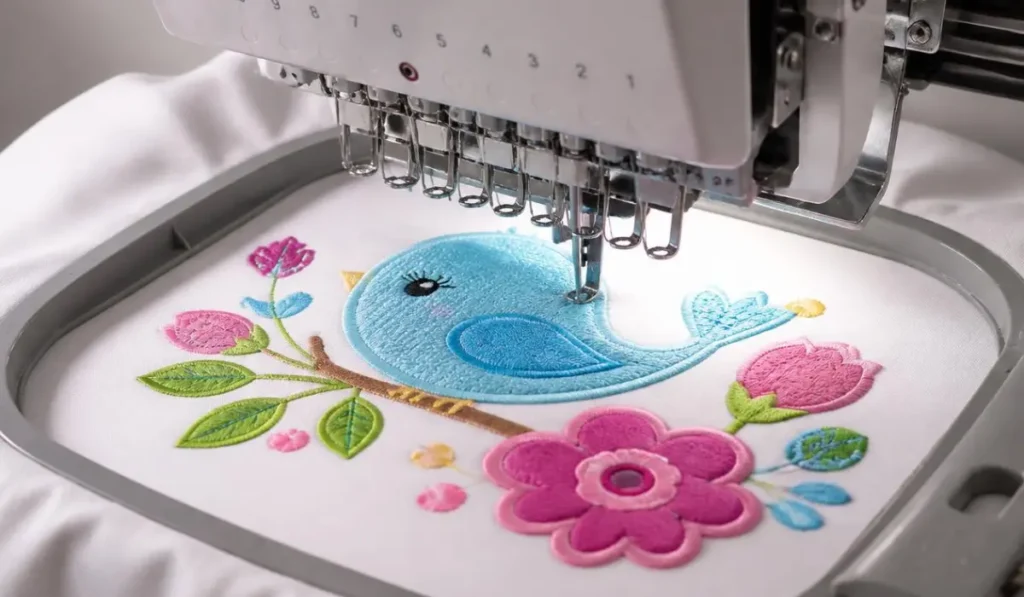
This is the automated version — a digitized design file runs the placement, tack-down, and finishing stitches for you. It’s what I reach for when I need the same design to come out identical five times in a row, which hand or plain machine applique makes surprisingly hard.
4. Reverse Applique
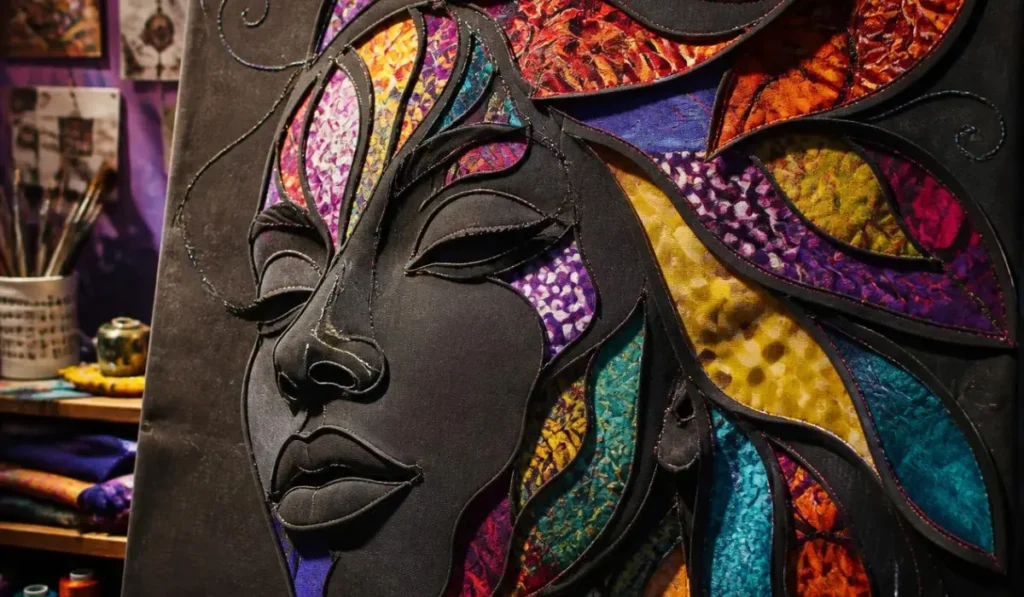
Instead of adding fabric on top, you layer fabric underneath and cut away sections of the top layer to reveal what’s beneath — so the design comes from what’s removed, not what’s added. I find this one genuinely harder to plan out in advance. It’s rooted in traditional textile art like Panama’s Mola work, and it still shows up in modern quilting for a completely different look than the other three types.
Tools You Actually Need
I’ve tried skipping a few of these over the years. It never goes well.
| Tool | Purpose |
|---|---|
| Fabric scraps | The applique shapes themselves |
| Fusible web (I use Heat n Bond) | Bonds fabric in place before stitching — skip this and the fabric shifts, guaranteed |
| Sewing or embroidery machine (or a needle, for hand applique) | Stitches the fabric down |
| Small, sharp, ideally curved scissors | Trims fabric close to the stitch line without nicking thread |
| Stabilizer | Keeps the base fabric steady so stitching stays even, especially on knits |
| Embroidery thread | For the tack-down and finishing stitches |
| Embroidery design file (embroidered applique only) | The pre-digitized pattern the machine follows |
Basic Steps to Make an Applique
- Choose your shape and fabric. Cotton or felt are the most forgiving for a first attempt — they don’t fray much even with an imperfect trim.
- Prepare the fabric. Iron fusible web onto the back of your fabric piece.
- Position the shape. Lay it onto your base fabric where you want the design to sit.
- Secure it. Fuse it with an iron, or stitch a placement/tack-down line if you’re using a machine.
- Trim close to the edge. Go slowly here — this is where most beginner mistakes happen.
- Finish the edge. Stitch a satin or zigzag border (machine) or a hand blind stitch (hand applique) to seal the raw edge.
- Clean up. Remove any stabilizer and give it a press.
Mistakes I See Beginners Make (Because I Made Them Too)
- Skipping fusible web — the fabric shifts mid-stitch and the whole shape drifts.
- Choosing a fabric that frays heavily without adding extra stabilizing.
- Trimming before the tack-down stitch has actually locked the fabric in place.
- Using the wrong stabilizer on stretchy fabric, like a plain t-shirt — it puckers and doesn’t smooth back out.
FAQ
What is applique in simple words?
It’s sewing a fabric shape onto another fabric to make a design, with the edges stitched down so they don’t fray.
What is an applique used for?
Decorating quilts, clothing, bags, home decor, and embroidery projects — anywhere you want a fabric-based design instead of something printed or filled entirely in thread.
Is applique the same as embroidery?
No. Regular embroidery is built entirely from thread. Applique embroidery uses actual fabric for the main design, with thread only attaching and finishing the edges.
Can beginners do applique by hand?
Yes — you just need fabric, fusible web (optional but genuinely helpful), a needle, and thread. It’s slower than machine applique but doesn’t require any special equipment.
What’s the easiest type of applique for a first project?
Machine applique with felt, in my experience. Felt doesn’t fray, so even a shaky first trim still looks clean.
I’ve made appliques by hand, on a regular sewing machine, and on my Brother PE800 embroidery machine — the comparisons above come from actually doing each one, not just reading about them.
By Sarah McLean