

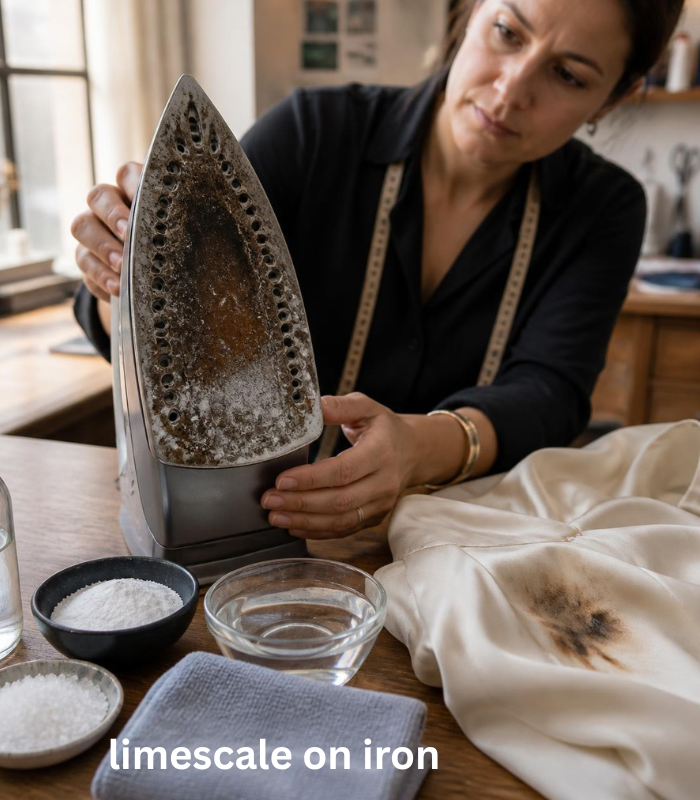
I ruined my favorite silk blouse last year. My iron’s soleplate had accumulated so much burnt residue and mineral deposits that it left brown marks across the fabric. That’s when I realized I’d been neglecting the most critical maintenance task for my steam iron—and I’m a tailor’s daughter who should’ve known better.
After that incident, I spent three months testing every cleaning method I could find. Here’s what actually works.
Table of Contents
The Problem Nobody Talks About
Most people don’t realize their iron plate is failing until starch buildup, burnt marks, or limescale damage starts showing on clothes. I’ve seen burnt stains appear on garments ironed by the finest Rowenta steam irons because the soleplate hadn’t been cleaned in months.
The issue is multifaceted: sticky residue from starched fabrics, scorch marks from heat damage, mineral deposits from tap water (especially problematic in hard water areas), and charred synthetic fabric fibers all accumulate silently. When you first notice brown marks on clothes or reduced steam output, your iron is already in trouble.
My Three Go-To Methods
1. Coarse Salt—The Quick Fix
I discovered this during a laundry emergency when I had twenty dress shirts to iron for a family wedding. One shirt had visible starch buildup on the plate, and I was out of white vinegar.
I preheated my iron to 300°F, spread rock salt on newspaper, and ran the iron back and forth for three minutes. The sticky residue lifted like magic.
Why this works for me: It’s instant, requires no cooling time, and handles starch buildup better than any other method. I use this weekly after ironing starched linens. No chemicals, no risk of damaging the iron base plate.
2. Baking Soda and Vinegar—The Deep Clean
When my steam iron developed burnt marks from an accident with a synthetic fabric, I needed something stronger. This paste became my solution.
I mixed three parts baking soda with one part white vinegar, applied it to burnt areas, and let it sit for ten minutes. The burnt stain lifted completely. I use this method monthly on my pressing iron.
Real experience: This is gentler than commercial iron cleaners but equally effective. I’ve never had it damage my iron’s protective coating, unlike steel wool (which I learned the hard way ruins the soleplate forever).
3. Vinegar for Descaling Steam Irons
My Rowenta steam iron started spitting brown water—a sign of heavy limescale buildup. Rather than buying expensive descaling solution, I filled the tank with equal parts white vinegar and distilled water.
I let it steam over a sink for 45 seconds, emptied the tank, refilled with distilled water, and repeated three times. The difference was immediate—clean steam, no brown spots on clothes.
From experience: Hard water is your steam iron’s worst enemy. I now use only distilled water, and I descale monthly. This single change eliminated 90% of my iron plate cleaning problems.
Mistakes That Cost Me
Steel wool: One mistake that haunts me. It permanently scratched my first iron’s base plate, causing permanent staining issues.
Ignoring limescale: I waited too long to address mineral buildup in my steam iron tank. By then, the damage was irreversible.
Cleaning a hot iron: I burned my hand badly attempting this and nearly damaged internal components.
What Maintenance Actually Looks Like
I wipe my iron’s plate after every use with a damp cloth. Takes 30 seconds. Monthly, I use baking soda paste on any burnt areas. Quarterly, I descale my steam iron with vinegar.
This routine prevents the starch buildup and scorch marks that destroy irons. It’s why my current pressing iron—five years old—still performs like new while my neighbor’s iron developed burnt stains after six months of neglect.