

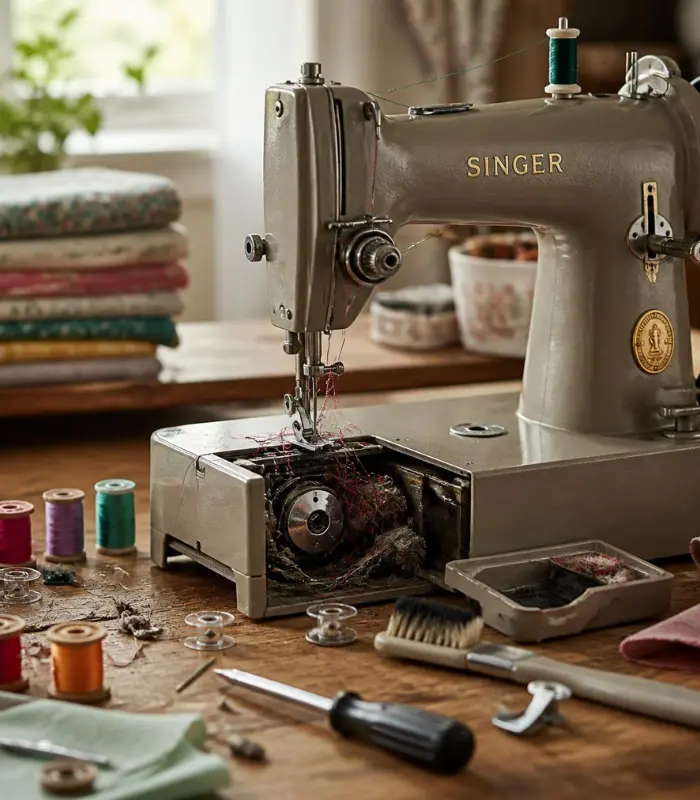
When my Singer machine jammed mid-project and the repair shop quoted $200, I made a decision: “I’m not paying that. Let me try fixing it myself.” That was fifteen years ago. Today, I’ve repaired hundreds of machines, and I’ve learned something important—most sewing machine problems aren’t actually broken. They’re just asking for attention.
I never planned to become the person people call when their machine stops working. But here’s the truth I discovered: fixing a sewing machine doesn’t require genius. It requires patience, observation, and knowing where to look first. After repairing everything from budget machines to heirloom Singer featherweights, I’ve found that roughly 80% of issues come down to three things: thread problems, needles, and lint buildup. The remaining 20% feels scary but usually isn’t.
The Moment Everything Changed
I remember sitting at my workbench completely lost. The tension was tight, the thread was frayed, and I had no idea what to do. Then I made my first real discovery: “The simplest solution is usually the right one.” I unthreaded the entire machine and started fresh. The jam disappeared. The machine worked perfectly.
That taught me troubleshooting follows a logical order. Start with basics: Is it threaded correctly? Is the needle damaged? Is there lint everywhere? I’ve used this three-question approach for fifteen years, solving 70% of problems with just these answers.
The Problems That Keep Coming Back
Thread Breaking (My Most Common Service Call)
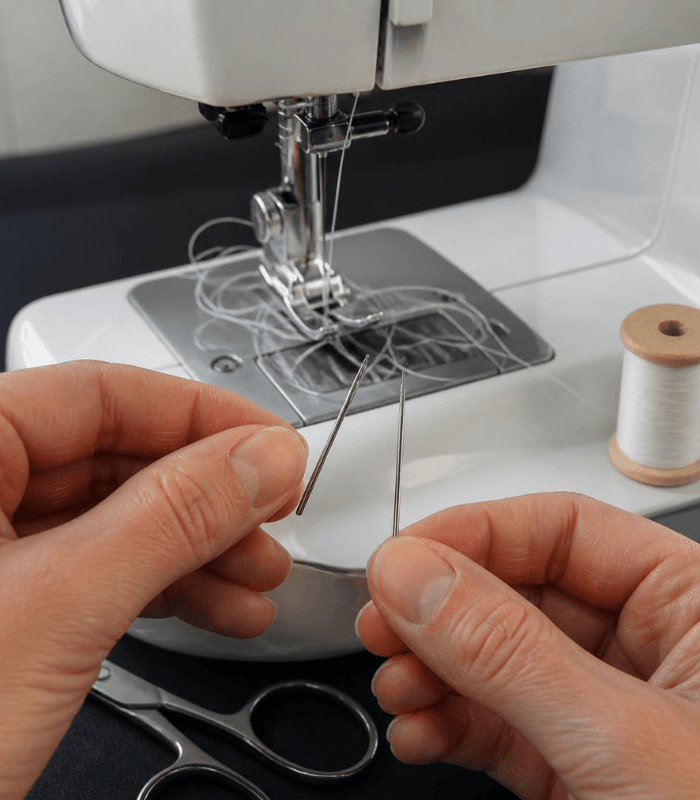
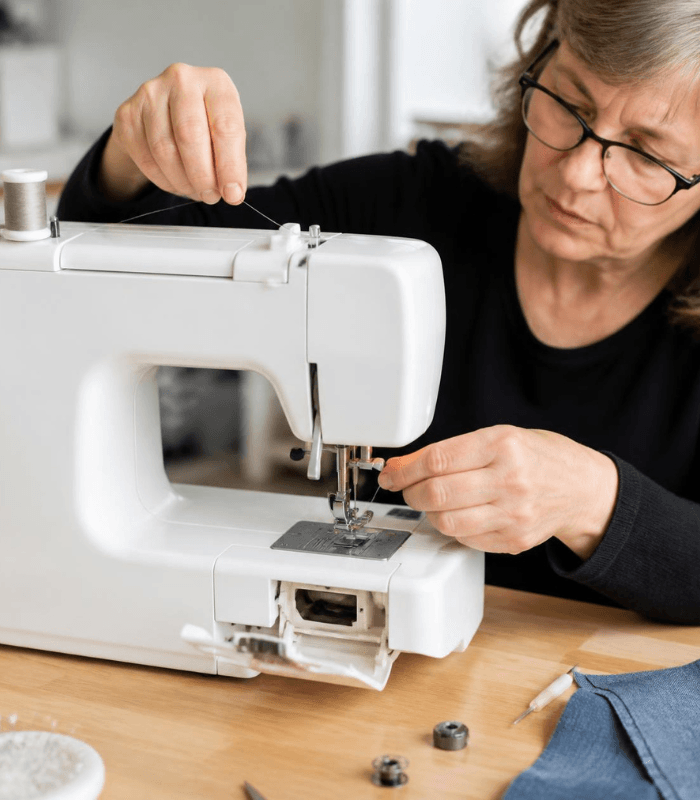
When someone brings me a machine with breaking thread, my first response is simple: “Let me check the needle.” I run nylon stocking through it to feel for burrs or rough spots. If the needle is fine, I rethread completely—and 60% of the time, that solves it. As I tell people: “Your machine is probably fine. It just needs you to pay attention to it.”
The worst cases had one thing in common—ignored early warning signs. Catch it early, and a fresh needle or proper rethreading fixes it.
Poor Stitches That Don’t Make Sense
My friend called once, frustrated because her stitches looked terrible. She’d already adjusted tension five different times. I asked one question: “When did you last change your needle?” She couldn’t remember. I installed a fresh needle. Her stitches were perfect. She was amazed; I wasn’t.
Needles wear out. You can sew over one pin and a needle bends enough to cause real problems. Most people ignore this, but I learned the hard way: change your needle after every 6-8 hours of sewing. It’s the cheapest maintenance possible and solves more stitch problems than anything else.
Machine Not Moving Forward
This frightened me the first time. The feed dogs weren’t advancing fabric. I found lint wrapped around the mechanism. A thorough cleaning solved it. I’ve seen this twenty times since—always lint or debris, never actual mechanical failure.
My Biggest Mistake
Five years in, I ruined a beautiful machine using the wrong oil. The gummed-up mechanism cost $150 to fix. That mistake taught me: follow the manual exactly. Different machines have completely different requirements. What works for Singer might destroy a Brother. Now I reference the manual before every repair.
Visuals
My Weekly Routine
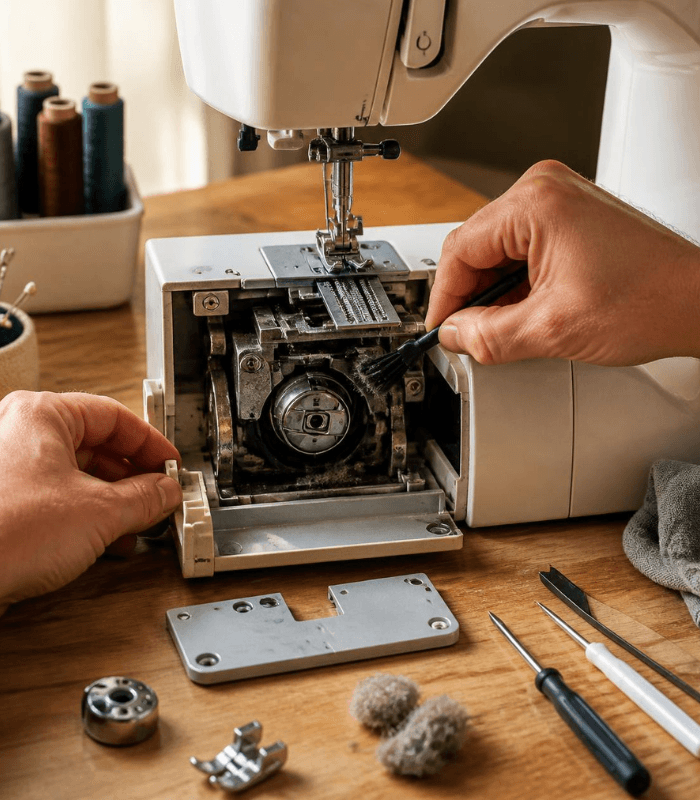
People ask what I actually do. The truth is wonderfully boring. Five minutes weekly—I remove the bobbin and brush out lint. Once a month, a thorough cleaning with compressed air. That’s it. I’ve maintained machines this way for fifteen years, and they consistently outperform machines with elaborate routines.
When something breaks, I have a saying: “Before you panic, rethread the machine completely and install a fresh needle.” I’ve fixed more machines this way than any other method. I genuinely cannot remember the last time someone did this and still had problems.
The Honest Truth
I’m realistic about my limits. When a motor sounds wrong or when nothing fixes skipped stitches, I admit defeat. Timing issues require professionals. As a repair person once told me: “Pride fixes broken machines. Wisdom admits when you need help.” That stuck with me.