

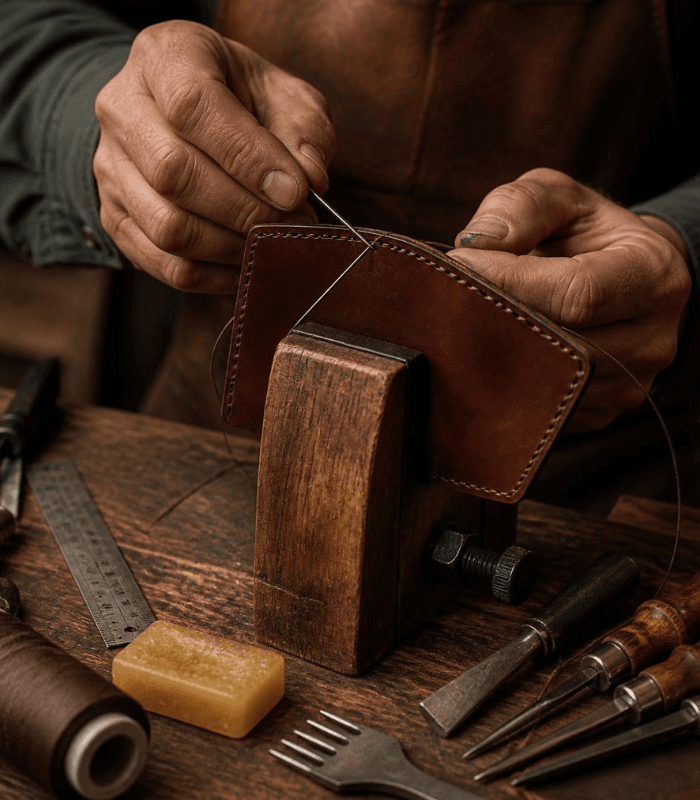
When I first picked up leather stitching five years ago, I made the rookie mistake of trying machine stitching. The results looked cheap and flimsy. Then a master leatherworker told me, “Your hands are your best tool—let them do the work that matters.” That single piece of advice changed everything. I discovered “saddle stitch“, and I haven’t looked back since.
Saddle stitch is a hand-sewing technique where two needles pass through each hole from opposite directions, creating an interlocking double line of thread. Unlike single-thread stitches or machine stitching, this method creates two parallel lines that strengthen each other. The thread on one side is always locked by the thread on the other side, making it virtually unbreakable. This is why luxury brands like Hermès use saddle stitch exclusively on leather bags and goods.
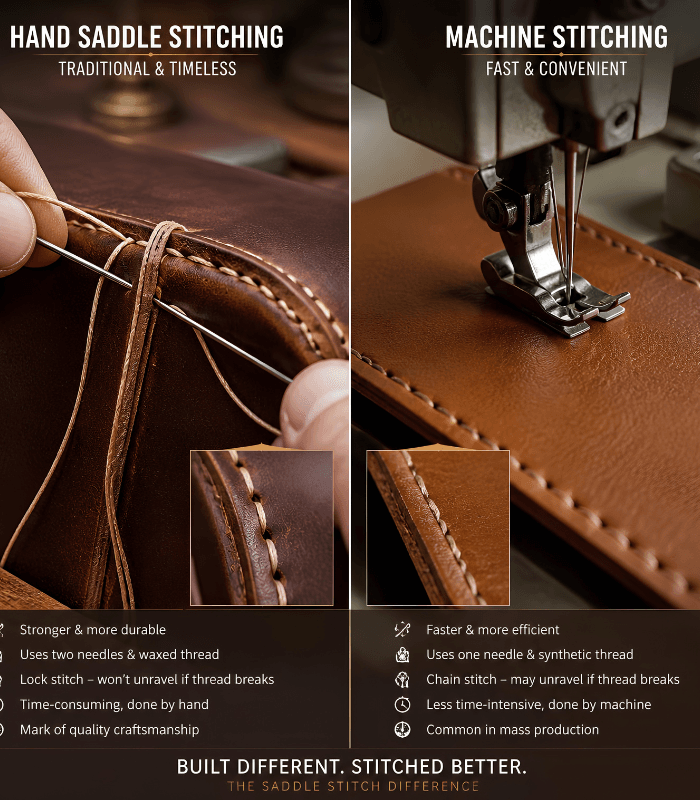
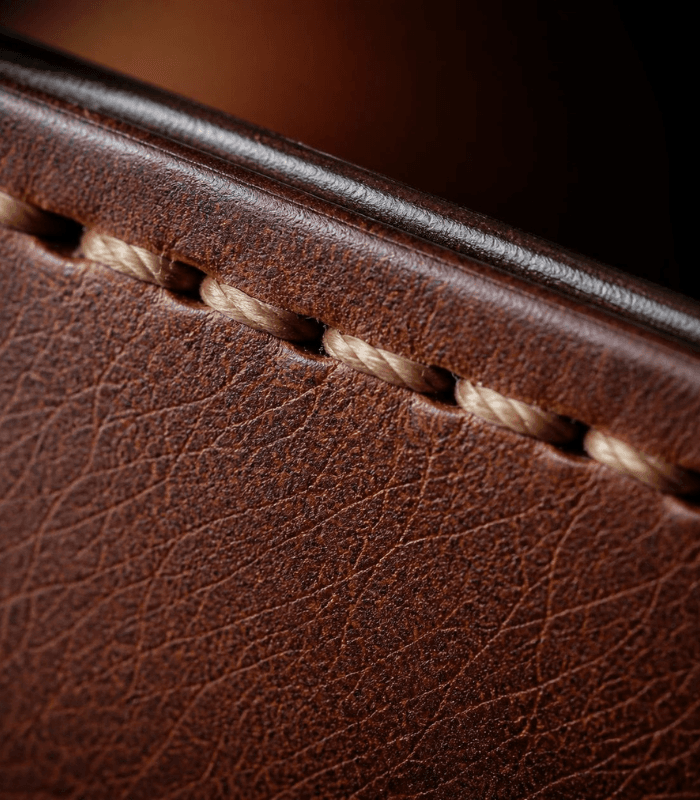
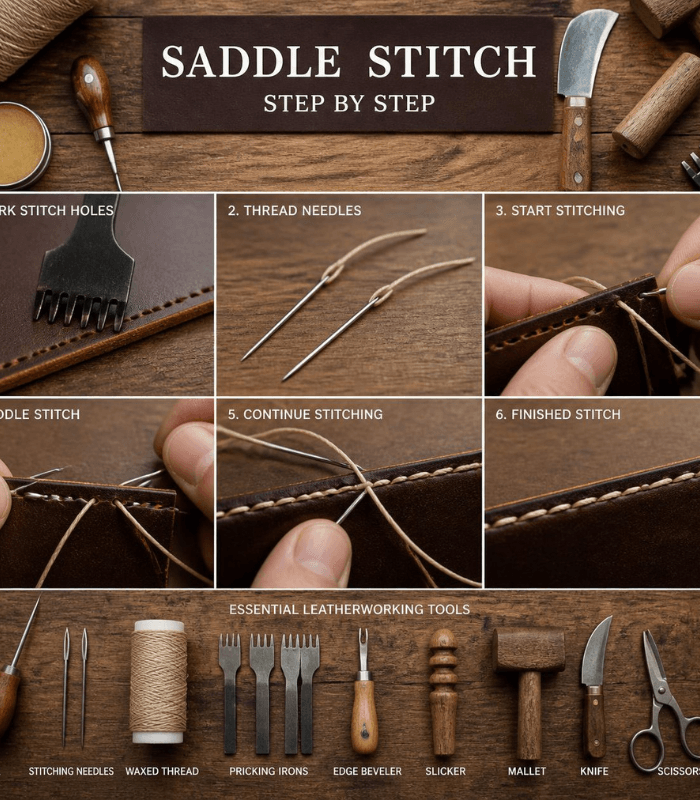
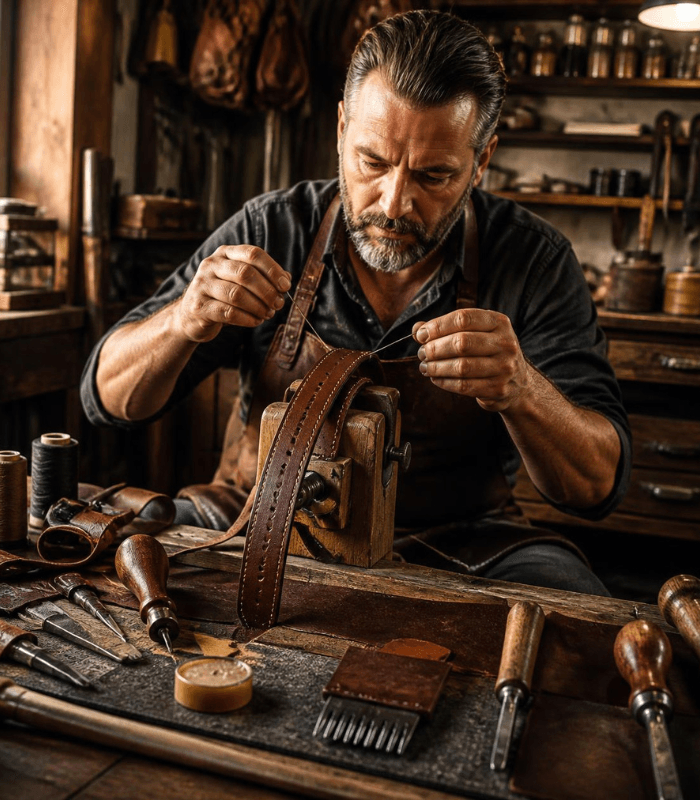
Table of Contents
What You’ll Need
Before learning how to stitch leather by hand properly, I gathered the right supplies through painful trial and error.
Essential tools:
- Two saddle stitch needles (Size 2 or 3)
- Waxed linen thread (my personal favorite for quality and durability)
- Pricking iron or stitching wheel for marking holes
- Metal ruler and chalk for guidelines
- Beeswax or thread conditioner
- Leather clamps to hold your work steady
The most important lesson I learned: cheap thread will shred. Always use saddle stitch thread specifically designed for leather. Regular sewing thread fails within days.
Step-by-Step: How to Do a Saddle Stitch
Preparation: Mark your stitch line carefully with a pricking iron. For beginners, space holes 3-4mm apart. This consistency is everything—uneven spacing ruins the entire look.
Threading: Cut thread approximately 1.5 times your seam length. Thread both needles onto opposite ends of a single thread. Run it through beeswax until it feels slightly tacky.
The Stitching Rhythm: Start at one end. Push one needle through the first hole from inside to outside. Then push the second needle through the same hole from outside to inside. Pull both threads gently—tight enough to remove slack, but not so tight you distort the leather.
Skip one hole and repeat. At every stitch, one needle comes from inside, one from outside. This interlocking is what makes saddle stitching leather virtually impossible to break. When I first understood this principle, my stitch quality improved dramatically.
Finishing: At the end, tie a square knot with both threads on the flesh side. Some leatherworkers add a dab of leather glue to lock the knot permanently.
Why This Method Matters
My first saddle-stitched wallet took four hours and looked uneven. Five years later, it still works perfectly. That’s the power of saddle stitch.
I’ve now hand-stitched over 100 leather items using this technique—wallets, bags, straps, belts. Each project taught me something. What amazed me most was durability. Items I stitched years ago show zero wear at the seams. Even if one thread breaks, the other holds because of the interlocking design.
Why choose saddle stitch over alternatives?
- Maximum strength: Strongest hand-sewing option for leather
- Professional appearance: That luxurious double-line look
- Exceptional durability: Can easily last 20+ years
- Repair-friendly: Unlike machine stitching, it’s easy to fix
Common Mistakes (I’ve Made Them All)
Wrong thread type: Regular sewing thread shreds immediately. Always use waxed thread designed for leather saddle stitching.
Inconsistent hole spacing: Uneven spacing makes your work look amateur. Use a template or stitching guide every single time.
Over-tensioning: My early work had wrinkled leather because I pulled too hard. Gentle, consistent tension is better than tight.
Skipping beeswax: Unwaxed thread frays constantly. Always condition your thread with beeswax or proper thread conditioner.
Beyond the Basics
Once you master basic saddle stitch, try variations:
Decorative leather stitching: Vary your hole spacing for visual interest or use contrasting thread colors.
Box stitch leather: Add perpendicular stitches to your main seam, creating a grid pattern that’s both strong and beautiful.
Leather bag stitching: Use 4-6 stitches per inch, spacing holes 3-4mm apart for visual consistency.
Saddle stitching a book: The technique works perfectly for journal binding and leather-bound books.
Final Thoughts
Saddle stitch isn’t complicated. The rhythm takes about 30 minutes to learn. Mastery—creating perfectly consistent, beautiful stitches—takes practice. But every hand-stitched item tells a story of time, attention, and care.