

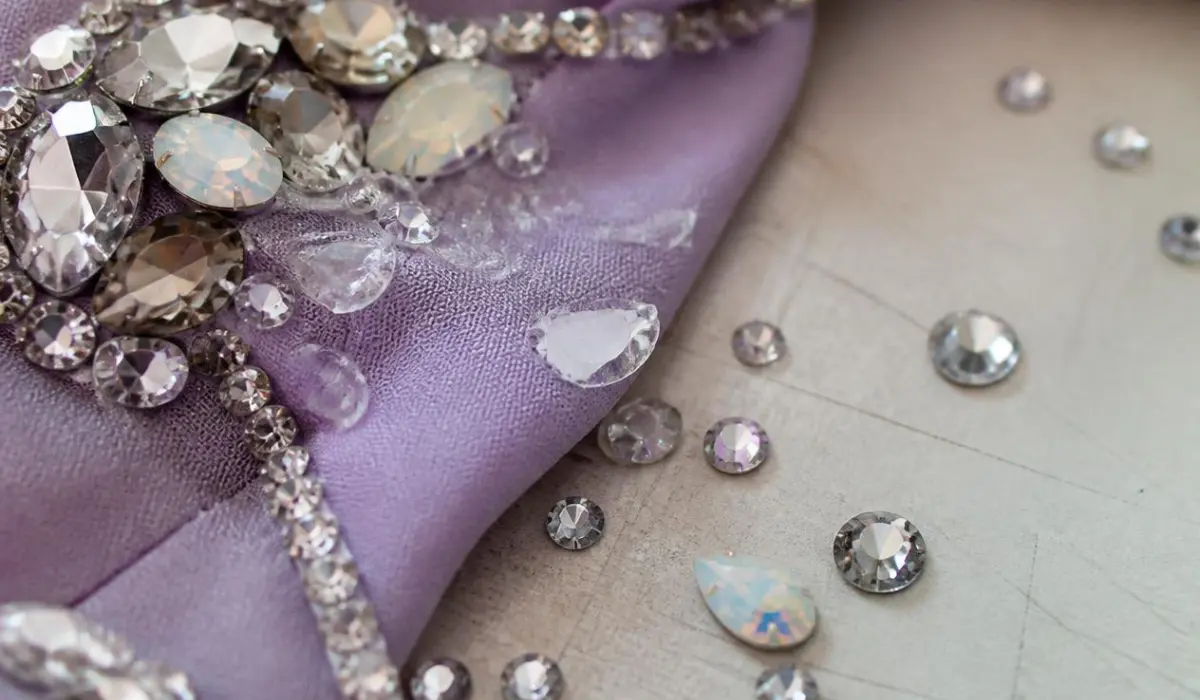
Rhinestone appliques usually fall off because of low heat, weak or wrong adhesive, incorrect fabric prep, or poor pressing technique. To fix them permanently, apply the correct temperature for 15–20 seconds with firm, even pressure, use the right adhesive for your fabric type, and let the piece cool completely before handling. Get those four things right and the bond will survive normal wear and repeated washing.
I’ve applied hotfix rhinestones with a household iron, a proper heat press, and a hotfix wand across cotton, polyester, and four-way stretch fabric — and I’ve had stones pop off every one of those surfaces at some point early in my learning curve. The good news: almost every case had a specific, fixable cause. This guide walks through what actually causes rhinestones to fall off and exactly how to stop it from happening again.
Table of Contents
Why Your Rhinestones Won’t Stay On
Run through this list before you reapply anything. Matching your symptom to the cause saves you from repeating the same mistake.
| Symptom | Likely Cause |
|---|---|
| Stones never held from day one | Not enough heat or pressing time |
| Stones fell off after the first wash | Washing in hot water, using fabric softener, or machine drying |
| Stones fall off on stretchy areas (necklines, cuffs) | Fabric was flexed or stretched during application, or wrong adhesive for stretch fabric |
| Stones fell off a slick or coated fabric | Non-porous surface (leather, vinyl, treated nylon) that needs extra prep |
| Stones lift with a hazy glue residue underneath | Fabric wasn’t clean or dry before application |
| Only a few random stones fell, not the whole design | Low-quality stones or inconsistent adhesive in that batch |
Top Causes of Rhinestone Appliques Falling Off
Not Enough Heat or Pressure
Hotfix rhinestones need sustained heat (around 300–320°F / 150–160°C) and firm, even pressure for 15–20 seconds to fully melt the adhesive into the fabric.
Hotfix rhinestones have a heat-activated glue on the back. If your iron or heat press isn’t hot enough, or you don’t press long enough, that glue never fully liquefies — so the stone sits on top of the fabric instead of bonding into it.
I learned this on a dance costume order early on. I was using a household iron on what I thought was a “medium-high” setting, pressing for maybe 6–8 seconds per section because I didn’t want to scorch the stretch fabric. Half the stones came off in the first rehearsal. Once I switched to a proper heat press with a real temperature dial and held each section for a full 15 seconds, the exact same stones on the exact same fabric didn’t budge for the rest of the season.
How to fix it:
- Use a heat press when you can — it gives consistent, even heat that a household iron often can’t match.
- If using an iron, set it to cotton/high heat, turn off steam, and press straight down without sliding.
- Hold pressure for 15–20 seconds per section, then let it cool undisturbed before touching or moving the fabric.
- Press from both the front (through a protective sheet) and the back of the fabric for extra security on garments that will see heavy wear.
Wrong Fabric Type
Slick, non-porous fabrics (leather, vinyl, some coated nylons) and highly stretchy fabrics both cause rhinestone adhesive to fail unless you adjust your technique.
Not every fabric accepts hotfix glue the same way. Porous fabrics like cotton and most polyester blends let the melted adhesive grip the fibers. Non-porous fabrics don’t give the glue anything to hold onto, so the bond sits weakly on the surface.
Stretch fabric causes a different problem: if you apply rhinestones to fabric that’s relaxed, then the fabric stretches later when worn, the glue bond cracks and stones pop off — even if your heat and pressure were perfect.
I found this out applying rhinestones to a spandex dance costume. I pressed everything on flat, unstretched fabric, and it looked perfect on the table. The moment the dancer moved in it, stones started falling off along the seams and curves where the fabric stretched the most.
How to fix it:
- For non-porous fabric (leather, vinyl), lightly rough up the surface with fine sandpaper before applying, or switch to a strong fabric glue like E6000 instead of relying on heat alone.
- For stretch fabric, gently stretch the fabric while applying the rhinestones — either by having someone wear the garment, or by stuffing it with cardboard or a rolled towel to hold it taut.
- Always test on a scrap of the actual fabric first, since blends behave differently than pure cotton or pure polyester.
Low-Quality Adhesive
Cheap hotfix glue or the wrong glue-on adhesive for your fabric type is one of the most common reasons rhinestones fail, regardless of how carefully you apply them.
Not all rhinestones are made equally. Budget hotfix stones often use a thinner, weaker adhesive layer that never forms a strong bond, no matter how much heat you apply. For glue-on stones, using the wrong type of glue — like hot glue or an all-purpose craft glue — is a common mistake, since these don’t flex with fabric and crack over time.
How to fix it:
- Buy hotfix rhinestones from reputable craft or embellishment suppliers rather than the cheapest bulk listing you can find.
- For glue-on application, use a purpose-made fabric or rhinestone adhesive (Gem-Tac and Beacon 527 are commonly used for everyday fabrics; E6000 for maximum strength and heavier crystals).
- Never use hot glue on rhinestones — it looks like a strong bond but breaks down quickly with movement and washing.
- Test a new batch on a scrap first before committing to a full design, especially if you’ve switched suppliers.
Washing Mistakes
Hot water, machine drying, and fabric softener are the top three washing habits that cause rhinestones to fall off after they’ve already been applied correctly.
This is the cause I hear about most from people who did everything right on application day, then lost stones a week later. Heat and agitation from a washing machine and dryer are hard on adhesive bonds, and fabric softener chemically breaks down glue over repeated washes.
How to fix it:
- Hand wash rhinestone-embellished items in cold water with a mild detergent, turning the garment inside out first.
- Skip fabric softener and bleach entirely — both weaken the adhesive.
- Air dry flat instead of using a tumble dryer. Heat from a dryer is one of the fastest ways to loosen a hotfix bond.
- If a machine wash is unavoidable, use a gentle cycle, cold water, and a mesh laundry bag to reduce friction and movement.
Step-by-Step Fix (Permanent Solution)
Follow this sequence whether you’re applying rhinestones for the first time or reattaching ones that fell off.
- Prep the fabric. Wash and fully dry the fabric to remove any sizing, dust, or oils. A clean, dry surface is non-negotiable for a strong bond.
- Check for old residue. If you’re reattaching a fallen stone, scrape off any old glue residue from both the fabric and the stone before starting over.
- Choose your method. Use hotfix for cotton, polyester, and most blends. Use fabric glue (like E6000 or Gem-Tac) for non-porous fabrics like leather or vinyl, or for stones that will face heavy flexing.
- Position precisely. Use tweezers, a hotfix applicator wand, or a template to place each stone exactly where you want it before applying heat or glue.
- Apply heat correctly. Set your iron or heat press to 300–320°F (150–160°C), place a protective sheet over the stones, and press with firm, even pressure for 15–20 seconds per section. No steam.
- Let it cool fully. Don’t touch, flex, or wear the garment until it’s completely cool — this is when the bond actually sets.
- Reinforce high-stress areas. For necklines, cuffs, or anywhere the fabric moves a lot, add a small dot of fabric glue at the edge of each stone after the hotfix bond has cooled, as extra insurance.
- Care for it properly going forward. Hand wash in cold water, skip the softener, and air dry to protect the bond long-term.
Tools & Materials Needed
- Heat press or household iron with an accurate temperature dial
- Hotfix applicator wand (for detail work and hard-to-reach spots)
- Protective pressing sheet or thin cotton cloth
- Tweezers or a wax pencil for stone placement
- Quality hotfix rhinestones or glue-on stones from a reputable supplier
- Fabric-specific adhesive (E6000, Gem-Tac, or Beacon 527) for glue-on or reinforcement work
- Lint roller to clean the fabric surface before application
Common Mistakes to Avoid
- Skipping the fabric prep. Applying stones to dusty, oily, or damp fabric almost guarantees early failure.
- Rushing the press time. A quick tap of the iron isn’t enough — the glue needs sustained heat to fully melt.
- Using steam. Steam adds moisture that interferes with hotfix adhesive; always use a dry iron or dry heat press setting.
- Applying to unstretched stretch fabric. Stones applied to relaxed spandex or lycra will crack loose the first time the fabric stretches.
- Machine washing and drying too soon. Give a freshly applied design at least 24–48 hours to fully cure before its first wash.
- Using hot glue as a shortcut. It bonds fast but breaks down quickly and doesn’t survive washing or movement.
FAQ
Why do rhinestones fall off after washing?
Hot water, machine drying, and fabric softener all weaken the adhesive bond over time. Hand washing in cold water and air drying is the most reliable way to prevent this.
Can I reattach rhinestones that have fallen off?
Yes. Clean off any old glue residue from the fabric and the stone, then reapply using a hotfix applicator or iron with fresh heat and pressure, or use a fabric glue like E6000 for a permanent bond.
Is glue or heat better for attaching rhinestones?
Heat (hotfix) is generally stronger and more durable for porous fabrics like cotton and polyester. Glue is better for non-porous surfaces like leather or vinyl, or for reinforcing hotfix stones on high-stress areas.
What temperature is best for applying rhinestones?
Most hotfix rhinestones bond best between 300–320°F (150–160°C), held with firm pressure for 15–20 seconds. Always check the manufacturer’s guidance, since formulations vary slightly by brand.
How do I make rhinestones stay on permanently?
Combine correct heat and pressing time, the right adhesive for your fabric type, full cooling before handling, and gentle cold-water washing afterward. Reinforcing stress points with a dot of fabric glue adds extra long-term security.