

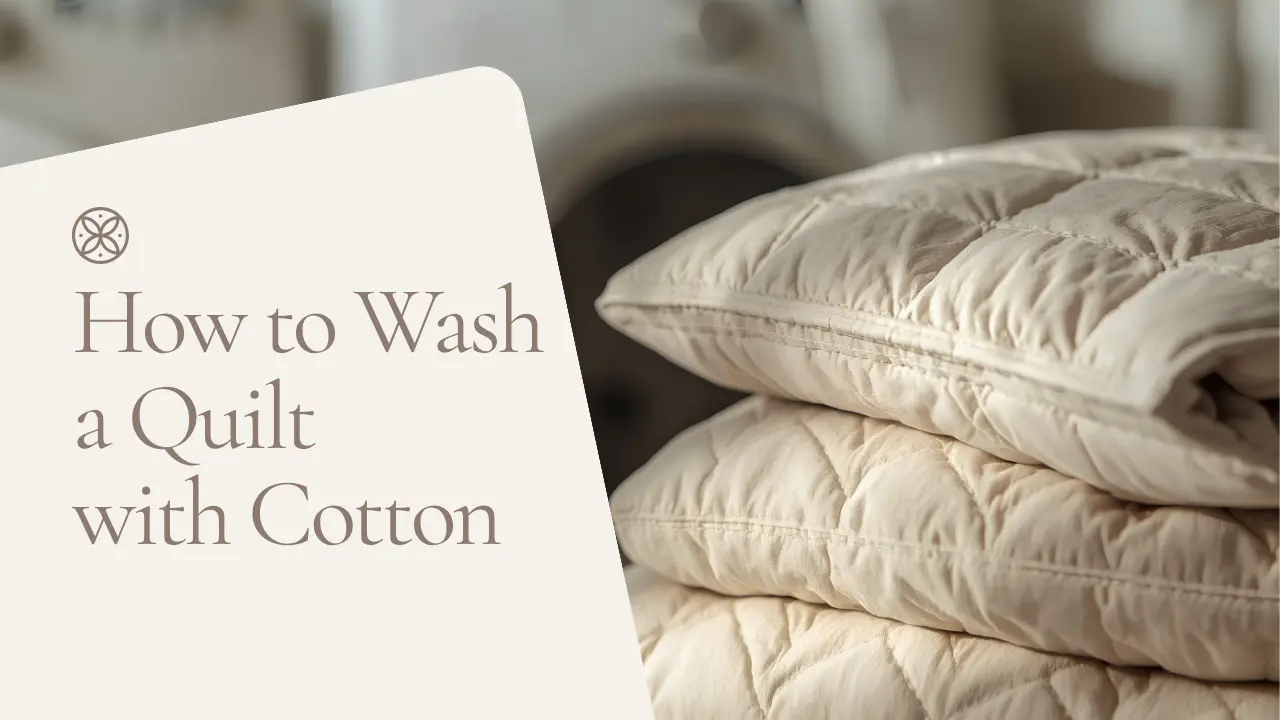
Wash a cotton batting quilt on a gentle, cold-water cycle using a mild, pH-neutral detergent, then either air-dry flat or tumble dry on low heat. Cotton batting can shrink and clump if exposed to hot water or high heat, so slow and gentle is always the safer choice.
Cotton batting quilts are sturdy, but they still need careful handling. This quilt care guide walks you through the safest way to clean a hand-quilted or machine-pieced blanket without damaging the stitching, fading the fabric, or warping the natural fiber batting inside. Whether it’s a modern throw or a hand-me-down heirloom quilt, the same core laundering principles apply.
Table of Contents
Why Cotton Batting Needs Special Care
Cotton batting is a natural fiber, which means it reacts differently than polyester or wool batting during quilt maintenance and laundering. It can:
- Shrink slightly with every wash (this is normal and even desired for a “vintage” crinkled look)
- Become lumpy if agitated too roughly
- Take longer to dry fully because cotton holds moisture
- Weaken over time if washed with harsh chemicals or bleach
Knowing this helps you choose the right method before you even start. This soft crinkled texture is also desirable in a rag quilt tutorial with batting, where washing enhances the final look.
Tools and Materials You’ll Need
The right supplies make quilt cleaning and fabric care much easier:
- A front-loading washing machine (gentler than top-load with an agitator)
- Mild, pH-neutral, dye-free detergent for quilts (like Woolite or a quilt-safe cleaner)
- A large bathtub (for hand-washing, if the quilt is antique or fragile)
- Clean towels
- A flat drying rack or clean sheet for air-drying
- Mesh laundry bag (optional, for extra protection during the wash cycle)
Step-by-Step: How to Wash a Quilt with Cotton Batting
1. Check the Quilt First
Inspect for loose threads, weak seams, or delicate appliqué pieces. Repair any small tears before washing so they don’t get worse in the machine.
2. Choose Your Washing Method
- Machine wash: Best for newer, sturdy quilts. Use a front-loading machine if possible.
- Hand wash: Best for antique, hand-stitched, or delicate quilts. Fill a bathtub with cool water and mild detergent.
3. Use Cold Water and a Gentle Cycle
Set your machine to the gentle or delicate cycle with cold water. Hot water causes cotton batting to shrink unevenly and can cause colors to bleed.
4. Add a Small Amount of Mild Detergent
Skip regular detergent with brighteners or bleach. A small amount of gentle, dye-free detergent is enough — quilts don’t need heavy suds to get clean.
5. Skip the Spin Cycle (If Possible)
A high-speed spin can stress seams, especially on older quilts. If your machine allows it, choose a low-spin or no-spin option and let excess water drain instead.
6. Dry Slowly and Carefully
- Air dry: Lay the quilt flat on a clean sheet or drying rack, out of direct sunlight, and flip it occasionally so both sides dry evenly.
- Tumble dry: Use the lowest heat setting and check every 20–30 minutes. Add a couple of clean, dry towels to help absorb moisture faster.
Cotton batting takes longer to dry than synthetic batting, so be patient — rushing with high heat is what causes shrinkage and clumping.
Common Mistakes to Avoid
Avoid these quilt washing and preservation mistakes that damage stitching and fabric over time:
- Washing in hot water (causes shrinkage and color bleeding)
- Using bleach or fabric softener (weakens cotton fibers over time)
- Overloading the washing machine (quilts need room to move freely)
- Skipping the drying check-ins (damp spots can lead to mildew)
- Hanging a wet quilt on a clothesline (the weight can stretch and tear seams)
How Often Should You Wash a Cotton Batting Quilt?
Only wash a quilt when it’s visibly dirty or has odors that airing out won’t fix — typically once or twice a year for a regularly used quilt. Frequent washing wears down the fibers faster, so spot-cleaning small stains is often a better first step.
FAQ
Can I put a cotton batting quilt in the dryer?
Yes, but only on low heat, and check it frequently to prevent overheating or shrinkage.
Will cotton batting shrink after washing?
A little shrinkage is normal and gives quilts their classic soft, crinkled texture. Excessive shrinkage usually comes from hot water or high heat.
Is it safe to hand wash an antique quilt?
Yes — hand washing in a tub with cool water and mild detergent is often the safest option for older or fragile quilts.
What detergent is safest for quilts?
A mild, dye-free, pH-neutral detergent made for delicates works best. Avoid bleach and fabric softener.
How do I remove a stain without washing the whole quilt?
Spot-treat with a small amount of mild detergent and cool water, gently dabbing rather than rubbing, then air-dry the area.
 Sara McLean