

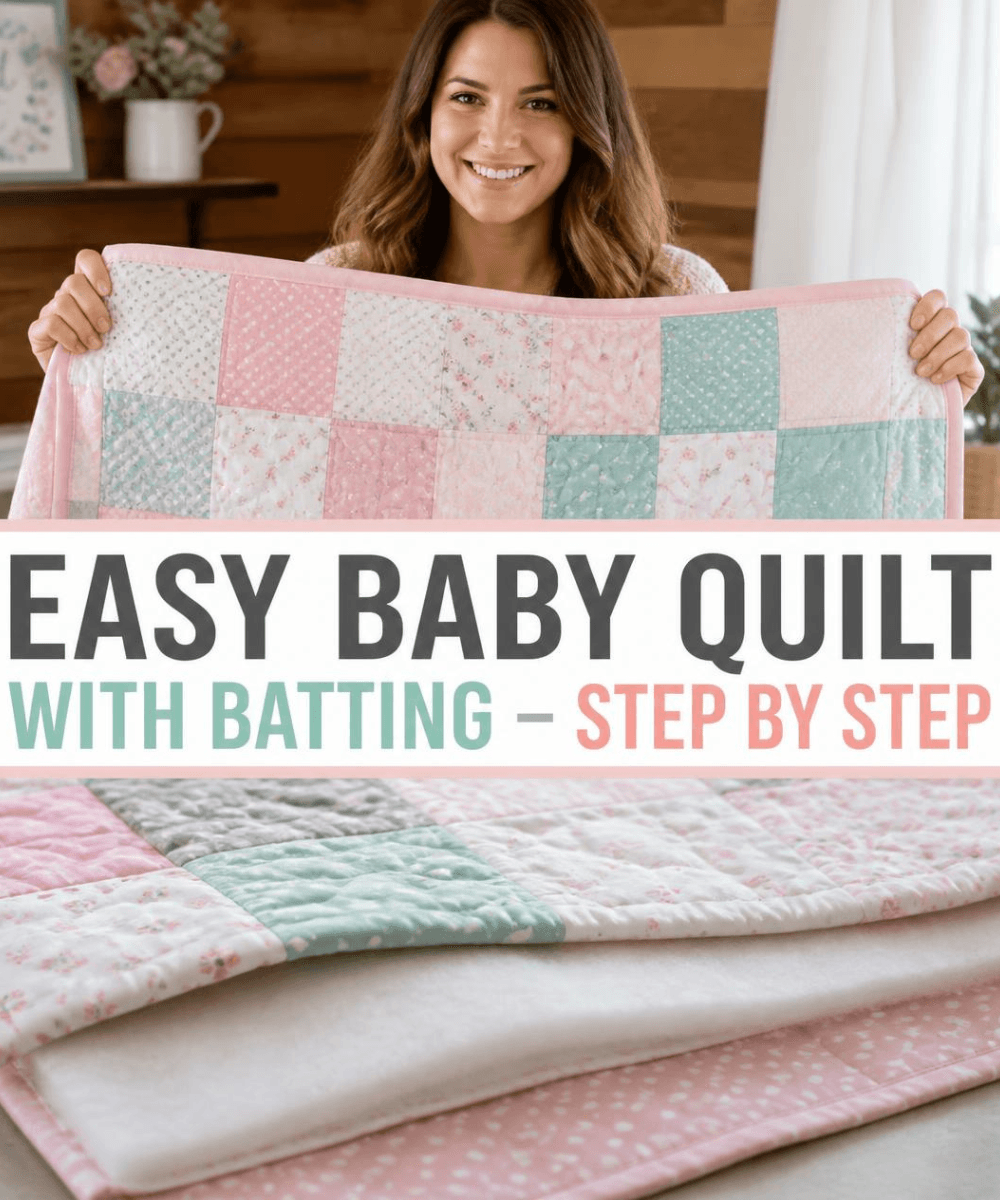
Most batting problems trace back to one of two mistakes: the wrong batting type for the fiber and technique being used, or a sandwiching method that lets layers shift before they’re secured. The techniques below cover the specific cases — fusible batting, wool, silk, and proper sandwiching — where the standard cotton or polyester approach doesn’t directly apply.
Table of Contents
How to Sandwich a Quilt Without Using the Floor
The classic advice to tape a quilt sandwich to the floor works, but it isn’t the only method, and it’s a poor option for anyone who can’t kneel over a large flat area for an extended session. Two real alternatives:
- Table sandwiching in sections: baste in overlapping sections on a table, working from the center outward and repositioning the quilt as each section is pinned, rather than needing the entire quilt flat at once.
- Design wall or pinned-up basting: pin the backing to a design wall or large flat vertical surface (wrong side facing out), smooth the batting and top over it, and baste from the top down. This uses gravity to keep the layers flat instead of floor tape.
Whichever method is used, the core rule is the same as floor-basting: smooth from the center outward in every direction to avoid trapping wrinkles or tucks under the top layer.
How to Back a Quilt with Batting
“Backing a quilt with batting” refers to the full three-layer assembly — top, batting, backing — rather than backing being a step separate from batting. The sequence that avoids the most common assembly errors:
- Press the backing fabric fully before layering; wrinkles pressed in after basting show through the quilting.
- Lay backing right-side down first, since it’s the layer that gets smoothed and secured to the work surface.
- Center the batting on top, leaving even overage on all sides.
- Lay the pieced top right-side up last, and smooth outward from the center — never from one edge, which pushes wrinkles toward the opposite side instead of out.
How to Quilt with Fusible Batting
Fusible batting has a heat-activated adhesive on one or both sides that bonds to fabric with an iron, eliminating pin-basting. It’s a real time-saver, with two technique-specific rules:
- Iron settings matter: fusible batting bonds at a lower, specific temperature than most fabric pressing — check the packaging, since overheating can scorch the adhesive or the fabric before the bond sets.
- Bond in sections, not all at once: press for the manufacturer’s stated time (often 10–15 seconds) in overlapping sections rather than dragging the iron across the whole quilt, which risks uneven bonding and shifted layers.
Fusible batting isn’t necessary for hand quilting the way it is for machine quilting, but it’s used there too, for the same reason: it removes the need for pins that snag thread while hand-stitching.
Hand Quilting with Fusible Batting
Once bonded, fusible batting behaves like any other low-loft batting under the needle — the fusing only replaces the basting step, not the quilting technique itself. The one adjustment: a fully fused sandwich is stiffer than a pin-basted one until it’s been through a few quilting passes, so early stitches may need slightly more force to punch through.
Hand Quilting with Wool Batting
Wool batting is notably easier to hand-quilt than cotton or polyester — it compresses more readily under a needle, which is part of why it was historically preferred for hand-quilted heirloom pieces. It’s also warmer per ounce than cotton, though it requires more careful laundering (see the care guide below) and tends to be priced higher than cotton or polyester equivalents.
How to Quilt with Silk Batting
Silk batting is thin, extremely lightweight, and used almost exclusively for garment quilting or fine art quilts rather than bedding, because it has very little insulating loft compared to cotton, wool, or polyester. It quilts easily by hand or machine due to its low loft, but it’s not appropriate for a project where warmth or durability under heavy washing is the goal — silk batting is chosen specifically for drape and lightness, not performance.
“Birthing” a Quilt with Batting
This refers to turning a quilt right-side out through a gap left in the outer seam — the same mechanism as the pillowcase binding method — pulling the entire quilted sandwich through so the batting ends up fully enclosed with no raw edges or separate binding needed. It’s most commonly used for smaller projects (baby quilts, table runners) rather than bed-size quilts, where the volume of fabric being pulled through a small gap becomes unwieldy.
Best Way to Iron a Quilt with Batting
Batting inside a finished quilt limits how directly heat and pressure should be applied:
- Press, don’t drag. Sliding an iron across a finished quilt can shift or flatten batting unevenly, especially with polyester, which can develop shiny compressed spots under direct heat.
- Use a pressing cloth between the iron and the quilt top, particularly with polyester or fusible batting, both of which are more heat-sensitive than cotton.
- Steam from a distance rather than direct contact when the goal is just to relax wrinkles rather than flatten seams — this avoids compressing the loft while still removing creases.
FAQ
Does fusible batting work with all fabric types?
Most fusible battings are designed for standard quilting cotton. Delicate or heat-sensitive fabrics (some silks, certain synthetics) may not tolerate the fusing temperature — check the fabric’s care label against the batting’s stated bonding temperature before committing
Is wool batting machine-washable?
Some wool battings are treated to be machine-washable on a wool or delicate cycle; untreated wool batting typically requires hand-washing or dry cleaning to avoid felting and shrinkage. Check the specific product’s label rather than assuming — this varies significantly by manufacturer.
Can silk batting be used for a full-size bed quilt?
Technically yes, but its low loft means the quilt will have minimal warmth or puffiness compared to cotton, wool, or polyester — it’s a stylistic and tactile choice better suited to lightweight or decorative pieces than a primary bedding quilt.
 Minty Mellon