

Wool felts under heat and agitation combined — not heat alone, and not agitation alone. That single fact is the basis for nearly every care instruction that follows: wool batting needs to be washed and dried in ways that avoid combining the two, or the fibers will mat and shrink permanently.
Table of Contents
How Do You Wash a Quilt with Wool Batting?
Check the label first. Some modern wool battings are treated (superwash-style processing) specifically to resist felting and are machine-washable on a wool or delicate cycle. Untreated wool batting is not, and should be hand-washed or professionally cleaned.
For hand-washing:
- Use cool or lukewarm water — never hot, which accelerates felting.
- Use a wool-safe or pH-neutral detergent; standard detergents can be too alkaline for wool fiber and cause it to roughen.
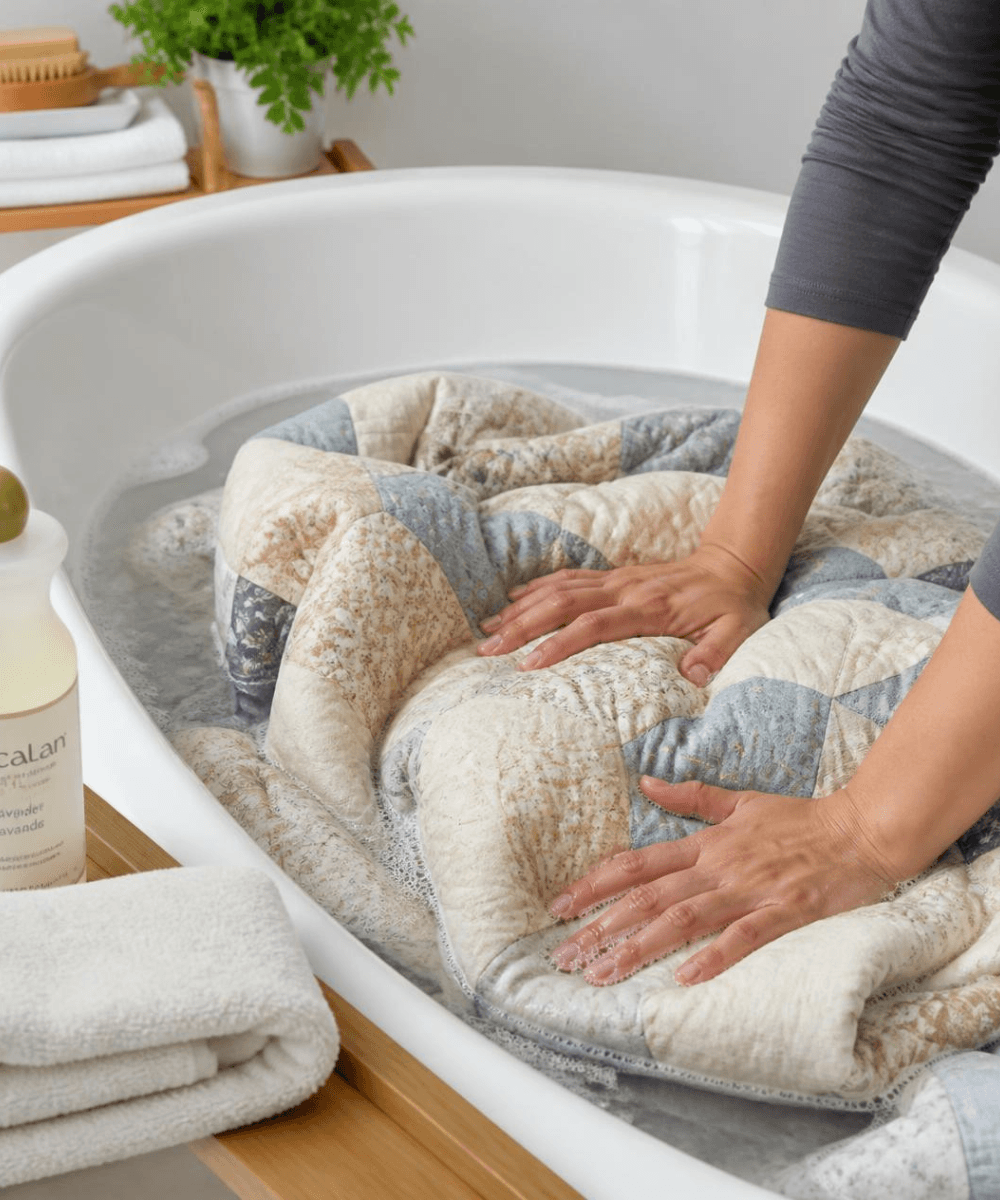
- Submerge and gently press water through the quilt rather than rubbing, twisting, or agitating it.
- Rinse in water the same temperature as the wash to avoid a temperature shock, which also contributes to felting.
For machine-washable treated wool batting:
- Use a wool or delicate cycle, cold water, and a wool-safe detergent.
- Avoid high spin speeds — a slow spin reduces the mechanical agitation that causes felting even in treated wool.
How to Clean a Quilt with Wool Batting
For quilts too large or too delicate to wash at all — heirloom pieces, antique wool-batted quilts, or anything with fragile piecing — cleaning options that avoid water entirely:
- Spot cleaning with a wool-safe cleaner for isolated stains, rather than washing the full quilt.
- Airing out — hanging the quilt outdoors or in a well-ventilated space — refreshes it without water, and is standard practice for wool items between full washes.
- Professional textile cleaning for valuable or antique pieces, using a cleaner who specifically states experience with wool-batted or heirloom quilts rather than a general dry cleaner, since improper handling is a common cause of damage to older wool-batted textiles.
Drying a Queen-Sized Quilt with Wool Batting
Size adds a real practical constraint on top of the felting risk: a queen-sized quilt holds significant water weight when wet, and wool absorbs more water relative to its weight than cotton or polyester.
Recommended approach:
- Never wring or twist a wet wool-batted quilt — the weight and wool’s own bulk makes this both physically difficult and highly likely to distort the shape permanently.
- Support the full weight while wet. Lay the quilt flat on a clean, dry surface — a mesh drying rack designed for sweaters works well for smaller sections, but a queen-size piece often needs to be laid flat across multiple towels or a large flat surface rather than hung, since hanging a heavy wet quilt stretches it under its own weight.
- Roll in towels first to remove excess water before laying flat to dry — press (don’t wring) the rolled towel-and-quilt bundle to draw out water.
- Reshape while damp. Gently pull the quilt back to its original dimensions while it’s still wet and before it’s left to dry undisturbed, since wool holds whatever shape it dries in.
- Avoid direct heat sources (radiators, direct sun for extended periods) during drying, which can both damage wool fiber and cause uneven shrinkage.
- Expect a longer dry time than a similarly sized cotton or polyester quilt — wool’s water retention means a queen-size wool-batted quilt can take one to two full days to dry completely when air-dried flat.
Machine drying wool-batted quilts is not recommended even for treated, machine-washable wool — the heat and tumbling combination is exactly the felting risk described above, regardless of the wash method used.
FAQ
How often should a wool-batted quilt actually be washed?
Less often than cotton or polyester quilts. Wool has natural odor- and stain-resistant properties, and frequent washing increases felting risk over the quilt’s lifetime — airing out between uses and spot-cleaning as needed is generally preferred over full washing on a routine schedule.
Will a wool-batted quilt shrink even with careful washing?
Some minor shrinkage (a few percent) is normal even with correct technique, particularly on the first wash. Significant or repeated shrinkage typically indicates water temperature that’s too warm, detergent that’s too harsh, or drying method that involves heat or tumbling.
Is it safe to store a wool-batted quilt long-term without washing it first?
Wool should be clean before long-term storage, since any soil or moisture left in the fiber attracts moths and other pests over time. A gentle wash or professional cleaning before storage, followed by fully drying the quilt, protects it better than storing it soiled.
 Minty Mellon