
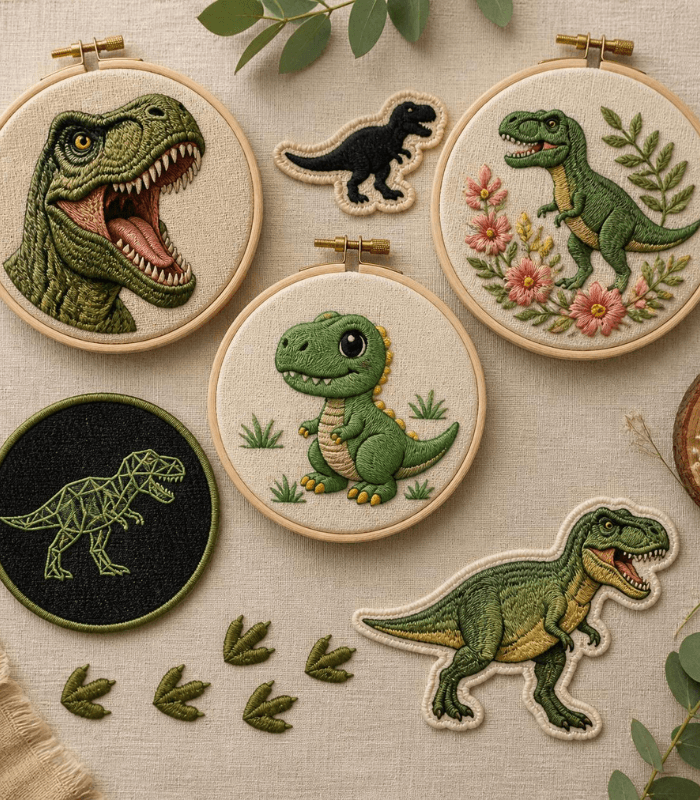
If you’re looking for T-Rex embroidery patterns, the best ones balance a recognizable dinosaur silhouette with a design simple enough to actually finish — think bold outlines, a few key shading tones, and one strong focal detail like teeth or a footprint trail. Below are 10 patterns I keep coming back to, ranging from true beginner to a bit more advanced.
I’ve grouped these by difficulty and use case, so whether you’re stitching a onesie for a baby shower or a patch for a backpack, you can pick one that actually matches your skill level instead of guessing.
Table of Contents
10 T-Rex Embroidery Patterns to Try
1. Classic Roaring T-Rex
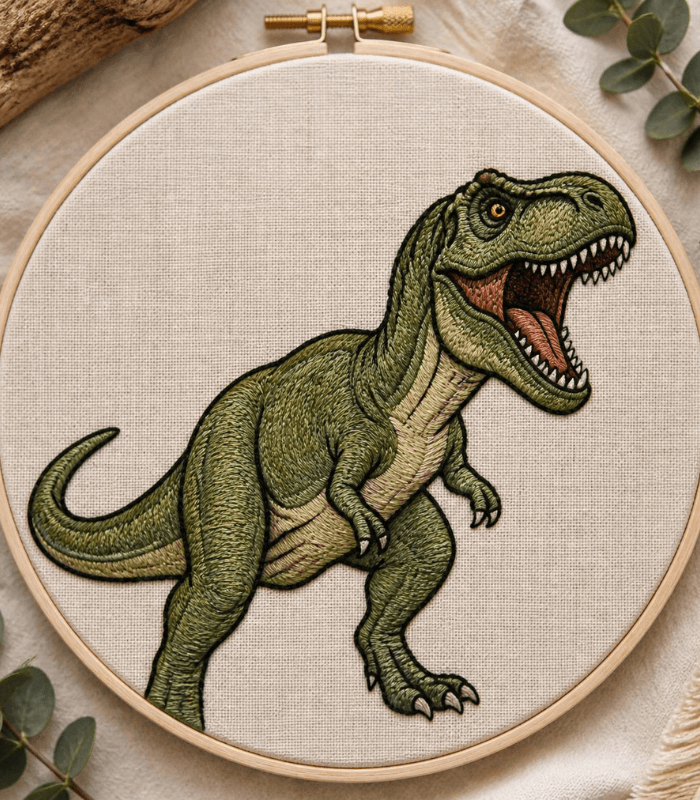
An open-mouthed, mid-roar T-Rex in profile, usually filled with contour or satin stitch and finished with short white teeth stitches. This is the most requested pattern I get, and it’s a great all-rounder — bold enough for a beginner, but with enough detail (teeth, claws, eye) to keep it interesting.
Best for: Beginners to intermediate | Stitches: Contour fill, satin stitch, backstitch outline
2. Cartoon Baby T-Rex
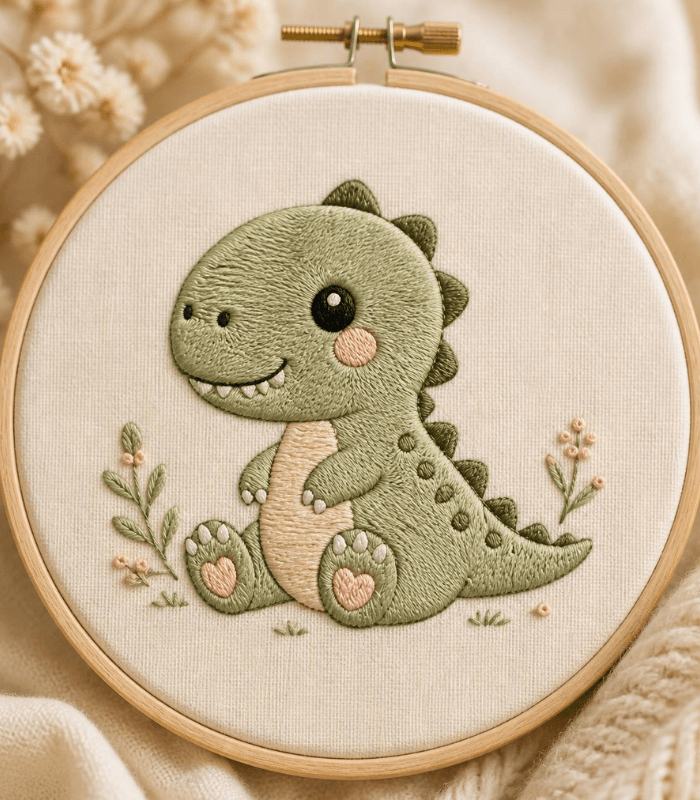
A rounder, softer T-Rex with big eyes and stubby arms — the kind of design that reads as cute rather than fierce. It’s forgiving because the shapes are simple and rounded, with no sharp teeth detail required.
Best for: Absolute beginners | Stitches: Satin stitch, French knot eye
3. T-Rex Skeleton Outline
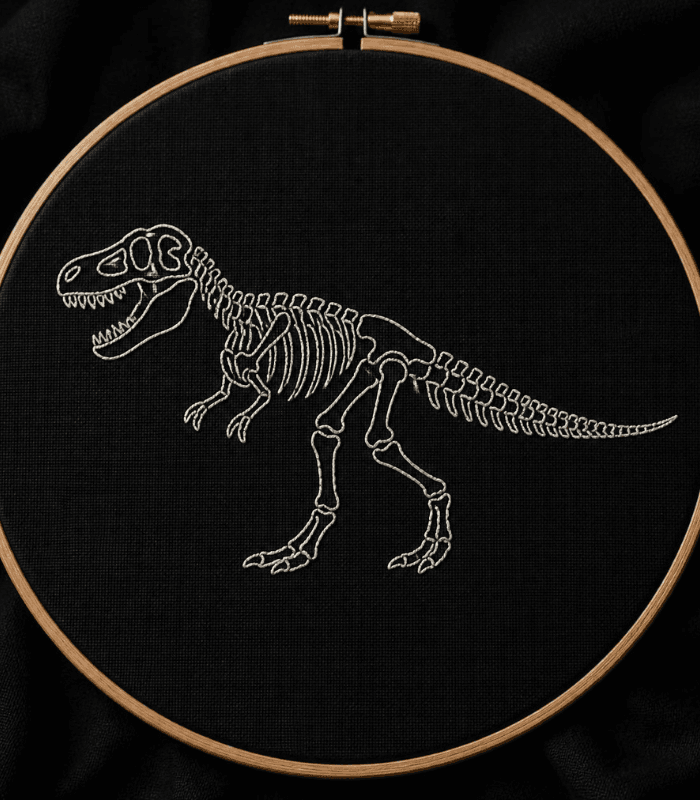
A single-color outline design showing the T-Rex’s bones, stitched entirely in backstitch or stem stitch on a dark or neutral fabric. No fill stitching needed, which makes it one of the fastest patterns on this list.
Best for: Beginners who want a quick project | Stitches: Backstitch or stem stitch only
4. T-Rex Silhouette Patch
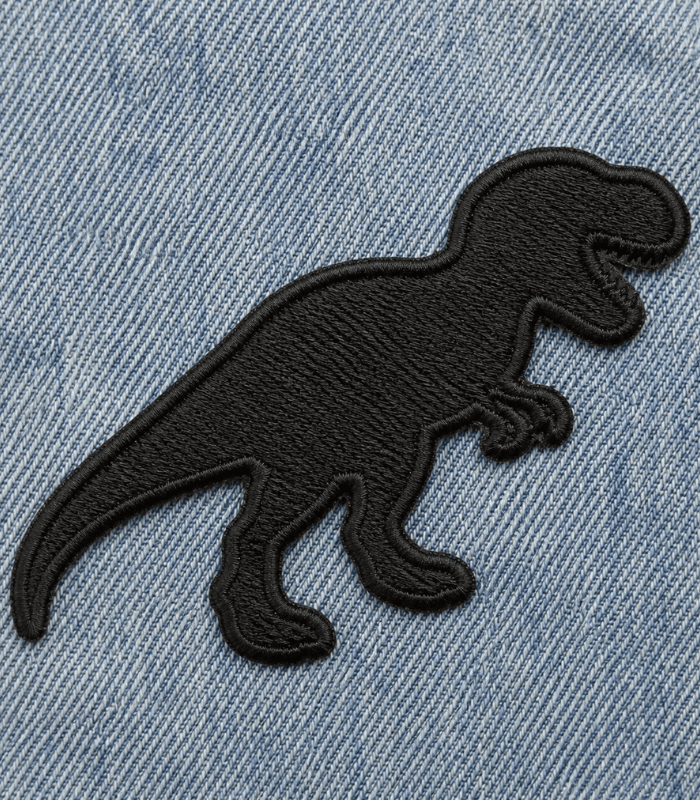
A solid black (or single-color) silhouette, filled entirely with satin stitch, great for iron-on patches or denim jacket appliqué. The appeal here is simplicity — no shading decisions, no color matching, just one clean solid shape.
Best for: Appliqué projects | Stitches: Satin stitch fill, blanket stitch edge
5. T-Rex with a Party Hat
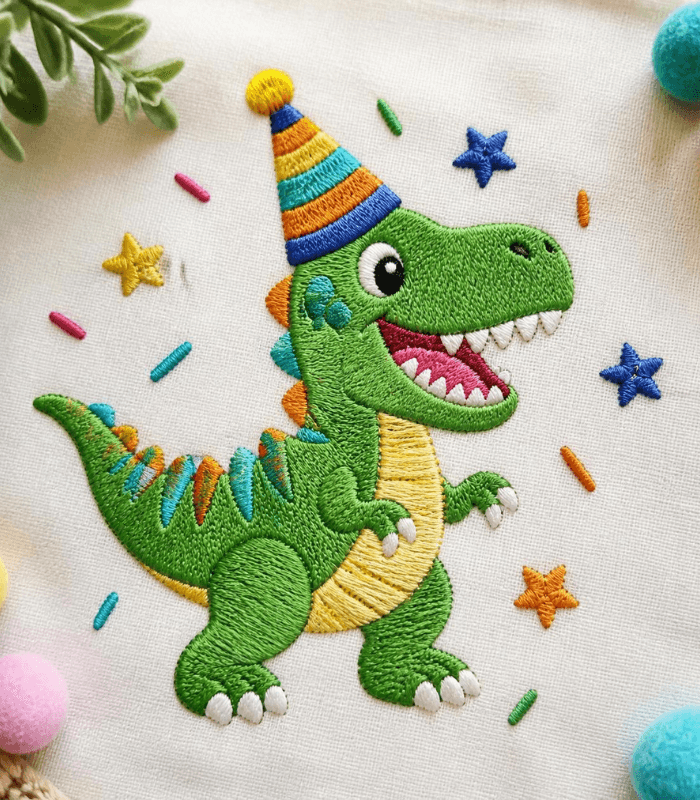
A classic roaring T-Rex fitted with a small striped party hat, ideal for birthday shirts. The hat adds a second small color block and a bit of personality without adding real stitching difficulty.
Best for: Kids’ birthday projects | Stitches: Satin stitch, straight stitch for hat stripes
6. Tiny Arms Joke Design
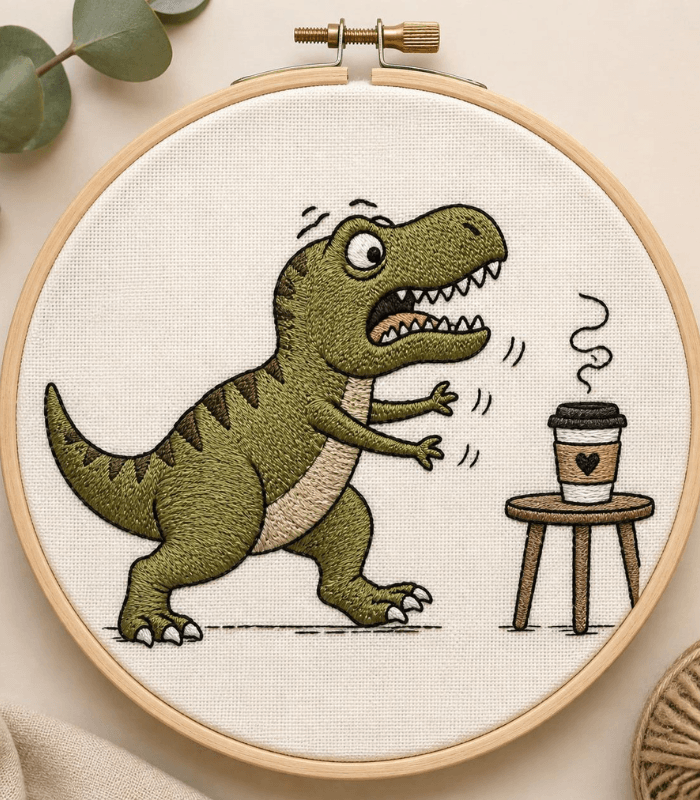
A T-Rex reaching for something just out of reach — a coffee cup, a high shelf, a doorknob — playing on the “can’t reach” joke. This one’s popular for adult gift projects like tote bags and aprons, and it’s genuinely fun to design around, since the joke changes depending on what you put the T-Rex reaching for.
Best for: Intermediate, novelty gifts | Stitches: Satin stitch, French knot, backstitch
7. Geometric T-Rex
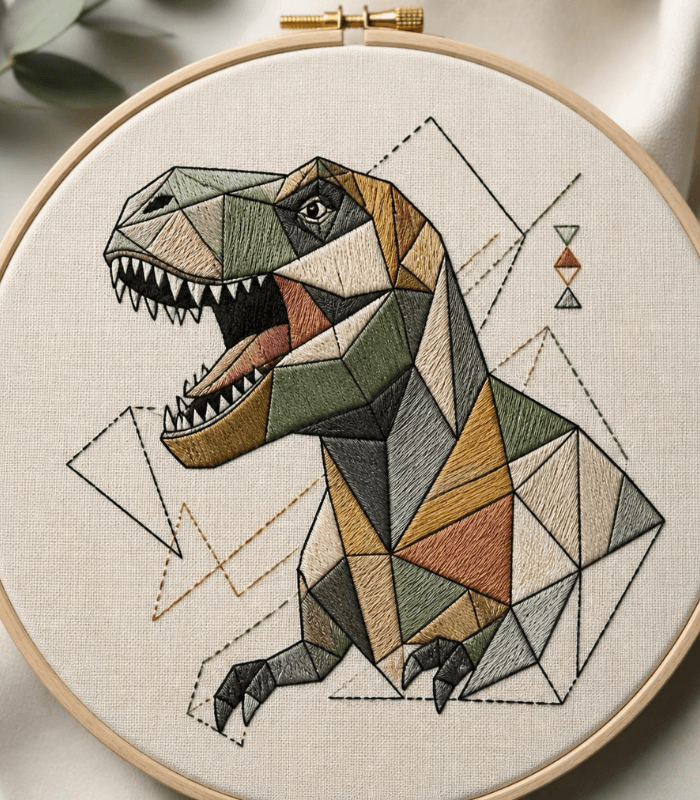
A T-Rex built from angular, polygon-style facets rather than a smooth curved outline — a more modern, graphic take on the design. This one takes more planning since every facet edge needs a clean straight backstitch, but it looks striking on plain fabric.
Best for: Advanced beginners comfortable with precise lines | Stitches: Backstitch, satin fill per facet
8. T-Rex Footprint Trail
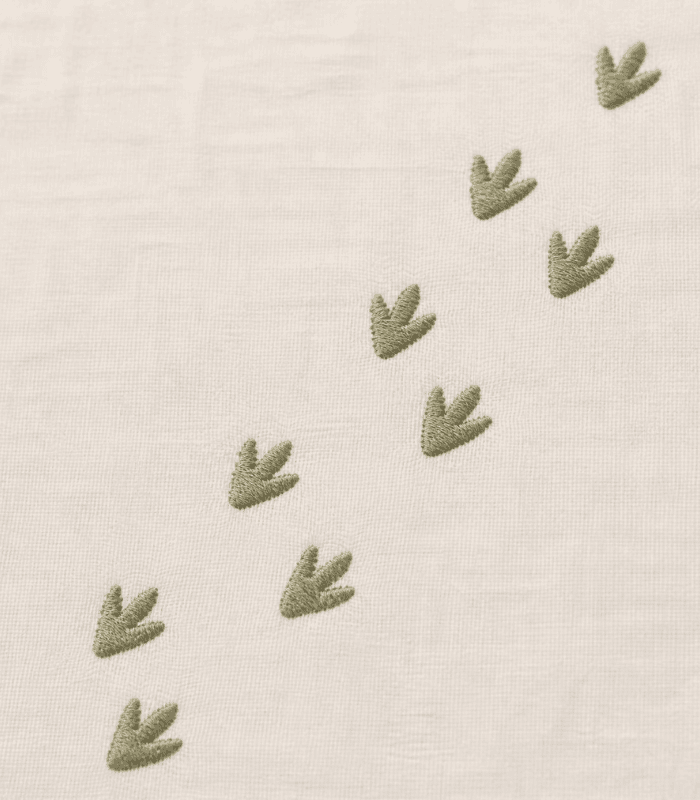
Instead of the full dinosaur, this pattern uses a trail of three-toed T-Rex footprints leading across the fabric, sometimes ending at a small silhouette in the corner. It’s subtle, works well on baby items, and takes far less time than a full-body design.
Best for: Beginners, nursery or baby projects | Stitches: Satin stitch fill, small footprints
9. Floral T-Rex
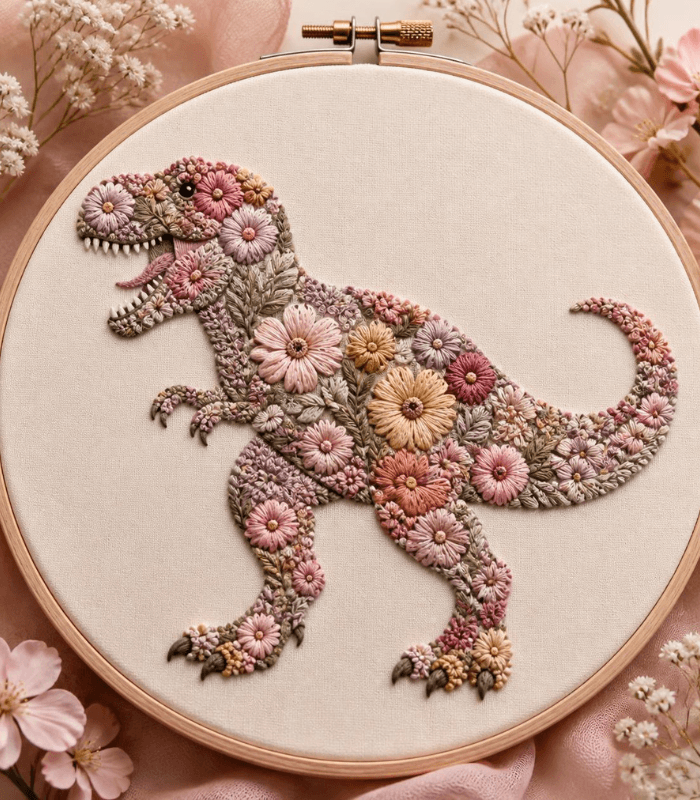
A botanical mashup — a T-Rex silhouette filled or surrounded with small embroidered flowers and leaves instead of scales. It’s a fun contrast piece that pairs a “fierce” subject with a soft, decorative fill.
Best for: Intermediate, decorative wall art | Stitches: Contour fill, French knots, lazy daisy for petals
10. T-Rex Family
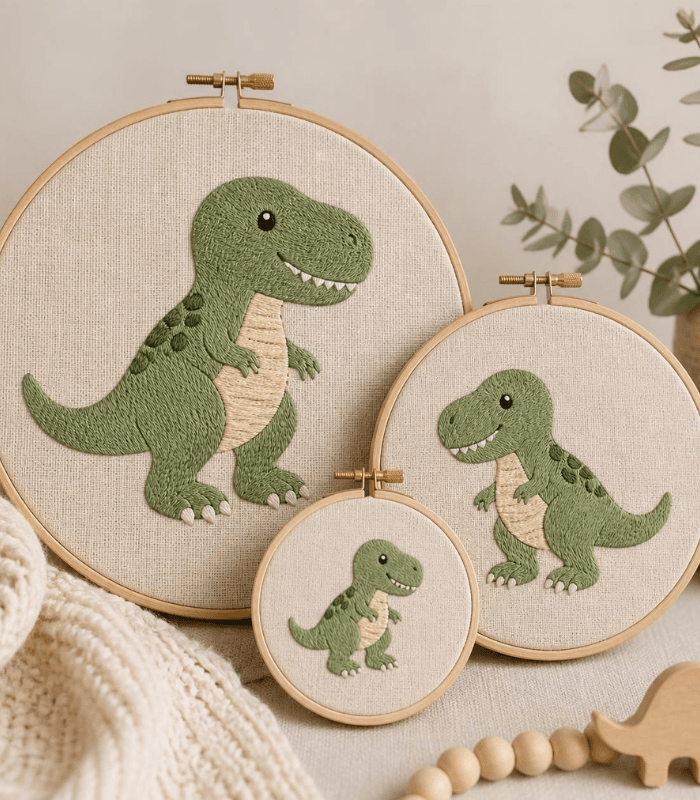
Three T-Rex figures in descending sizes — a nod to a matching family set — often used across coordinating shirts for parents and kids. Each figure can be simplified individually, so you can make the smallest one easy and the largest one more detailed if you want variety in a single set.
Best for: Matching family sets | Stitches: Satin stitch, backstitch, French knot eyes
Tips for Choosing the Right Pattern for Your Skill Level
- If you’re new to embroidery, start with the skeleton outline or footprint trail — both skip fill stitching entirely.
- Save the geometric or floral T-Rex for once you’re comfortable keeping tension even across long stitch lines.
- For kids’ clothing, pick patterns with fewer thin details (like the tiny arms design) since fine lines wear out faster with regular washing.
- If you’re stitching a matching family set, test your smallest size first — details that look fine at 6 inches can turn into a blob at 2 inches.
FAQ
Which T-Rex embroidery pattern is easiest for a first project?
The skeleton outline or silhouette patch. Both avoid detailed shading and use just one or two stitch types.
Can these patterns be used for appliqué instead of full embroidery?
es, especially the silhouette patch and classic roaring T-Rex, which both work well as a cut fabric shape with a stitched edge.
What size hoop do I need for a full-body T-Rex design?
A 6 to 8-inch hoop is usually enough for a detailed full-body pattern like the classic roar or geometric design.
How many thread colors do I need for these patterns?
Most patterns need 2–4 colors. Even the more detailed designs, like the floral T-Rex, rarely need more than that if you keep the palette intentional.
Are these patterns suitable for kids’ clothing that gets washed often?
Yes, as long as edges are secured with a tight satin or blanket stitch and you avoid very thin, delicate details on high-wear areas like sleeves.