
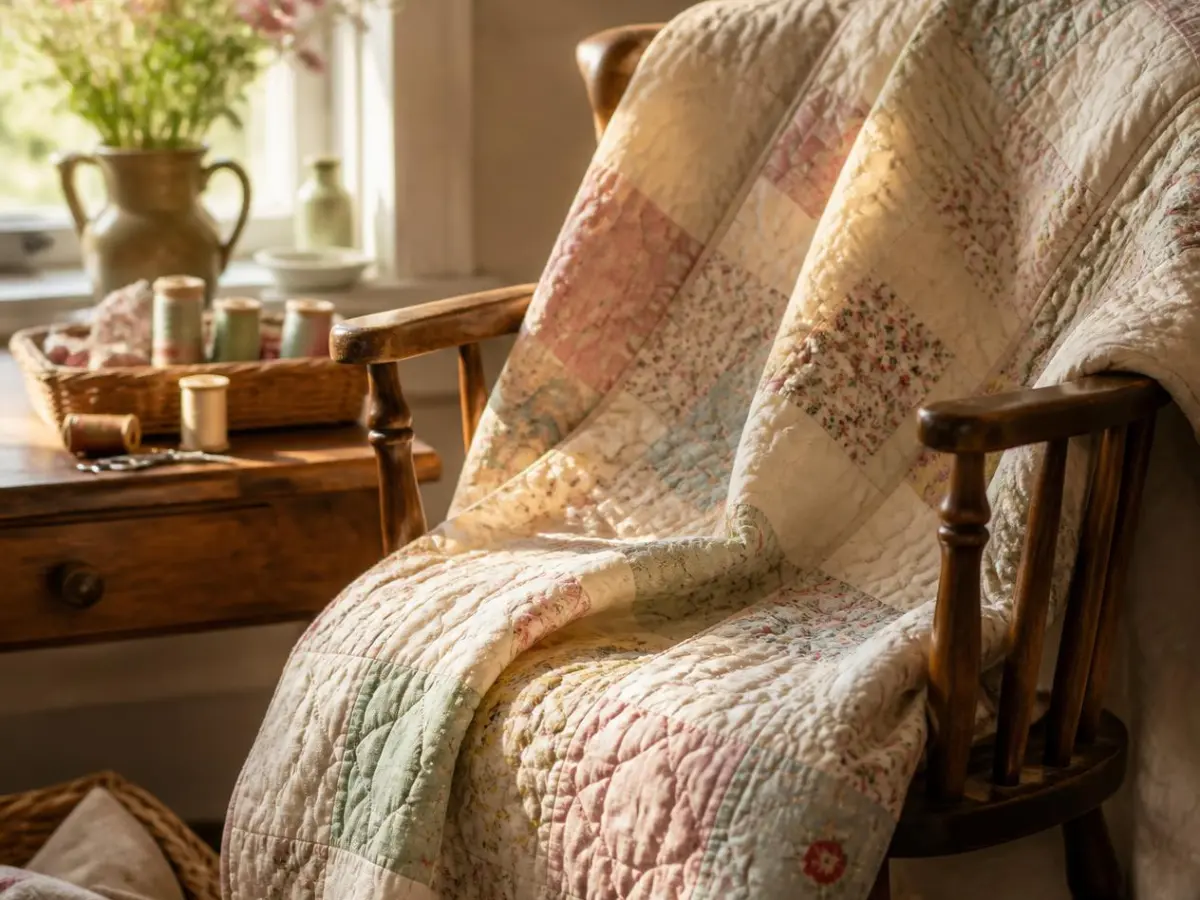
For years I couldn’t figure out why the quilts my grandmother made felt so different from the ones I bought at the store. Hers had this soft loft to them — puffy but not heavy, warm but not suffocating. Mine, filled with whatever polyester batting was cheapest at the craft store, either went flat after a few washes or felt like sleeping under a plastic tarp.
It wasn’t until I started quilting myself and asked her outright that I got the answer: wool. She’d used wool batting in nearly everything, not because it was trendy, but because it was what was available and what worked. Once I switched my own next project to wool batting, I understood immediately. The loft held its shape. The drape was softer. And on a cold night, it was warm in a way that felt different from anything synthetic — warmer for its weight than I expected, and somehow it still breathed.
I’ve since made close to a dozen quilts with wool batting — baby quilts, lap quilts, one full-size heirloom piece I still keep on my own bed — and tested it side by side against cotton and polyester batting in the same pattern just to see the difference for myself. What follows isn’t advice pulled straight off a batting label. It’s what actually happened in my sewing room, seam by seam, wash by wash.
Table of Contents
What Makes Wool Batting Different
Wool batting behaves differently from cotton and polyester in a few key ways:
- High loft, low weight — wool traps air efficiently, so you get warmth without bulk
- Breathability — wool naturally regulates temperature, which is why wool quilts don’t trap heat the way synthetic battings can
- Resilience — wool batting bounces back after being compressed, so quilts keep their loft even after storage or years of use
- Easier hand-quilting — wool is soft to needle through, which is part of why traditional hand-quilters have favored it for generations
- Slight shrinkage — wool batting can shrink a little when washed, which some quilters actually use intentionally to create a gently puckered, antique-style texture
How Wool Batting Compares to Cotton and Polyester
| Feature | Wool Batting | Cotton Batting | Polyester Batting |
|---|---|---|---|
| Warmth-to-weight | High | Moderate | Low to moderate |
| Loft | High, springy | Low to flat | High but can feel synthetic |
| Breathability | Excellent | Good | Poor |
| Ease of hand-quilting | Easy, soft to needle | Moderate | Can be harder, slippery |
| Shrinkage after wash | Slight | Slight to moderate | Minimal |
| Best for | Cold-weather quilts, heirlooms | Traditional, flatter quilts | Machine-washed everyday quilts |
Getting Started: What You’ll Need
- Wool batting, sized to your quilt top plus a few extra inches on all sides
- Quilt top and backing fabric, prepped and pressed
- Basting pins or spray baste to hold your quilt sandwich together
- Hand or machine quilting supplies — wool batting works well with both
- A walking foot if machine quilting, to help feed the loftier layers evenly
How to Quilt With Wool Batting
1. Let the Batting Rest Before Use
Wool batting is often compressed for shipping and storage. Unroll or unfold it and let it sit for a few hours, or overnight, before basting your quilt. This lets the loft relax back to its natural thickness.
2. Trim to Size
Cut your wool batting a few inches larger than your quilt top on all sides. This gives you margin for any shifting during quilting.
3. Layer Your Quilt Sandwich
Lay your backing fabric right side down, add the wool batting on top, and place your quilt top right side up over that. Smooth out each layer as you go to avoid trapped folds.
4. Baste Generously
Because wool has more loft than cotton, it can shift more easily if under-basted. Use closely spaced pins or a thorough spray baste to keep the layers stable through quilting.
5. Quilt With a Slightly Longer Stitch Length
Wool’s loft means a very short stitch length can look overly dense and flatten the texture you’re trying to preserve. A slightly longer stitch length lets the loft show through your quilting lines rather than compressing it.
6. Handle Puckering Intentionally
If you’re hand-quilting, you may notice the wool batting encourages a soft, slightly rounded puff between stitch lines — many quilters see this as a desirable, heirloom-style texture rather than a flaw.
7. Wash With Care
Wool batting can be washed, but it should be done in cool water on a gentle cycle, and dried flat or on low heat to prevent excess shrinkage or felting. Some quilters intentionally use a first wash to create a soft, slightly crinkled antique look — worth deciding before you start whether you want that effect.
Tips for Working With Wool Batting
- Buy a little extra. Wool batting compresses in the package, and it’s better to have too much margin than too little once it lofts back up.
- Test your quilting design on a scrap sandwich first. Wool’s loft can change how a quilting pattern reads compared to flatter battings.
- Store wool batting rolled, not folded, to avoid permanent crease lines.
- Don’t over-quilt. Wool’s appeal is its loft — quilting too densely can flatten the very texture you chose wool for in the first place.
- Check for wool sensitivities. If the quilt is for a baby or someone with wool sensitivity, look for machine-washable, allergy-friendly wool batting blends.
Common Mistakes to Avoid
- Skipping the resting step. Quilting straight out of a compressed package can leave uneven loft across the quilt.
- Under-basting a loftier sandwich. Wool shifts more than flatter battings if the layers aren’t secured well before quilting.
- Using a very short stitch length by habit. This can compress the very loft that makes wool batting worth choosing.
- Washing on a hot cycle. This risks shrinking or felting the batting more than intended.
- Assuming all wool batting is machine washable. Always check the specific batting’s care instructions before laundering — I learned this the hard way on a lap quilt that came out of a warm wash noticeably thinner than it went in.
Why Quilters Keep Coming Back to Wool
Wool batting isn’t the easiest option on the shelf, and it isn’t the cheapest either. But it’s the one that keeps quilts feeling alive years later — springy instead of flat, warm instead of heavy, breathable instead of stifling. It’s the difference I felt the first time I pulled one of my grandmother’s old quilts over me on a cold night, long before I understood why it felt that way at all.