
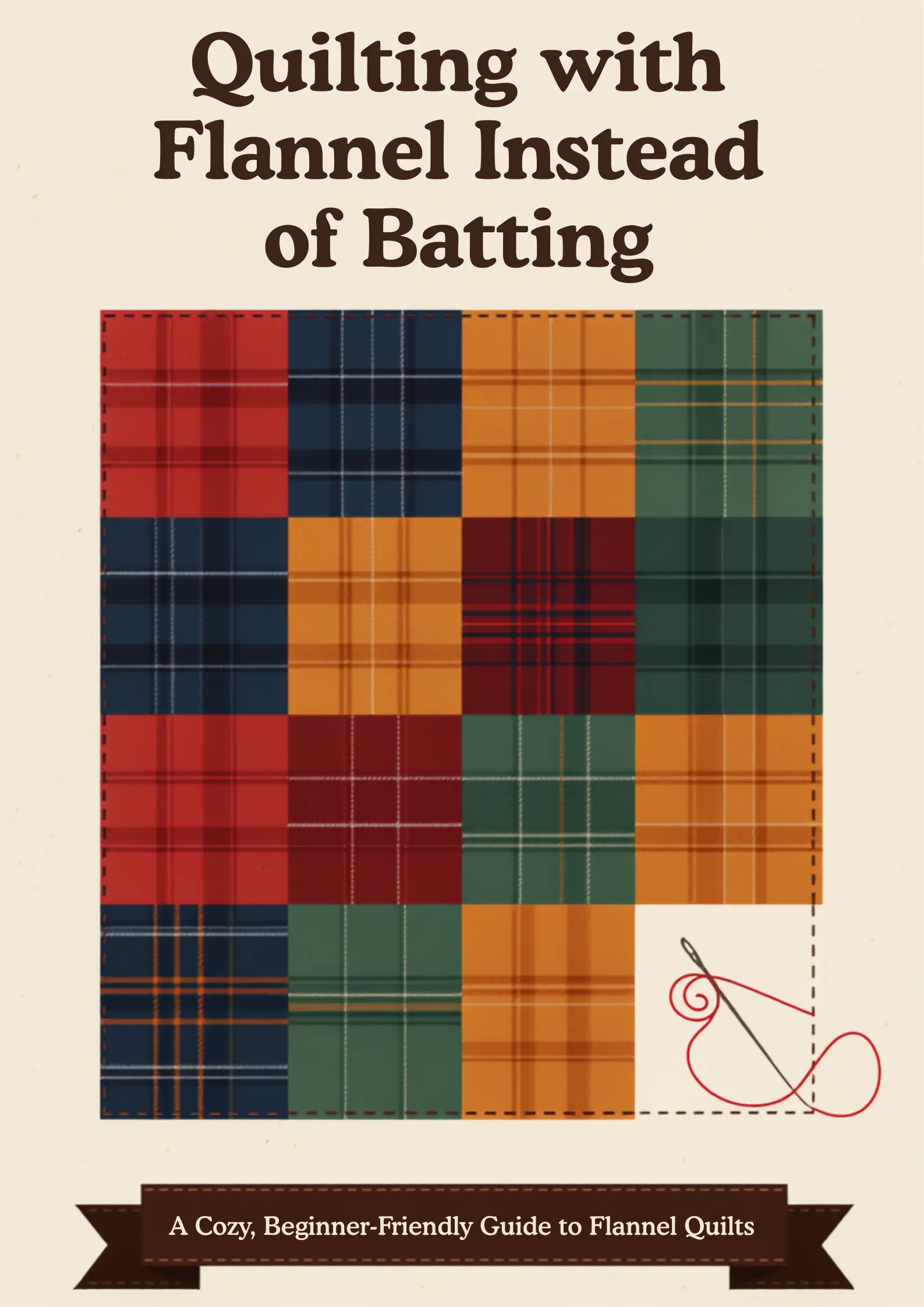
Quilting with flannel instead of batting is a simple method where flannel fabric—cut from yardage or even a flannel sheet—is used as the middle layer or backing to create a soft, lightweight quilt. Unlike traditional techniques (including “dirty quilting,” where layers are quilted without turning), this approach skips bulky batting and gives a smooth, drapey finish that works well for rag quilts and everyday use. While some traditional quilters, including Amish makers, often use natural cotton or wool batting, flannel is a practical alternative because it’s warm, affordable, and easy to sew. A flannel quilt doesn’t always need batting, but compared to standard options like 100% cotton or 80/20 blends, it produces a flatter, less puffy look—so the best choice depends on the comfort, weight, and style you want.
Table of Contents
What Does “Flannel Instead of Batting” Actually Mean?
There are two common ways quilters use flannel in place of batting:
- Flannel as the entire middle layer — one piece of flannel replaces batting completely, giving you a thin, soft quilt.
- Flannel as the backing, with no separate batting at all — the quilt top is stitched directly to a flannel backing, skipping the batting layer entirely.
Both methods are common in flannel rag quilts, baby quilts, and summer-weight quilts where you don’t want the loft and warmth of traditional batting.
Why Quilters Choose Flannel Over Batting
- Lighter weight. A single layer of flannel is noticeably thinner than most cotton or polyester batting, which makes for a quilt that folds flat and packs easily.
- Better drape. Without batting’s loft, a flannel-based quilt hangs and drapes more like a blanket than a puffy comforter.
- Cost savings. Flannel yardage is often less expensive than batting, especially for smaller projects like baby quilts or table toppers.
- Extra warmth without extra bulk. Flannel adds a cozy layer of warmth that a plain cotton backing alone doesn’t provide.
- Great for rag quilts. Many rag quilt patterns are specifically designed around flannel, since the exposed seam allowances fray and fluff up beautifully with a flannel middle layer.
Flannel vs. Batting: Key Differences
| Feature | Flannel as Batting | Traditional Batting |
|---|---|---|
| Loft/thickness | Thin, flat | Varies from low-loft to high-loft |
| Warmth | Warm, but less insulating than thick batting | Can be very warm depending on fiber |
| Drape | Soft, blanket-like | Stiffer, more structured |
| Visibility of quilting stitches | Less pronounced | More pronounced, especially with high loft |
| Shrinkage | Can shrink noticeably if not prewashed | Minimal shrinkage, especially with scrim |
| Cost | Often cheaper per yard | Varies by fiber and brand |
How to Quilt with Flannel Instead of Batting: Step-by-Step
1. Choose Good-Quality Flannel
Not all flannel is created equal. Look for a medium-weight, tightly woven quilting flannel rather than thin apparel flannel, which can stretch and wear out faster.
2. Prewash Your Flannel
This step is non-negotiable. Flannel shrinks more than quilting cotton, sometimes significantly. Wash and dry it on high heat at least once — many quilters recommend two or three times — before cutting or piecing.
3. Decide on One Layer or Two
- One layer of flannel gives you the lightest, most drapey result.
- Two layers of flannel (used by some quilters instead of a top-and-back-only build) adds a bit more weight and warmth, closer to a lightweight batting.
4. Baste as You Normally Would
Pin-baste or spray-baste your quilt sandwich just like you would with batting. Flannel can shift more than batting during basting, so smooth out the layers carefully and baste a little more densely than usual.
5. Quilt with a Walking Foot
Flannel has more stretch than woven quilting cotton, so a walking foot is essential to keep the layers feeding evenly and prevent puckering.
6. Quilt Your Stitches Closer Together
Since there’s no batting to hold the layers apart, quilting lines spaced too far apart can let the quilt shift or “balloon.” Many quilters space stitches every 8–12 inches when using flannel with no batting at all, and closer if using flannel as a thin batting substitute.
Tips for Success
- Use a walking foot or dual-feed system to manage flannel’s stretch and prevent the top and backing from shifting against each other.
- Increase your stitch length slightly when piecing and quilting flannel — around 2.6–3.0mm works well for most machines.
- Size up your seam allowance slightly if you’re using an older or looser-woven flannel that tends to fray.
- Use heavier thread if you want your quilting stitches to show up more, since flannel doesn’t create the same shadowing effect that high-loft batting does.
- Consider tying instead of machine quilting for a quick, cozy finish — Perle cotton or yarn ties work well with flannel.
Common Mistakes to Avoid
- Skipping the prewash. Unwashed flannel can shrink unevenly after your quilt is finished, causing puckering and distortion.
- Ironing flannel directly with high heat. Flannel is stretchy, and a hot iron can stretch it out of shape. Press gently instead of ironing with a sliding motion.
- Quilting too far apart. Without batting’s structure, wide gaps between stitches can let the layers shift or the quilt “balloon” over time.
- Assuming all flannel is the same weight. Mixing lightweight and heavyweight flannel in one quilt can create uneven bulk — check your fabrics before cutting.
- Forgetting how much heavier a full flannel-and-flannel quilt can get. Two layers of flannel (top and back) with no batting can still add up to real weight on a large bed quilt.
Wide Flannel Quilt Backing: A Popular Alternative to Piecing
If you’re backing your quilt with flannel instead of using it as batting, one detail makes life much easier: 108-inch wide flannel quilt backing. Regular flannel typically comes 42–44 inches wide, which means piecing several panels together to cover a bed-size quilt back. Extra-wide flannel quilt backing fabric — often sold specifically as quilt backing flannel — comes on wider bolts so you can back a full or queen quilt with a single seamless piece.
A few things to know when shopping for wide-back flannel:
- 108″ wide flannel quilt backing is the most common width for bed-size quilts and eliminates the need for piecing seams on the back.
- Flannel quilt backing fabric is usually a bit heavier than dress-weight flannel, which holds up better to the wear a quilt back gets.
- Not every flannel print line offers a wide-back option, so check with your fabric shop before building a pattern around a specific print.
- Wide flannel quilt backing costs more per yard than standard-width flannel, but you’ll often buy less yardage overall since you skip piecing.
Flannel Quilt Patterns, Kits, and Pre-Cuts
Flannel has its own corner of the quilting world, with patterns and precuts designed specifically around it.
- Flannel quilt patterns range from simple strip quilts and rag quilts to more detailed patchwork designs. Easy flannel quilt patterns are a great starting point for beginners, since flannel’s texture hides minor piecing imperfections better than quilting cotton.
- Flannel quilt kits bundle coordinated flannel prints (often plaids, wovens, and prints from a single fabric line) with a pattern, so you don’t have to hunt for matching fabrics yourself.
- Pre-cut flannel fabric squares — sometimes sold as flannel charm packs or a 10-inch flannel layer cake — make it easy to whip up a strip quilt or rag quilt without cutting yardage yourself.
- Flannel panels with holiday, alphabet, or novelty designs are popular for baby quilts and kids’ quilts.
Plaid flannel quilts remain one of the most popular styles, especially for lap quilts, cabin-style bedding, and gifts for the outdoorsy person on your list.
Rag Quilts, Tied Quilts, and Other Flannel-Friendly Styles
Flannel and rag quilts go hand in hand. Making a rag quilt with flannel is one of the most beginner-friendly quilting projects out there, since the exposed, clipped seam allowances are designed to fray into a soft, shaggy texture — something flannel does especially well compared to quilting cotton. Rag quilts don’t have to use flannel exclusively, but it’s by far the most common choice.
If machine quilting a flannel sandwich feels like too much bulk, tying is a popular shortcut. A flannel tie quilt uses Perle cotton or yarn knotted at regular intervals instead of quilted lines — a good option for a shaggy flannel quilt or a thicker flannel-and-cotton combination.
Can You Mix Flannel and Cotton in a Quilt?
Yes — combining flannel and cotton is a common approach, not a mistake. A few ways quilters do it:
- Flannel top with a quilting-cotton backing (or the reverse) for a quilt that’s warm on one side and lighter on the other.
- Flannel and cotton patchwork, mixing flannel prints with quilting cotton in the same pieced top for texture and visual contrast.
- Cotton batting sandwiched between a flannel top and flannel or cotton backing, which gives more loft than flannel alone while still keeping that soft flannel feel against the skin.
The main thing to watch for when mixing fabrics is weight and shrinkage — prewash both your flannel and cotton so they shrink at the same rate before you piece them together.
My Experience Quilting with Flannel Instead of Batting
I first tried flannel instead of batting on a lap quilt I made for my son, mostly because I had leftover flannel and didn’t want to buy a full batt for such a small project. The difference from my usual cotton-batting quilts was obvious the moment I started quilting — the whole sandwich was noticeably softer and easier to maneuver under my domestic machine, without the bulk I was used to wrestling with.
What surprised me was how much the flannel shrank the first time I washed the finished quilt, even though I thought I’d prewashed it thoroughly. On my next project, I washed and dried the flannel three times before cutting, and the finished quilt came out flat with no puckering at all. That’s the biggest lesson I’d pass on to anyone quilting with flannel instead of batting: treat the prewash step as mandatory, not optional.
I’ve since made a couple of rag quilts using flannel as the middle layer, and I’ve settled into quilting my lines about 8 inches apart with a walking foot, which keeps the layers stable without weighing the quilt down. For anyone making a baby quilt, lap quilt, or summer-weight coverlet, flannel has become my go-to alternative to batting — I reach for actual batting again only when I want more loft or warmth for a winter bed quilt.
FAQ: Quilting with Flannel Instead of Batting
Can you use flannel instead of batting in a quilt?
Yes. Many quilters use a single layer of flannel in place of batting, or skip batting entirely and back their quilt top with flannel. It’s especially common in rag quilts, baby quilts, and lightweight summer quilts.
Do you need to prewash flannel before using it as batting?
Yes, prewashing is strongly recommended. Flannel can shrink significantly, and skipping this step can lead to puckering or distortion after the finished quilt is washed.
Is a flannel quilt without batting too thin?
It’s thinner than a traditional batted quilt, but that’s often the goal. Flannel-only quilts are popular for warm-weather bedding, baby quilts, and lap quilts where a lightweight, drapey feel is preferred over a thick, puffy quilt.
How far apart should you quilt when using flannel instead of batting?
Without batting to hold the layers together, most quilters stitch every 8–12 inches to keep the quilt from shifting or ballooning. Closer spacing is safer for larger quilts.
Is it hard to quilt with flannel?
Not particularly, but flannel behaves differently than quilting cotton. It stretches more, frays more at raw edges, and shrinks more in the wash — so a walking foot, a slightly longer stitch length, and a thorough prewash go a long way toward smooth results.
Do rag quilts have to be flannel?
No, but flannel is by far the most popular choice for rag quilts because it fluffs up into a soft, shaggy texture at the clipped seams. Quilting cotton and denim are sometimes used too, often combined with flannel in the same quilt.
Can I make a queen or full-size flannel quilt without piecing the backing?
Yes — look for 108-inch wide flannel quilt backing fabric. It’s sold specifically for full, queen, and king quilts so you can back a large quilt with one seamless width of fabric instead of piecing several panels together.
Can I mix flannel and cotton in the same quilt?
Yes. Combining flannel with quilting cotton — in the top, the backing, or both — is a common way to balance warmth, weight, and cost. Just prewash both fabrics so they shrink evenly before piecing.
Final Thoughts
Quilting with flannel instead of batting is a simple, budget-friendly way to make lighter, cozier quilts — especially for rag quilts, baby gifts, and summer bedding. The trade-off is less loft and a flatter look to your quilting stitches, but many quilters find the softness and drape more than make up for it. Just remember the two non-negotiables: prewash your flannel thoroughly, and quilt your stitches close enough together to keep the layers from shifting once the quilt is finished.
 Minty Mellon