

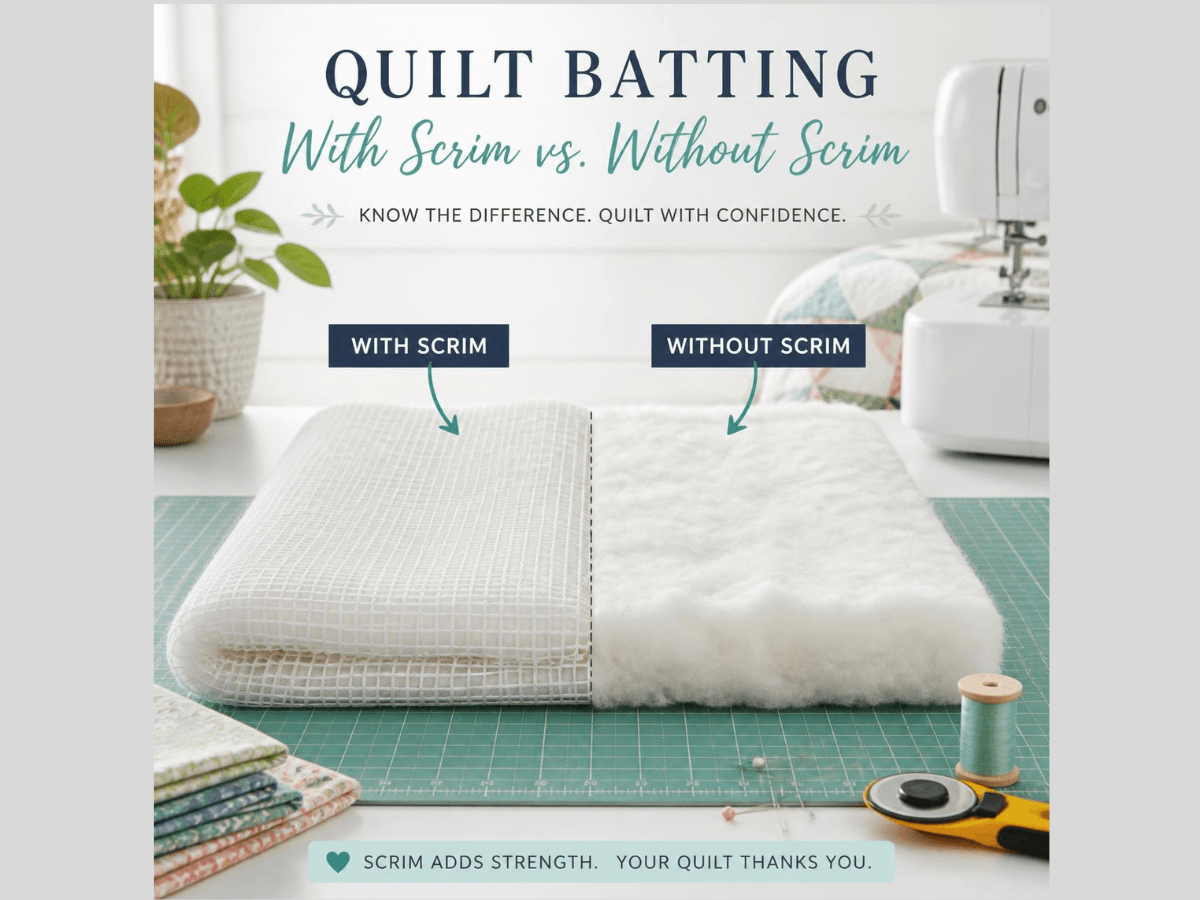
Quilt batting with scrim is batting that includes a thin stabilizing layer, usually a lightweight mesh, which holds the fibers together for added strength and stability. This scrim prevents shifting, allows wider stitch spacing, and makes quilting easier—especially with popular options like 80/20 cotton batting (a blend of cotton and polyester), such as Hobbs 80/20 Cotton Batting, known for its durability and machine-washable performance. In contrast, Hobbs Premium Cotton Batting and other 100% cotton batting do not have scrim, offering a softer, more natural feel with a slightly crinkled look after washing. While DIY methods can mimic scrim, they don’t match factory quality. Overall, use scrim batting for durability and ease, and 100% cotton batting for a classic, natural quilt finish.
Table of Contents
What Is Scrim in Quilt Batting?
So, what is batting with scrim, exactly? Scrim is a lightweight stabilizing layer bonded to one side of batting. It’s typically made from polyester, though some brands use cotton scrim to keep the batting closer to 100% natural fiber content. Manufacturers usually attach it by needle-punching, a process where thousands of small barbed needles push loose fibers through the scrim mesh, locking everything together. This is also the answer you’ll find any time you look up what is scrim batting or scrim on batting — it’s simply the mesh backbone holding the loft in place.
You can’t always see scrim on batting, but you can usually feel it. Run your hand across the batting and the scrim side will feel slightly rougher, thinner, or more “papery” than the loftier, softer side.
Why Manufacturers Add Scrim
Loose cotton or wool fibers naturally want to drift apart over time, especially through repeated washing. Scrim solves that by:
- Anchoring the fibers so they don’t shift, clump, or thin out in spots
- Preventing bearding — those little wisps of batting fiber that migrate up through the quilt top
- Allowing wider quilting spacing, since the mesh (not just the stitching) is holding the batting together
- Reducing stretch and distortion when you’re loading, rolling, or handling the quilt on a longarm frame
Scrim vs. No Scrim: What Changes
The presence of scrim affects three things a quilter actually cares about: quilting distance, hand vs. machine quilting, and fiber content.
| Feature | With Scrim | Without Scrim |
|---|---|---|
| Quilting spacing | Up to 8–10 inches apart | As close as ½–1 inch apart |
| Best quilting method | Machine quilting | Hand quilting or machine |
| Fiber purity | Usually blended (e.g., 80–97% cotton) | Can be 100% cotton, wool, or bamboo |
| Handling on a frame | More stable, resists tearing | More delicate, tugs and thins more easily |
If a batting label advertises 100% cotton and claims you can quilt several inches apart, that’s worth double-checking — true 100% cotton batting no scrim generally needs closer stitching to stay intact. Genuine 100% cotton batting with no scrim relies entirely on your quilting stitches to keep the fibers from shifting, so it rewards a denser quilting pattern.
Types of Batting That Commonly Include Scrim
Scrim shows up most often in these batting types:
- Cotton-blend batting — the most common home for scrim, since pure cotton fibers need the most help staying anchored
- Cotton/polyester blends — scrim adds extra hold on top of the polyester content already stabilizing the mix
- Polyester batting — some polyester battings still include scrim for extra structure on large quilts
- Bamboo and blended natural-fiber battings — scrim compensates for the fibers’ tendency to shift
Wool batting typically skips scrim altogether, since wool fibers naturally cling together and don’t beard the way cotton does.
How to Tell Which Side Has the Scrim
Before you fuse fabric to your batting or load it on a frame, it helps to know which side the scrim is on. A few quick checks:
- Feel test: The scrim side feels rougher or slightly pebbly compared to the soft, fluffy loft side.
- Look for a sheen or grid pattern: In good light, you may spot a faint woven or crosshatch texture.
- Check the label: Many manufacturers note which side the scrim is on, or state that it’s centered in the batting.
This matters most if you’re using fusible fabric. Ironing fusible web directly onto the scrim side can cause puckering or a rippled quilt, since the adhesive doesn’t bond evenly to the mesh. When in doubt, fuse to the loftier, non-scrim side.
Tips for Working with Scrim Batting
- Machine quilters benefit most. Scrim’s stability shines on longarm and domestic machines, where the batting gets pulled, rolled, and shifted during loading.
- Hand quilters may want to skip it. Scrim can make hand quilting stiffer and harder on the needle, so many hand quilters prefer batting without it.
- You still need some quilting. Scrim lets you space stitches farther apart, not skip quilting altogether. Follow the manufacturer’s recommended maximum spacing.
- No need to prewash. Because scrim already stabilizes the fibers, most brands don’t require prewashing before use.
- Orient it with the backing. If you can identify the scrim side, many quilters place it toward the quilt backing so the needle travels through the loft in the same direction it was needle-punched.
My Experience with Scrim Batting
I’ve quilted with both scrim batting and 100% cotton batting no scrim on projects ranging from baby quilts to full-size bed quilts, and the difference shows up the moment you load the quilt on a frame.
The first time I used cotton/poly batting with scrim on a longarm, I noticed right away how much less it tugged and thinned out at the edges compared to a plain cotton batting I’d used the month before. I was able to space my quilting lines about six inches apart on a medallion-style quilt without any bearding showing up after multiple washes. That same quilting spacing on a 100% cotton batting with no scrim would have left the fibers shifting and clumping in the wash — I learned that the hard way on an earlier project where the batting bearded through a loosely woven cotton top within a year.
On the flip side, when I hand-quilted a small wall hanging, I deliberately chose batting without scrim. The needle glided through far more easily, and the finished piece had that soft, old-fashioned drape that scrim batting just doesn’t give you. My rule of thumb now: scrim batting for anything going on a machine or longarm, and 100% cotton batting no scrim for hand work or projects where I want that vintage, relaxed feel.
Common Mistakes to Avoid
- Assuming all cotton batting is scrim-free. Many blends labeled “cotton” actually include a small percentage of polyester scrim — check the fiber content on the label. Only batting marked 100% cotton batting no scrim is truly free of it.
- Fusing directly to the scrim side. This is the most common cause of puckered or rippled quilts after pressing.
- Quilting too far apart on batting without scrim. Skipping enough stitching on a non-scrim batting risks the fibers shifting or clumping after the first wash.
- Ignoring the manufacturer’s spacing guidelines. Scrim brands vary — some allow 10 inches between quilting lines, others recommend closer stitching. Always check the packaging.
FAQ: Quilt Batting with Scrim
Is batting with scrim better than batting without it?
Neither is universally “better” — it depends on your project and quilting method. Scrim batting is more stable and forgiving for machine and longarm quilting, while non-scrim batting (often preferred for hand quilting) tends to feel softer and drapes more like traditional quilts.
Does scrim make a quilt stiffer?
Scrim adds a small amount of body to the batting, but it doesn’t noticeably stiffen the finished quilt after quilting and washing, since the scrim layer is very thin.
Can I hand quilt through scrim batting?
You can, but most hand quilters find it more difficult, since the needle has to pass through the extra mesh layer. Batting without scrim is generally easier for hand quilting.
Does scrim batting need to be prewashed?
Usually not. Scrim already stabilizes the fibers, so prewashing isn’t required the way it sometimes is with loose, unstabilized batting.
How do I know if my batting has scrim?
Check the product label first — most manufacturers list it. If the label isn’t clear, feel both sides of the batting; the scrim side will feel thinner and slightly rougher than the soft, lofty side.
What is the difference between scrim batting and 100% cotton batting no scrim?
Scrim batting has a mesh stabilizer that lets you quilt farther apart and holds up well on a machine or longarm. 100% cotton batting no scrim has no mesh, so it needs closer quilting lines to stay intact, but it’s softer, drapes better, and is easier to hand quilt.
Final Thoughts
Scrim is a small detail with a big impact on how your quilt behaves during construction and how it holds up over years of use. If you’re machine quilting, working on a longarm, or want more flexibility in your quilting design, batting with scrim is usually the more forgiving choice. If you’re hand quilting or want a softer, more traditional feel, batting without scrim may suit your project better. Either way, checking the label before you buy saves you from surprises once your quilt sandwich is already basted.
 Minty Mellon