

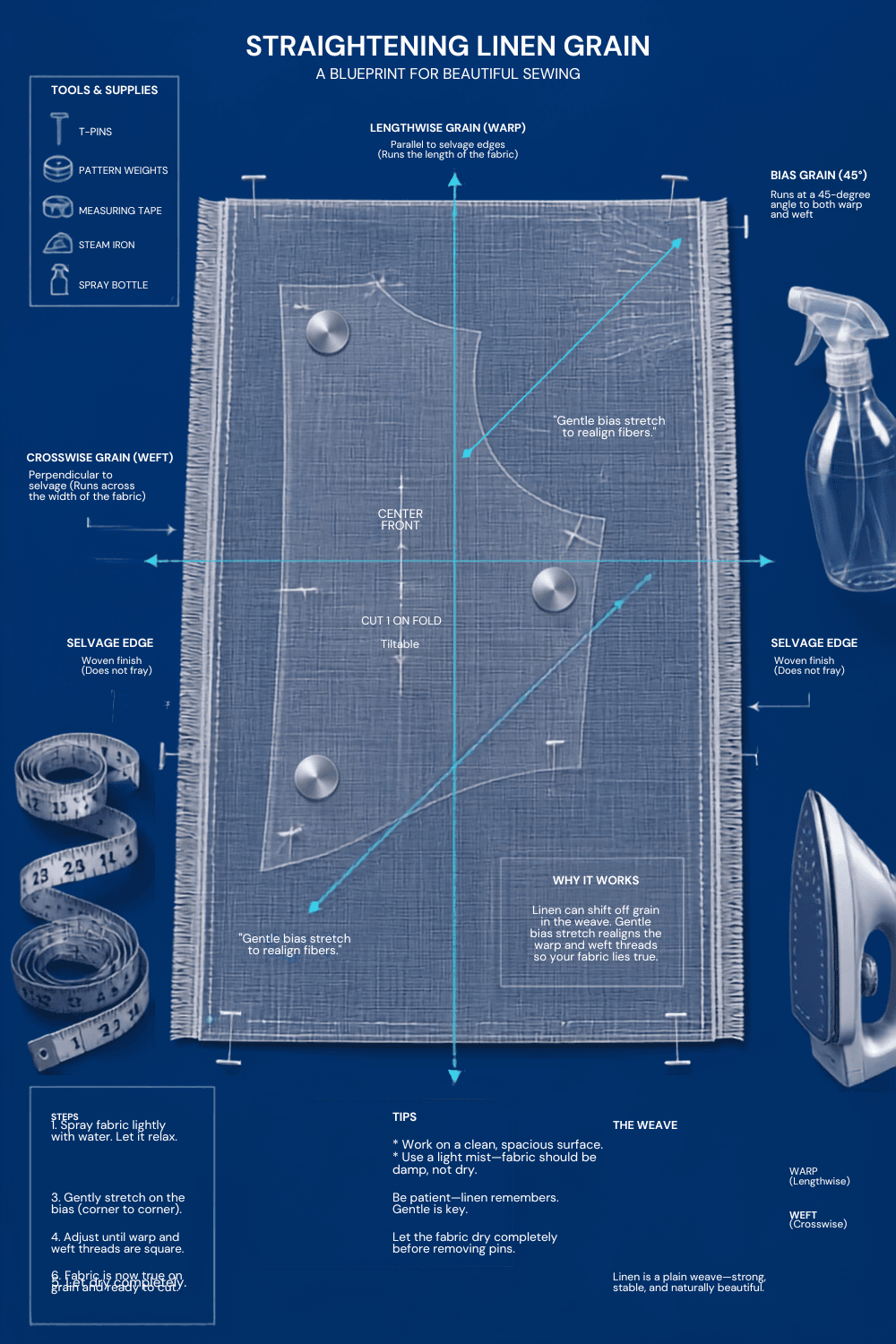
I still remember my first major sewing disaster. I cut fabric without checking the grainline, and the finished dress hung crooked and twisted. After years of sewing, I’ve learned that understanding fabric grain is non-negotiable for quality results. The grain of fabric refers to the direction of the warp and weft threads. When linen fabric becomes warped or misaligned during manufacturing or shipping, straightening the grain ensures your cut pieces hang properly and your seams align perfectly.
The “grainline of fabric” runs lengthwise along the warp threads, and recognizing its importance changed everything about how I approach cutting. Whether you’re working on home décor, garments, or appliqué projects, taking time to straighten grain linen prevents hours of frustration later.
Table of Contents
Understanding Fabric Grain: The Basics You Need to Know
Before straightening, you must understand what you’re working with. Grain line fabric has three directions: lengthwise grain, crosswise grain, and bias grain. The lengthwise grain runs parallel to the selvage edges and is the most stable. If you’re new to fabrics, understanding fabric types and basics will give you solid foundational knowledge about how different materials behave.
How to Find the Grainline on Fabric
Finding your grainline is straightforward:
- Look at the selvage edge: The manufacturing edge shows the lengthwise grain direction
- Feel the fabric: Linen feels smoother in one direction—that’s typically the grain line direction
- Pull gently: When you pull along the grain, fabric resists more than pulling across grain
- Check the crosswise grain: This grain runs perpendicular to the selvage and has less stability
I always remind myself: knowing how to find grain of fabric prevents mistakes that ripple through your entire project.
How to Straighten Grain Linen: The Method That Works
I’ve tried various approaches, but this technique gives the most reliable results:
What You’ll Need:
- A flat work surface (table or design wall)
- T-pins or pattern weights
- A spray bottle with water
- Measuring tape
- Optional: iron (for stubborn cases)
Step-by-Step Process:
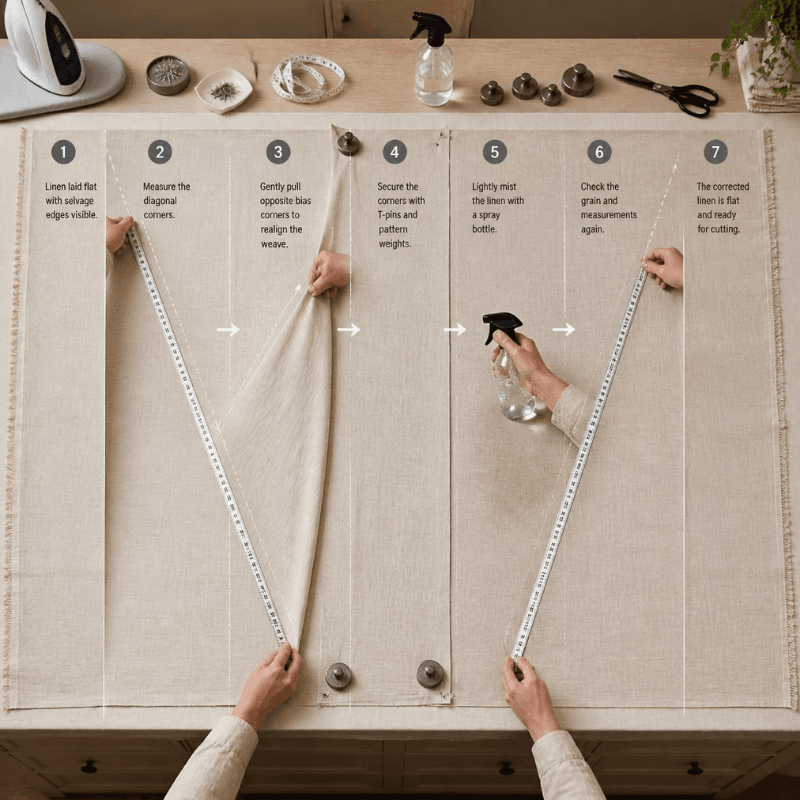
- Lay your linen flat with the selvage edges visible. This is your reference point for the lengthwise grain.
- Measure the diagonal corners of your fabric. Note these measurements.
- Gently pull the fabric at opposite bias grain corners. Apply pressure diagonally if the fabric is significantly warped. This physically aligns the weave.
- Pin or weight the corners in place while you work. This prevents the fabric from shifting back.
- Lightly mist with water and allow it to dry completely. Linen responds beautifully to moisture, and drying helps set the grain correction.
- Remeasure the diagonals. They should now be equal, indicating the grain is straight.
- Let it rest for 24 hours before cutting. This ensures the fabric maintains its corrected position. After straightening, you’ll be ready to cut and potentially baste your fabric for your project.
Pro Tips from My Sewing Room

Before you cut fabric straight, grain must be genuinely corrected. I’ve made enough mistakes to know:
- Tension matters: Over-pulling damages delicate fabrics and creates permanent distortion. Understanding proper sewing tension prevents issues both during straightening and at the machine
- Humidity helps: I straighten grain linen on slightly humid days when the fibers are more pliable
- Width consistency: If straightening a large piece, work in sections to maintain even tension
- How to cut a straight line on fabric starts with grain correction—no straight cut compensates for warped fabric
Common Mistakes I Made (So You Don’t)
- Rushing the drying process and assuming correction set immediately
- Confusing what is the grainline with bias lines
- Not securing corners, causing fabric to shift during drying
- Ignoring fabric pull and tension requirements
If you’re learning, consider practicing these techniques on fabric scraps before your main project to build confidence without wasting quality material.
FAQ About Straightening Grain Linen
What’s the difference between grainline and bias grain?
Grainline is the lengthwise grain running parallel to selvage. Bias runs at 45-degree angles and stretches significantly.
Can you straighten synthetic weave the same way?
Synthetic fabrics respond differently to moisture. Use low-heat ironing instead of water-based methods.
How do I know if fabric is actually warped?
Measure diagonals. If they’re unequal, your fabric grain needs correction. This is especially common in linen trimming situations.
Does straight grain fabric stay straight after straightening?
If properly straightened and stored flat, it maintains alignment. Moisture and humidity can cause minor shifts.
Why is grainline sewing so important?
Proper grain line ensures garments hang correctly and seams sit where intended, creating professional results.