
A pattern written for stretchy knit fabric fails completely in stiff, structured cotton — same instructions, opposite result. Fabric choice isn’t a finishing detail; it’s the decision that determines whether a garment fits, drapes, and holds up the way the pattern intended. Here’s what actually separates one fabric type from another, and why it matters before scissors ever touch the cloth.
Table of Contents
Woven vs. Knit Fabric
The distinction that matters most is how the threads are constructed.
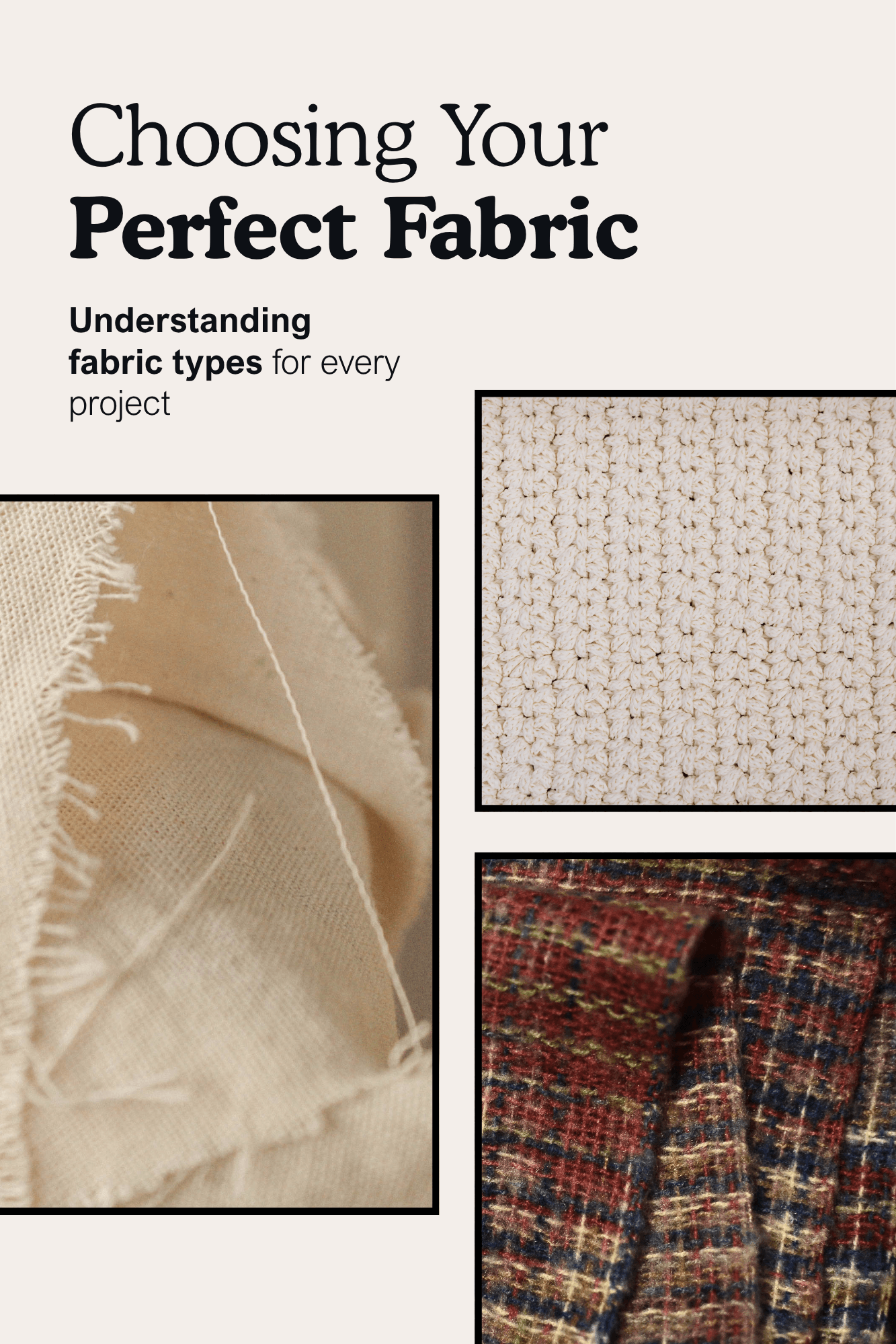
Woven fabric is built from two sets of threads crossing at right angles — warp and weft. Little to no stretch, holds shape well, frays along cut edges. Cotton quilting fabric, denim, linen — all wovens.
Knit fabric is made from interlocking loops of thread, the same logic as hand-knitting. That structure gives it natural stretch and a softer drape, though it curls at raw edges and doesn’t fray the way wovens do. Jersey, rib knit, fleece.
Patterns specify woven or knit for a reason — fit and construction methods diverge sharply depending on which one is in play.
Common Fabric Types and Their Uses
Cotton is the most forgiving fabric to learn on: easy to cut, press, and stitch, with predictable behavior. Quilting cotton is crisp and holds shape; cotton lawn and voile are lighter and drapier.
Linen breathes well and carries a distinctive texture, but wrinkles fast and frays more readily than cotton.
Denim is a heavyweight, durable cotton twill — pants, jackets, bags — that calls for a stronger needle and heavier thread.
Silk drapes beautifully and weighs almost nothing, but it’s slippery to cut and sew, and prone to water spots.
Wool is warm and durable, the standard for coats and tailored garments. Presses well; shrinks if handled carelessly.
Jersey is the most common knit — soft, stretchy, the fabric behind most T-shirts and casual wear.
Fleece is thick, warm, and doesn’t fray at all, which makes it forgiving territory for beginners on cold-weather projects.
Polyester and blends trade some breathability for durability, wrinkle resistance, and lower cost.
Canvas is heavy and tightly woven — bags, upholstery, outdoor gear — prized specifically for its strength.
Understanding Fabric Weight
Fabric weight describes how heavy or thick material is, measured in grams per square meter (GSM) or ounces per yard. As a guide:
- Lightweight (chiffon, voile, lawn): blouses, linings, scarves
- Medium weight (quilting cotton, poplin, linen): dresses, shirts, quilts
- Heavyweight (denim, canvas, wool coating): jackets, bags, upholstery
Matching weight to what a pattern recommends is what makes a finished piece drape, move, and hold up the way it’s supposed to.
Fabric Grain and Why It Matters
Every woven fabric has a “grain” — the direction its threads run. The lengthwise grain runs parallel to the selvage and has the least give. The crosswise grain runs perpendicular with slightly more stretch. The bias, cutting diagonally across both at 45 degrees, carries the most stretch and drape of the three.
Cutting pattern pieces “on grain” keeps garments hanging correctly instead of twisting after a few washes.
Pre-Washing Fabric
Natural fibers especially shrink on their first trip through the wash. Pre-washing before cutting prevents uneven shrinkage later — check the care label, or test a swatch first if there’s any doubt.
Tips for Choosing Fabric as a Beginner
- Start with quilting cotton or another stable, medium-weight woven — forgiving to cut, press, and stitch.
- Skip very slippery fabric (silk, satin) and very stretchy knits until basic skills are in place.
- Buy extra yardage to cover mistakes, especially with directional prints or plaids that need pattern matching.
- Feel the fabric in person before buying — texture and drape communicate more than any photo.
Final Thoughts
Woven versus knit, fabric weight, and grain aren’t academic distinctions — they’re the working knowledge that prevents most beginner mistakes before they happen. Get comfortable with a handful of reliable fabric types, and trickier ones like silk or stretch knits stop being intimidating.