

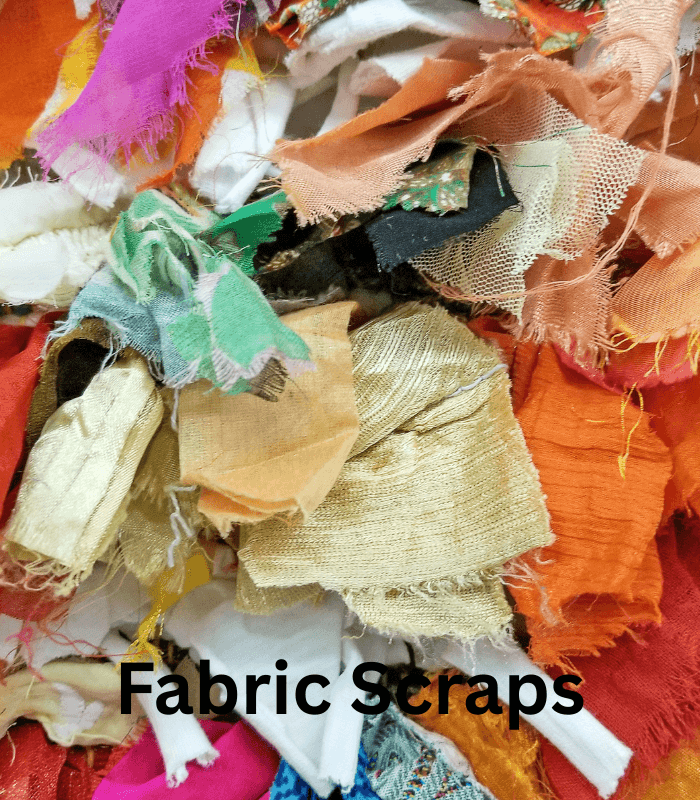
My scrap bin lived under the cutting table for almost two years before I actually opened it. When I finally did, I found a piece of the linen from my first successful shirt, a triangle of the flannel I used for a niece’s baby quilt, and enough small denim offcuts to piece an entire pouch collection. None of it was clutter, really. It was a timeline of every project I’d made, sitting there unused because I’d never treated it as a resource in its own right.
Table of Contents
Why Practice on Scraps First
Before cutting into new fabric for a real project, scraps make it possible to:
- Test stitch length, tension, and needle choice without risk
- Practice an unfamiliar technique — a zipper, a buttonhole — before it touches an actual garment
- Get a feel for how an unfamiliar fabric behaves, drape and fraying tendency included
- Build muscle memory for straight lines, curves, and pivots
I keep a small “practice basket” next to the machine specifically for this — any new stitch, any new fabric, gets tested there first. It’s saved me from at least a dozen ruined buttonholes over the years.
Skill-Building Practice Exercises
Straight line practice: draw straight lines on scrap fabric with chalk and sew along them, keeping the seam allowance even against the needle plate’s guides.
Curve and pivot practice: draw gentle curves and sharp corners, then stitch around them smoothly, pausing with the needle down at each pivot.
Zigzag and decorative stitch practice: test the machine’s built-in stitches on scraps to see how they actually behave before using them on something real.
Buttonhole practice: test the buttonhole function and fine-tune stitch density before committing to a garment. I still do this every time I switch fabric weight — the one time I skipped it on a heavier wool coating, the buttonhole came out dense and stiff enough to nearly jam the machine.
Tension testing: fold a scrap in half and sew a line to check whether top and bottom tension balance — especially useful whenever fabric type changes.
Hand stitch practice: use scraps to run through running stitch, backstitch, whipstitch, and the rest of the hand-sewing basics without any pressure riding on the outcome.
Small Projects for Fabric Scraps
Scrap fabric coasters: cut small squares, layer with batting or interfacing, quilt simple lines, bind the edges — the first thing I ever made entirely from scraps, and still what I make when I need a low-stakes evening project.
Patchwork pouches: piece scraps into a small patchwork panel, then sew it into a zippered pouch for pencils, makeup, or small tools.
Fabric scrap quilts: the classic use for accumulated scraps — piece into a simple block pattern for a lap quilt, baby quilt, or pillow cover. That flannel triangle from my niece’s quilt scraps eventually became a matching pillow, years later.
Scrunchies and hair ties: minimal fabric, quick turnaround, and a chance to practice elastic casing technique.
Pin cushions: stuffed with fiberfill or rice, small and quick, a good way to practice hand or machine finishing.
Fabric scrap garlands or bunting: cut shapes from an assortment of scraps and string them together for decorative bunting.
Appliqué accents: cut motifs from patterned scraps and appliqué them onto plain garments, bags, or home decor.
Mug rugs or mini place mats: slightly larger than a coaster, popular among quilters for combining piecing and quilting practice in one project.
Fabric-covered buttons or hair clips: barely any fabric required, and honestly the best use I’ve found for scraps too sentimental to throw out.
Organizing Your Scrap Stash
- Sort by size (usable strips, medium pieces, tiny bits) so future projects are easier to plan.
- Store by color family for anyone who regularly pieces scrap quilts, so complementary shades are easy to find.
- Set a size cutoff — pieces under roughly 2 inches square are usually better used as stuffing than kept indefinitely. I ignored this rule for years and paid for it with an overflowing bin.
- Use clear bins or labeled boxes so scraps don’t turn into an unsorted pile no one wants to touch.
Tips for Successful Scrap Projects
- Press scraps flat before cutting anything new from them; folded storage leaves stubborn creases.
- Mix fabric weights carefully — pairing very different weights (silk with denim) in one project can cause uneven wear or stitching problems.
- Treat scrap projects as low-stakes practice, not perfection — the exact place to try a technique too nerve-wracking to attempt on good fabric.