

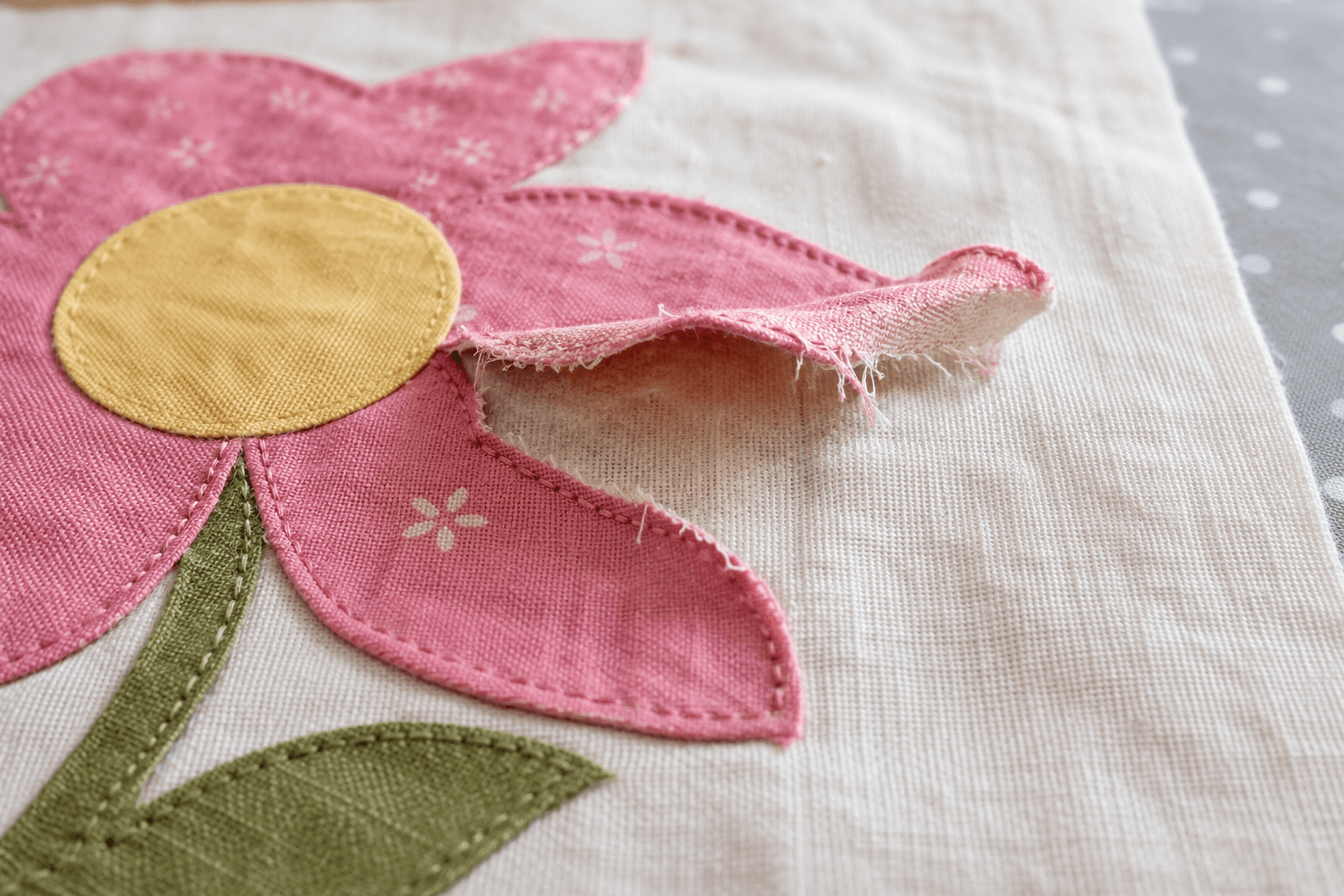
Your appliqué isn’t sticking because of one (or more) of these: not enough heat, not enough pressure, not enough time, a worn-out iron, or fusible web that’s old or mismatched to your fabric. Fix the heat-press-time combo and use fresh, fabric-appropriate fusible web, and your appliqué will hold every time.
I’ve had this exact problem more times than I’d like to admit — a “finished” appliqué block that looked great on Monday and had curling edges by Wednesday. After years of troubleshooting my own projects (and hearing the same complaints from readers of this site), I’ve narrowed it down to a short list of repeat offenders. This guide walks through every one of them, in the order I’d check them myself, and includes the exact fixes that worked when I tested them on real fabric scraps — not just theory from a product label. If you want to see how appliqué works in a real project, check out this appliqué quilt with stitched flowers tutorial for a complete example.
Table of Contents
The 5 Most Common Reasons Appliqué Won’t Stick
- Not enough heat or pressure from the iron
- Fusible web is old, dried out, or the wrong type for your fabric
- Iron didn’t stay in one spot long enough (dragging instead of pressing)
- Fabric is too thick, too textured, or has a coating the adhesive can’t grip
- You skipped the cool-down step and moved the fabric while it was still soft
If you’re in a hurry, start with your iron. It’s the cause behind most fusing failures.
How Fusible Appliqué Actually Works
Fusible web is a thin sheet of heat-activated adhesive, usually sandwiched between two layers of paper. When you apply heat and pressure, the adhesive melts and soaks into the fibers of both fabrics. As it cools, it hardens and locks the layers together.
That means sticking isn’t really about “glue” — it’s about melting the adhesive fully and letting it re-solidify inside the fabric weave. If any part of that process is interrupted, the bond fails. Different methods behave differently, so understanding the different types of appliqué and how they work can help you choose the right technique.
Cause 1: Your Iron Isn’t Hot Enough (or Isn’t Hot Enough for Long Enough)
This is the #1 reason appliqué peels.
Most fusible web brands need a cotton or wool heat setting with no steam, held for 10–15 seconds per section, with firm, straight-down pressure. If your iron runs cool, has a worn thermostat, or you’re moving it around like you’re ironing a shirt, the adhesive never fully melts.
Fix:
- Set your iron to the temperature listed on your fusible web’s packaging (not a guess).
- Turn off steam — moisture can interfere with the melt.
- Press straight down and hold. Don’t glide the iron back and forth.
- Work in overlapping sections for large appliqué shapes, so no spot gets skipped.
Cause 2: You’re Ironing, Not Pressing
There’s a real difference between ironing a shirt and fusing appliqué. Ironing glides. Fusing presses.
If you slide the iron across a fusible appliqué the way you’d smooth a wrinkle, you disturb the melting adhesive before it sets and can shift the fabric out of place.
Fix: Lift and press, lift and press. Treat the iron like a stamp, not a broom.
Cause 3: Old or Low-Quality Fusible Web
Fusible web has a shelf life. Adhesive can dry out, become brittle, or lose tackiness — especially if it’s been stored somewhere hot or humid, like a garage or car.
Cheaper fusible webs also tend to have a thinner adhesive layer, which struggles on textured or heavier fabrics.
Fix:
- Check the age of your fusible web. If it’s more than a couple of years old or feels stiff and flaky, replace it.
- For anything beyond quilting cotton (denim, canvas, felt), use a heavyweight fusible web made for those fabrics.
Cause 4: Fabric Type Is Fighting the Adhesive
Not all fabric takes fusible web equally well:
- Slick or coated fabrics (some flannels, laminated cottons, performance fabrics) resist adhesion because the coating blocks the fusible web from reaching the fibers.
- Loosely woven or textured fabrics (linen, some wools) have gaps that let the adhesive pool unevenly.
- Very thick fabrics (denim, canvas) may need extra time and a higher-hold fusible web to get a full bond.
Fix:
- Test a scrap first. If it doesn’t stick after a normal press, don’t fight it — switch to a stronger-hold or specialty fusible web.
- For tricky fabrics, add a line of appliqué glue or a few hand stitches as backup, even after fusing.
Cause 5: You Moved It Before It Cooled
This one catches beginners the most. Fresh off the iron, fused adhesive is still soft. If you pick up the fabric, fold it, or start sewing right away, the bond can shift or peel before it fully hardens.
Fix: Let the piece cool completely on a flat surface — usually 1–2 minutes — before handling it. Patience here saves you from redoing the whole step.
Cause 6: No Pressing Cloth or Wrong Ironing Surface
Ironing directly on a shifting or padded surface (rather than a firm, flat one) reduces the pressure that actually reaches the fusible web. Skipping a pressing cloth can also cause adhesive to stick to your iron plate, which then transfers unevenly to future projects.
Fix:
- Iron on a firm, flat surface — a wooden ironing board or a folded towel over a hard table works well.
- Use a pressing cloth or parchment paper between your iron and the appliqué to protect both the fabric and your iron.
Tools & Materials That Make Fusing Reliable
- A hot iron with an accurate thermostat (no steam function needed for fusing)
- Fresh fusible web rated for your fabric weight
- A pressing cloth or parchment paper
- A firm, flat ironing surface
- A timer or count, if you tend to rush (10–15 seconds per section is a good baseline)
Common Beginner Mistakes to Avoid
- Using steam when the fusible web instructions say dry heat only
- Pressing once quickly instead of holding with firm pressure
- Skipping the fabric test before committing to your final piece
- Handling the appliqué before it’s fully cooled
- Reusing fusible web that’s already been ironed once (it loses tack)
- Assuming all fusible webs work the same across fabric types
Frequently Asked Questions
Why does my appliqué stick at first but peel off after washing?
This usually means the adhesive melted on the surface but never fully penetrated the fabric fibers — often from too little heat or too short a press time. A quick surface fuse can look secure at first and still fail in the wash. Re-press with more heat and hold time, and consider reinforcing the edges with a straight or zigzag stitch for anything that will be washed regularly.
Can I use appliqué without fusible web?
Yes. You can hand-baste or pin the appliqué in place and stitch it directly, or use a fabric glue stick as a temporary hold before sewing. Fusible web just makes the process faster and keeps edges from shifting while you stitch.
Do I need steam to fuse appliqué?
No. Most fusible web brands recommend a dry iron, since steam adds moisture that can interfere with the adhesive melting evenly.
How long should I press appliqué for it to stick properly?
Roughly 10–15 seconds per section with firm, direct pressure is a solid starting point, but always check your specific fusible web’s packaging — hold times vary by brand and thickness.
Why won’t appliqué stick to denim or canvas?
Heavier fabrics need more time and often a stronger-hold fusible web made for medium-to-heavyweight materials. A standard lightweight fusible web frequently isn’t enough for these fabrics on its own.
Final Tip From Experience
If you only remember one thing from this guide: heat, pressure, and time have to work together — and none of them can be rushed. Most sticking problems trace back to skipping or shortening one of the three. Slow down, test on scraps first, and let every piece cool undisturbed before you move it.
Sources & Further Reading
Heat and hold-time recommendations were cross-checked against manufacturer instructions for common fusible web brands (e.g., HeatnBond, Wonder-Under, Pellon). Always defer to the specific instructions printed on your fusible web packaging, since formulas vary by brand.
About this guide: Written and tested by the AppliquéFits team and Sarah McLean, who work hands-on with appliqué projects across a range of fabrics — from quilting cotton to denim and laminates — and update these guides as techniques and materials change. Have a fusing problem this guide didn’t solve? Let us know and we’ll test it.