
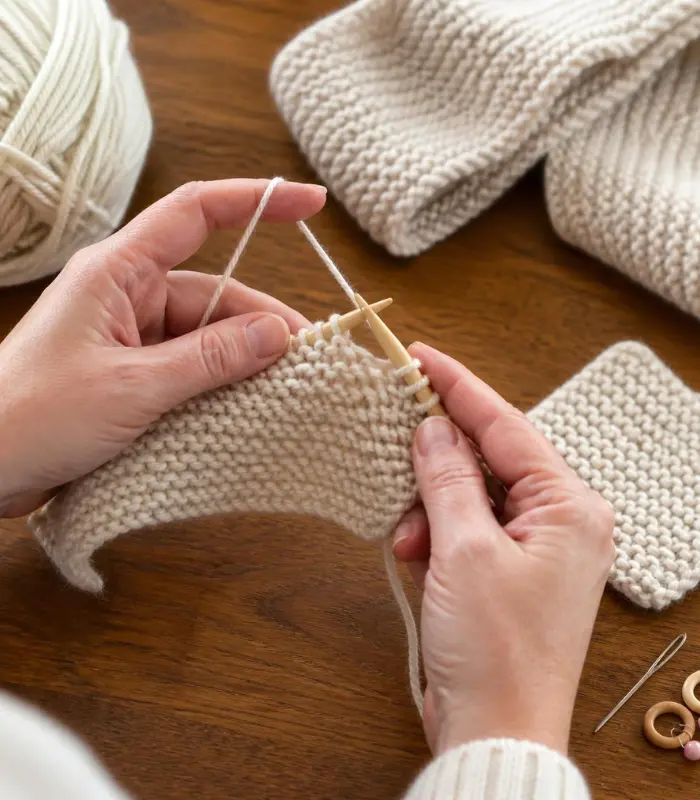
When I picked up knitting needles three years ago, I thought it was impossibly complex. Needles clicking, yarn tangling, everything looked like chaos. A mentor told me, “Knitting isn’t about being perfect—it’s about showing up and practicing one stitch at a time.” That simple advice changed everything. Today, I’ve taught over 50 people to knit, and I’m sharing exactly what I’ve learned.
Table of Contents
Understanding Basic Knitting Stitches
Starting knitting patterns isn’t complicated—it all comes down to learning two foundational stitches. Everything else builds from there.
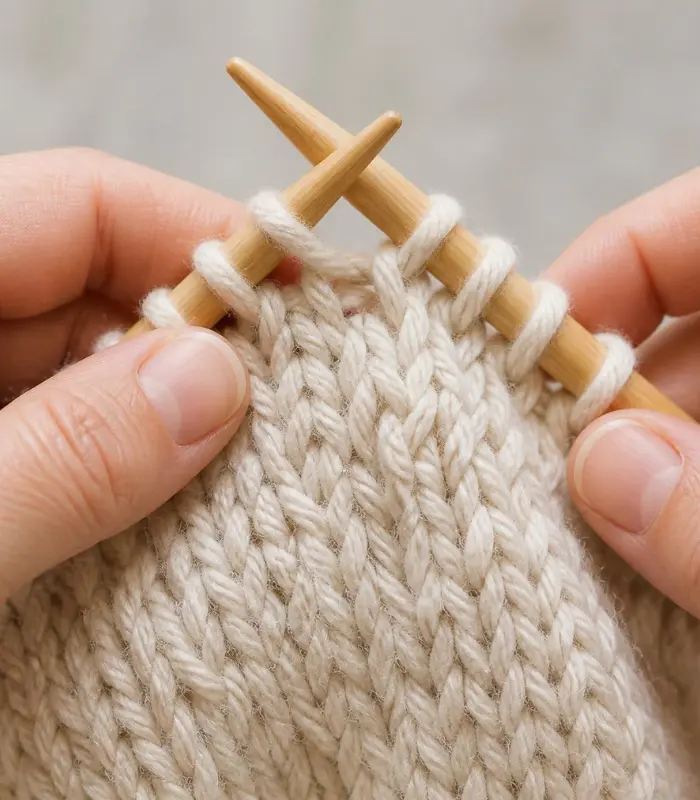
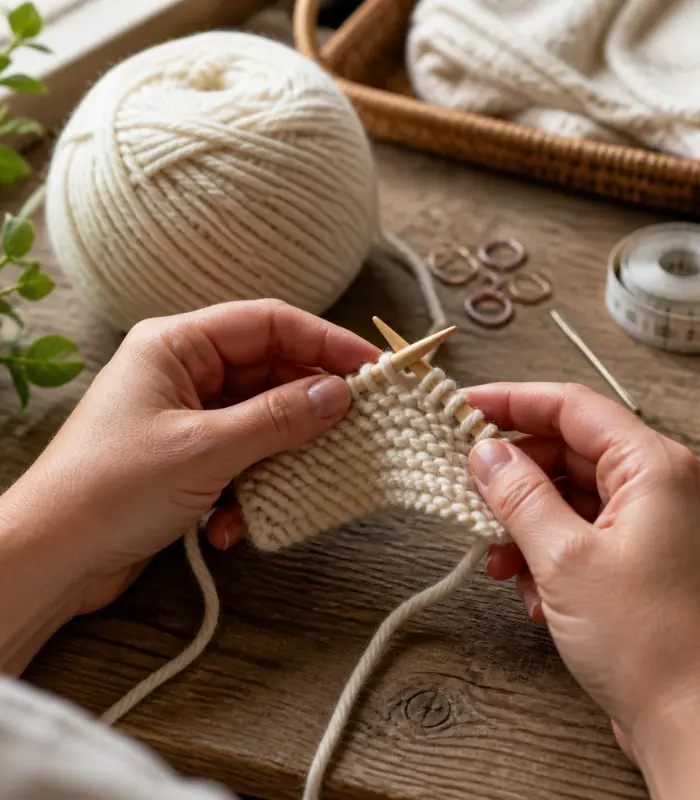
The Knit Stitch (K) is the most basic stitch. You insert your needle through a loop, wrap yarn around it, and pull it through. It creates a smooth, bumpy texture. This is your foundation.
The Purl Stitch (P) is essentially a knit stitch in reverse. It looks different—it creates a raised bump texture. When you alternate knit and purl rows, you create a pattern that looks intentional and professional.
When I first learned these two stitches, I realized they’re literally the building blocks for every single knitting pattern. Everything else—from simple knitting designs for beginners to complex projects—uses these same motions repeated over and over.
Essential Tools Before You Start
You don’t need expensive equipment. I’ve seen beginners make beautiful knitting projects with basic supplies.
What You Actually Need:
- Knitting needles (bamboo or metal, Size US 6-8 for learning)
- Yarn (worsted weight, light color so you can see stitches)
- Yarn needle (for weaving in ends)
- Stitch markers (even safety pins work)
That’s it. Start there. Advanced tools come later.
knitting images
Your First Easy Knitting Projects
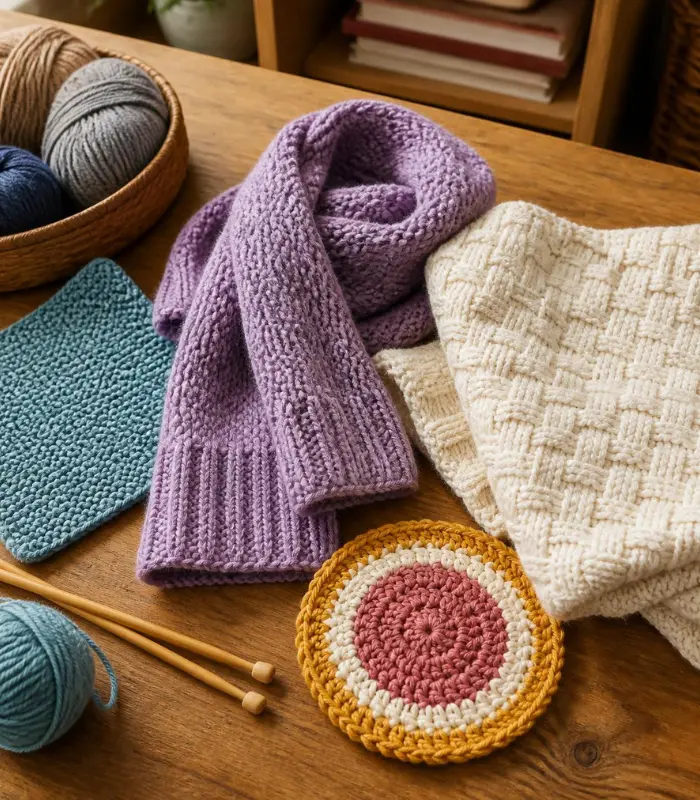
I always recommend these beginner knitting projects because they build confidence without frustration.
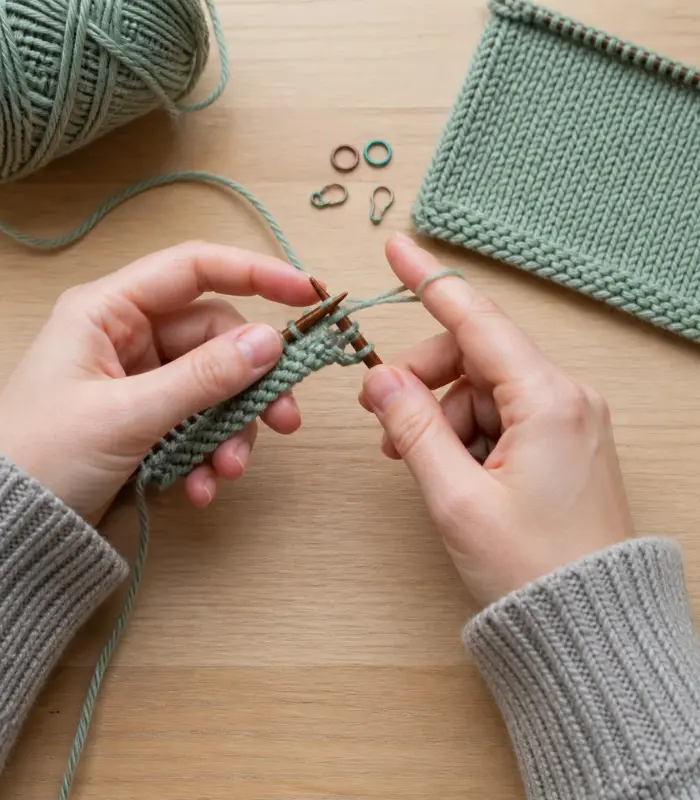
The Dishcloth (Best First Project) This is the perfect first knitting project. Cast on 30 stitches, knit every row until it’s a square. Bind off. Done. Your first completed project teaches you stitch consistency while producing something useful.
The Scarf (Most Satisfying) Cast on 20 stitches. Knit every row for 60 inches. Simple. Meditative. You’ll watch it grow, and that feeling is incredible. This teaches you rhythm and endurance.
The Baby Blanket (Show-Off Quality) Garter stitch (knit every row) on larger needles creates a beautiful blanket quickly. I learned beginner knit patterns this way—simple enough to not frustrate, impressive enough to feel accomplished.
Step-by-Step: How to Start Your First Project
Step 1: Cast On Create your foundation stitches on one needle. I use the long-tail cast-on because it’s the most forgiving.
Step 2: Work Your Rows Insert needle through first stitch, wrap yarn, pull through. Do this across the entire row.
Step 3: Develop a Rhythm After 10 rows, your hands relax. After 20 rows, you stop thinking about the motion. This is when easy knitting patterns become enjoyable.
Step 4: Bind Off When your project reaches the desired length, bind off to secure stitches permanently.
Common Mistakes I Made (And Teach Others to Avoid)
Mistake 1: Choosing Complicated Yarn Slippery or fuzzy yarn hides your stitches. Use smooth, light-colored yarn until you’re confident.
Mistake 2: Needles That Don’t Match Using mismatched needle sizes creates uneven tension. Keep pairs together.
Mistake 3: Expecting Perfection Immediately Your first rows will look wonky. Everyone’s do. This is completely normal.
Mistake 4: Not Learning to Read Your Stitches Understanding what each stitch looks like prevents dropped stitches from becoming disasters.
Quick Beginner Knit Pattern Ideas
Once you master the two basic stitches, try these:
- Simple Dishcloths: Just knit stitch in different colors
- Washcloths: Mix knit and purl rows for texture
- Hand Warmers: Small rectangle, sew sides—done in one afternoon
- Coasters: Tiny projects for gifts (easy knit gifts people actually use)
These small knitting ideas teach you fundamentals while staying manageable.
FAQ
What’s the easiest thing to knit as a beginner?
A garter stitch dishcloth (knit every row). It teaches stitch consistency without patterns.
How long before I can knit a real project?
About 2-3 hours of practice. You can create a basic scarf or blanket after that.
What if I drop a stitch?
Don’t panic. Pick it back up with a crochet hook. You’ll develop this skill quickly.
Should I use circular or straight needles?
Start with straight needles. They’re intuitive for beginners learning how to knit.
How do I find good beginner knitting patterns?
Look for patterns marked “beginner friendly” or “garter stitch only.” These simple knitting patterns teach you more than complicated ones.