

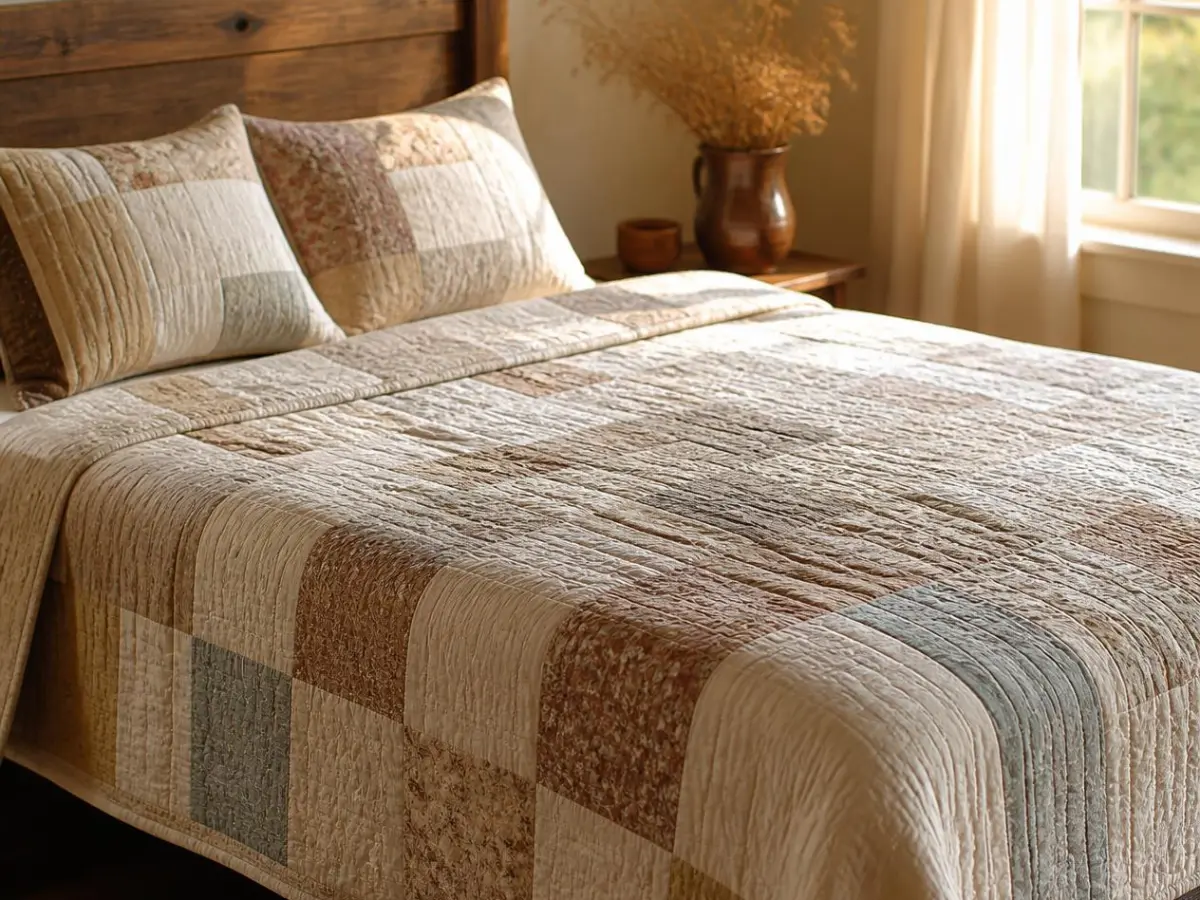
If you’ve ever picked up a well-loved quilt at a family gathering and thought, “why does this feel so soft and a little crinkly, in the best way?” — there’s a good chance you were holding a cotton quilt made with cotton batting. All three layers of the quilt sandwich (top fabric, batting, and backing) are 100% cotton, no polyester, no blends. That’s what gives these quilts their flat, breathable, old-fashioned feel, and it’s a big part of why so many quilters, myself included, keep coming back to this combination.
Table of Contents
Why This Pairing Just Works
Fabric choices in quilting don’t exist in isolation. What you pick for your batting affects how your top fabric behaves, and vice versa. Keep everything in the same fiber family, and a lot of little problems just disappear.
A few reasons this combo has stuck around for generations:
- It breathes, so you’re less likely to wake up sweaty under an all cotton quilt.
- It lies flat, giving that classic, almost antique-looking drape instead of a puffy comforter look.
- It behaves under the needle, gripping just enough to keep layers from sliding while you quilt.
- It ages gracefully — wash a cotton-on-cotton quilt a few dozen times and it gets softer, not worse.
- Everything shrinks together, so you don’t end up with weird puckering where one layer pulls tighter than another.
When someone walks into one of my workshops for the first time, this is almost always what I steer them toward. It presses flat without a fight and doesn’t punish small mistakes the way slippery poly blends can.
Not All Cotton Batting Is Created Equal
“Cotton batting” isn’t just one product — a few variations are worth knowing:
- Natural, unbleached cotton – sometimes has tiny flecks of cotton seed; part of the rustic look some quilters want.
- Bleached white cotton – cleaner and brighter, a safer bet for quilts with a lot of white or pale fabric.
- Cotton-poly blends (often 80/20) – mostly cotton, with just enough polyester to bump up loft and cut down on shrinkage.
- Needle-punched cotton – mechanically processed so fibers hold together more firmly, needing less dense quilting.
Check the shrinkage percentage on the packaging before deciding whether to prewash — it genuinely changes how your finished quilt looks and feels.
How to Actually Make One
What You’ll Need
- 100% cotton top fabric (pieced, appliquéd, or just a favorite print)
- 100% cotton backing fabric
- Cotton batting, cut a few inches bigger than your top on every side
- Curved safety pins, or basting spray if pins aren’t your thing
- A walking foot, if you’re machine quilting
- Cotton quilting thread
The Steps
- Decide on prewashing. Some quilters do it to avoid shrinkage surprises. Others skip it because they love the soft, crinkled texture cotton batting gets after its first wash. Neither answer is wrong.
- Build your quilt sandwich. Backing right-side down first, batting next, then your pieced top right-side up. Smooth out any wrinkles before moving on.
- Baste it well. Cotton batting has some natural grip, but don’t skip this step. Pin roughly every 4 to 5 inches, or reach for basting spray.
- Start quilting. Straight lines, a simple grid, or gentle free-motion curves all work well with cotton’s low loft, letting your pieced pattern be the star.
- Trim and bind. Square everything up and add binding to finish off the raw edges.
A Few Things I’d Tell You to Watch For
- Don’t skip checking the shrinkage percentage, or you might be surprised by how much the quilt crinkles after its first wash.
- Try not to stretch the batting while basting. Overstretching can distort your finished shape.
A Few Things That Actually Help
- If you’re making something that needs to drape softly, like a garment, go with the lowest loft cotton batting you can find.
- Test your quilting spacing on a scrap first. Most cotton batting handles lines spaced 8 to 10 inches apart without bunching.
Questions I Get Asked a Lot
Is cotton batting good for someone just starting out?
Yes. It’s low-loft, grips fabric layers just enough during basting, and is easy to work with by hand or machine.
Will my cotton quilt shrink?
A little, if you don’t prewash. That slight shrinkage gives cotton quilts their soft, crinkled texture, which many quilters prefer over a smooth finish.
Can I use cotton batting with polyester fabric instead?
You can, but matching fiber types keeps shrinkage and washing behavior consistent, meaning less puckering and more even aging.
How far apart should my quilting lines be?
Most cotton batting is fine with lines spaced 6 to 10 inches apart, though this varies a bit by brand.
Is cotton warmer than polyester?
Not really. Polyester traps more heat for its weight, but cotton breathes better, which is why so many quilters choose it for everyday and warm-weather quilts.
Written By Sara McLean, Textile & Appliqué Specialist — 12+ years quilting experience
 Minty Mellon