
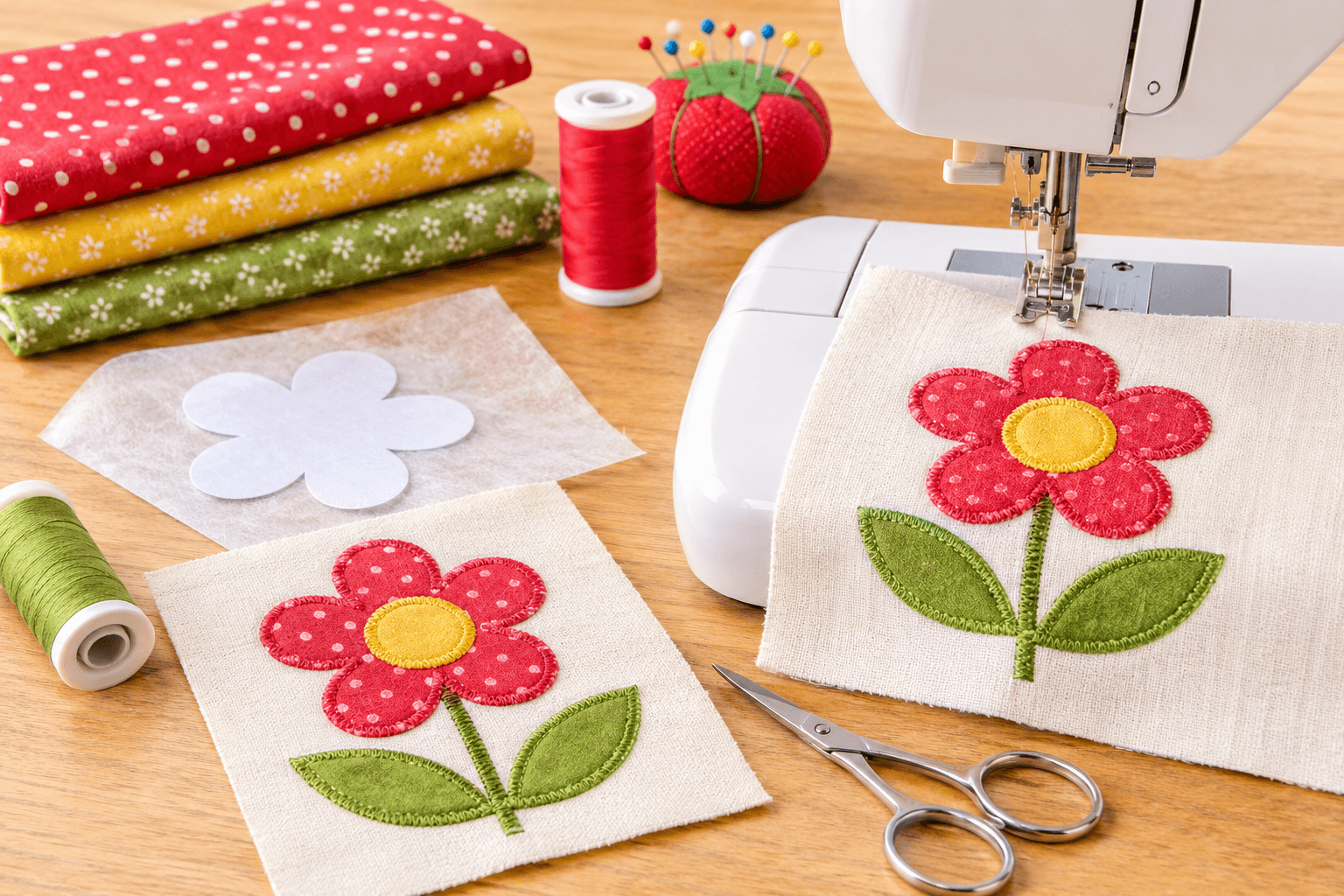
Applique on a sewing machine means “stitching a fabric shape onto a base fabric with a zigzag, satin or blanket stitch. You need fusible web, a fabric scrap, stabilizer and a machine that does zigzag“. Most beginners finish a small design in an afternoon.
Table of Contents
What is applique in sewing?
Applique in sewing is the craft of stitching a fabric shape onto another fabric to make a picture or pattern. You see it on quilts, kids’ clothes and tote bags. Machine applique is the fast version, because the stitch seals the raw edge for you.
My first try
I used to think sewing machine applique needed an expensive embroidery machine. My first try on a plain zigzag machine puckered like a potato chip. The fix was boring: stabilizer and a test scrap. After that, everything got easier.
What you need
- A base fabric, like a quilt block or a shirt
- A fabric scrap for the shape
- Fusible web
- Tear-away stabilizer
- Thread that matches or contrasts
- Small, sharp scissors
- An open-toe foot, if you have one
Any machine with a zig zag stitch will do.
How to applique on a sewing machine
- Draw a simple shape on the paper side of the fusible web. Letters and other shapes with a direction must be drawn in reverse.
- Iron the web onto the back of your scrap, then cut along the line.
- Peel off the paper, place the shape on your base fabric, and iron it down.
- Put stabilizer under the base fabric.
- Choose your stitch. Start with a narrow zigzag and a short length, and test on a scrap first.
- Stitch around the edge. Keep the raw edge under the middle of the stitch. Leave the needle down to pivot at corners.
- Tear away the stabilizer and trim loose threads.
Applique stitches: which one to pick
- Straight stitch applique: quick and casual, with a soft raw-edge look.
- Zigzag stitch applique: the easy all-rounder. It seals the edge.
- Satin stitch applique: a tight, dense zigzag that makes a smooth, bold border. It looks neat on letters.
- Blanket stitch by machine: a handmade look, with little stitches that reach into the fabric.
If you sew on a Necchi, find the stitch numbers in your manual. Names and numbers vary between brands.
Reverse applique on a sewing machine
For reverse applique, put the fabric behind the garment, stitch the shape, then cut the top layer away inside the stitching. It works best on knits like sweatshirts, because they do not fray.
How to applique on a quilt
For applique on a quilt, I finish the shapes on the block before I layer the quilt sandwich. Fusible raw-edge applique keeps it simple. A narrow zigzag or machine blanket stitch holds each piece in place.
Applique with an embroidery machine
An embroidery machine does the same job automatically. It stitches a placement line, then a tack-down line, then a satin border, and you pause to trim between steps. Embroidery machine applique is great for repeats, but you do not need one to start.
Mistakes I made
- Puckering: I skipped stabilizer. Use it.
- Gaps at corners: I rushed. Slow down and pivot with the needle down.
- Frayed edges poking out: Use fusible web and a slightly wider stitch.
- No test scrap: Always test your stitch settings first.
FAQ
What is the best stitch for applique?
A satin stitch or tight zigzag gives a clean border. A blanket stitch gives a handmade look.
Do I need a special foot?
No. An open-toe foot just lets you see the stitching.
Can I applique without fusible web?
Yes. Pin or glue-stick the shape, but fusible web stops it from shifting.
Final thoughts
Start with one simple shape, like a heart or a star. Stitch it slowly and enjoy the moment it looks finished. Tell me which stitch you tried first.
About the Author: Sara McLean is the creator of AppliquéFits.com and a textile designer who shares practical appliqué, sewing, and fabric-design ideas.