

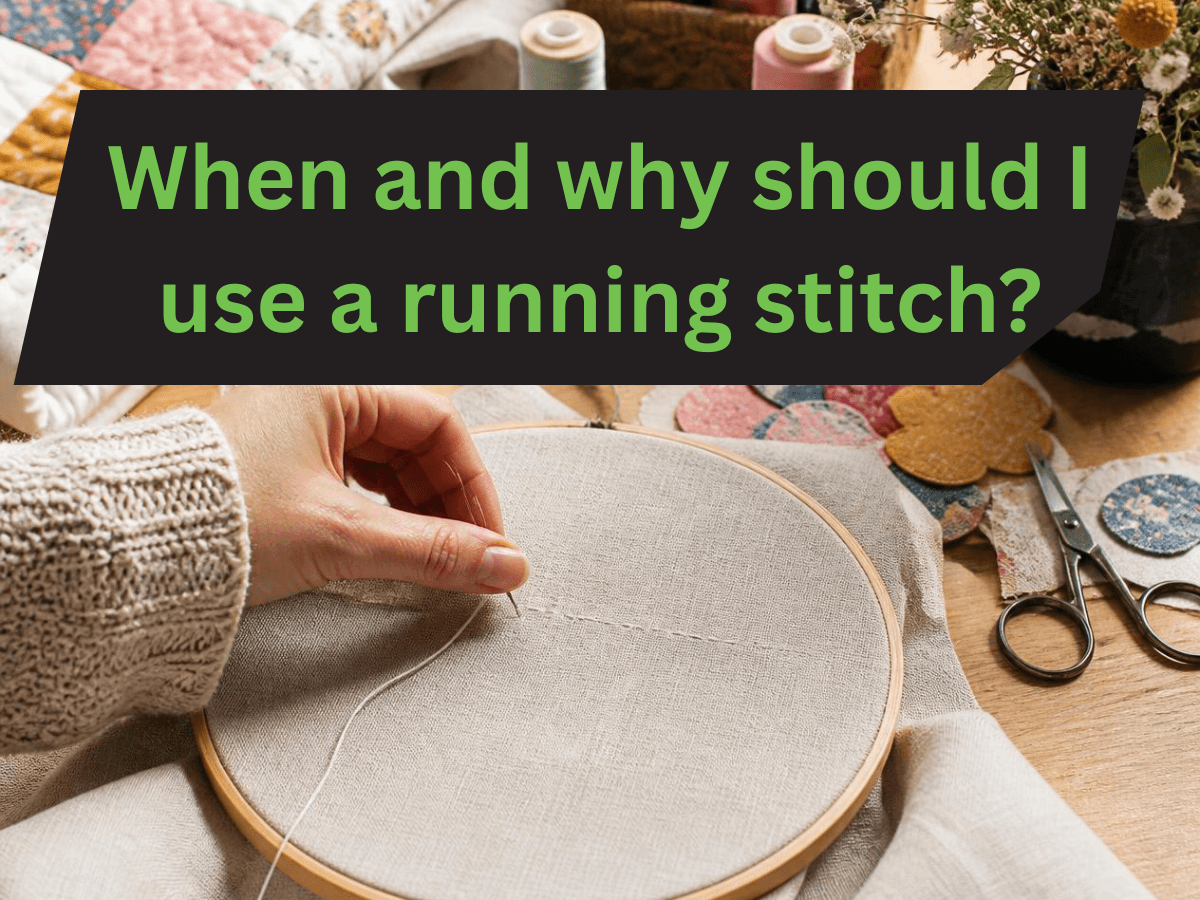
Reach for a running stitch any time you need something sewn together quickly, temporarily, decoratively, or by hand in a way that doesn’t need to survive heavy stress. It’s not the strongest stitch out there, but it’s fast, flexible, and honestly kind of forgiving if your tension isn’t perfect.
Here’s the longer answer, broken down by situation.
Table of Contents
When You’re Basting
This is probably the single most common reason people reach for a running stitch, even if they don’t call it that. Basting is a temporary stitch — you’re holding fabric layers in place before machine sewing, and you fully intend to pull it out later. Pins work too, obviously, but running stitch basting has a few advantages: it doesn’t get in the way of your machine’s presser foot, it holds curved seams more reliably than pins do, and it’s genuinely faster once you get the rhythm down.
If you’ve ever wondered why quilters baste with thread instead of just pinning everything, this is why.
When You’re Hand Quilting
Traditional hand quilting is basically running stitch, full stop. You’re stitching through multiple layers — top fabric, batting, backing — and the small, even running stitches are what create that classic puckered quilt texture. It’s slower than machine quilting, no question, but there’s a texture and softness to hand-quilted running stitch that machines just can’t fully replicate.
When You’re Working on Appliqué
If you’re stitching an appliqué shape onto a base fabric, running stitch is a solid, simple option — especially if you want the stitching itself to show as part of the design rather than disappear invisibly. Smaller, tighter stitches read as more subtle; bigger, looser ones become part of the decorative look.
When You Want Decorative Texture or Pattern
This is where running stitch stops being purely functional. If you’re filling a shape, adding a border, or working anything inspired by sashiko-style patterns, running stitch is genuinely one of the best tools for the job — mostly because it’s simple enough to repeat for hours without your hand cramping up, but flexible enough to create surprisingly complex-looking patterns.
When You’re Gathering Fabric
Need to ruffle or gather a piece of fabric? A long running stitch pulled taut does exactly that. It’s the same basic mechanic used in a lot of skirt waistbands and ruffled trims before elastic or a gathering foot gets involved.
When You Probably Shouldn’t Use It
Running stitch isn’t your best pick for anything that needs to hold serious structural weight — a stitch under constant strain, like a waistband seam on pants that’ll get pulled on daily, is going to fare better with a backstitch or machine stitching. Running stitch stitches aren’t locked in place individually, so if one thread snaps, the whole line can loosen or unravel more easily than a backstitch would.
So think of it this way: running stitch is your go-to for speed, temporary holds, hand quilting, and decoration. Save the sturdier stitches for anything that needs to survive real pulling and stress.
Bottom Line
If the project calls for something fast, flexible, or decorative — basting, hand quilting, appliqué, gathering, or pattern work like sashiko — running stitch is very likely your best move. If it calls for serious durability under stress, look elsewhere in your stitch toolkit.