

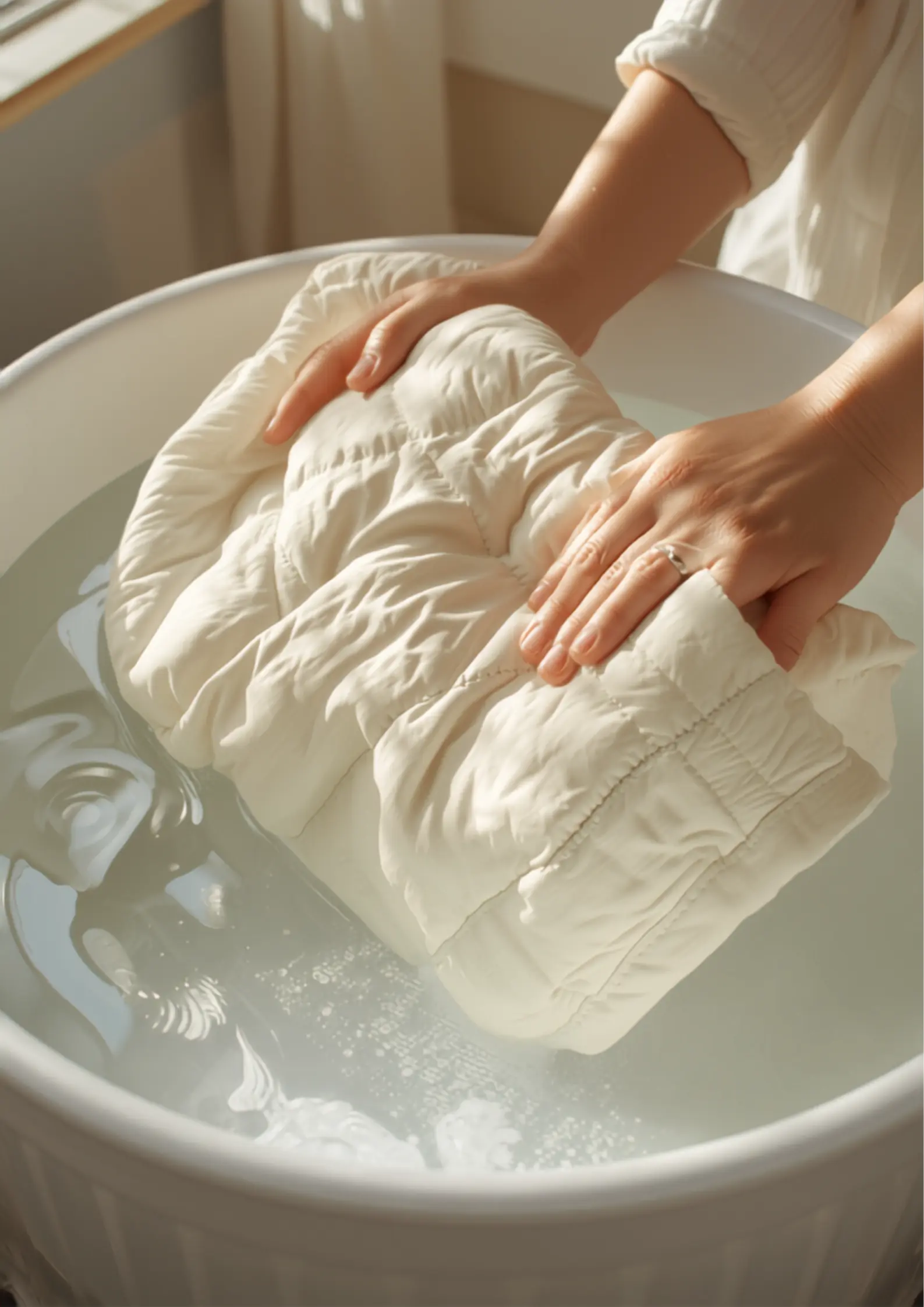
Hand wash a quilt with wool batting in cold water using a wool-safe detergent, press out the water gently (never wring), and dry it flat. Heat and agitation are what ruin wool — avoid both and your quilt will be fine.
I learned this the hard way. My first wool-batted quilt went into a regular machine cycle on warm, and it came out looking like a felted doormat — stiff, shrunk at the corners, and about two pounds heavier than when it went in. That mistake is the whole reason this guide exists. Wool batting isn’t hard to wash, but it plays by different rules than cotton or polyester, and once you know those rules, you’ll never ruin one again.
Table of Contents
Why Wool Batting Needs Special Care
Wool is a protein fiber, not a plant fiber like cotton or a synthetic like polyester, and that difference matters the moment water touches it.
- Natural fiber behavior: Wool fibers are covered in tiny scales. Heat, agitation, and sudden temperature changes cause those scales to open and lock together — that’s felting. Once wool felts, it shrinks and mats permanently. There’s no undoing it.
- How it differs from cotton or polyester batting: Cotton batting can usually handle a normal warm wash and tumble dry with minimal risk. Polyester is even more forgiving — it’s essentially waterproof and heat-stable. Wool batting has neither of those safety margins, so it needs cold water, gentle handling, and air drying every time.
- What is batting, for beginners: If you’re new to quilting, batting (sometimes called wadding) is the insulating layer sandwiched between a quilt’s top and backing fabric. It’s what gives a quilt its warmth and loft. Wool batting is prized for being warm, breathable, and lightweight, but that same fluffy structure is exactly what’s vulnerable to felting.
Check Before You Wash
Don’t skip this step — five minutes here can save the whole quilt.
- Read the label / know your filling type. If the quilt has a care tag, it will usually confirm the batting type and give a manufacturer-recommended method. No tag? Ask whoever made it, or check the listing if you bought it.
- Spot test for colorfastness. Dab a damp white cloth with a little detergent on an inconspicuous corner of the quilt top. If color transfers onto the cloth, wash with extra caution (cold water only, minimal soak time) or consider spot cleaning instead.
- Inspect the backing and stitching. Check the quilt backing and every seam for loose threads, thin patches, or weak stitching. Washing puts stress on old or fragile seams, and a small repair now is much easier than trying to fix a quilt that’s come apart mid-soak.
Supplies You’ll Need
- A wool-safe or wool-specific detergent (look for ones marketed for wool sweaters or delicates — they’re pH-balanced and won’t strip wool’s natural lanolin)
- A large mesh laundry bag or oversized pillowcase, if you’re attempting the machine method
- A bathtub or large basin for hand washing
- Clean, dry towels
- A large flat surface or a mesh drying rack
Method 1 — Hand Washing (Recommended for Wool Batting)
Hand washing is the safest option, and it’s what I use for every wool-batted quilt now.
- Cold water soak. Fill a clean bathtub with cold water and add a small amount of wool-safe detergent. Submerge the quilt fully and let it soak for 10–15 minutes. Cold water keeps the wool fibers relaxed and prevents the scales from opening.
- Gentle press technique. Press down on the quilt with flat hands to work the water and detergent through the layers. Never wring, twist, scrub, or agitate it — that motion is exactly what causes felting. Think of it as pressing a sponge, not scrubbing a stain.
- Rinse thoroughly. Drain the soapy water, refill with clean cold water, and press again to rinse. Repeat until the water runs clear with no soap residue. Leftover detergent can stiffen wool fibers over time.
Method 2 — Machine Washing a Quilt with Wool Batting (When It’s Safe)
Machine washing is riskier, but it can work for smaller, sturdy quilts if your machine has the right settings.
- Wool or delicate cycle only. This cycle uses minimal agitation and a slower drum speed, which is closer to hand washing than a normal cycle.
- Cold water, minimal spin. Set the spin cycle to low or skip it entirely — a high-speed spin can twist and mat wool batting inside the quilt.
- When to avoid this method entirely. Skip the machine if the quilt is queen-sized or larger, if it’s antique or hand-stitched, or if your machine doesn’t have a true wool/delicate setting. In those cases, hand washing is the only safe choice.
How to Clean a Quilt with Wool Batting Without Washing
Full washing isn’t always necessary. For quilts that just need refreshing, try these instead:
- Spot cleaning. For small stains, dab (don’t rub) with a cloth dampened in cold water and a drop of wool-safe detergent, then blot dry.
- Airing out / sunning. Drape the quilt over a clean railing or line outdoors on a dry, breezy day. Sunlight and air naturally reduce odors and kill dust mites without any water at all.
- Vacuum with an upholstery attachment. Lay the quilt flat and vacuum both sides on low suction using a soft upholstery brush. This lifts dust and debris and is safe to do between full washes.
Drying a Quilt with Wool Batting
Drying is where most wool quilts actually get ruined, not washing.
Never tumble dry. Dryer heat is the fastest way to felt and shrink wool batting — even a “low” setting is too risky.
Drying a Queen-Sized Quilt with Wool Batting
Bigger quilts hold more water and need extra support while drying.
- Lay several thick towels on a flat, non-carpeted surface (a spare bed frame, mesh rack, or clean floor works well) before placing the quilt down, so the towels absorb excess water underneath.
- Roll the quilt in dry towels first and press gently to pull out extra moisture before laying it flat, since a soaked queen quilt is heavy and can stretch under its own weight if handled wet.
- Rotate the quilt and swap out damp towels every few hours to prevent mildew or a musty smell from developing in the center layers, which take longest to dry.
Flat drying process. Lay the quilt flat, smooth out the edges and corners by hand, and reshape it into its original dimensions while it’s still damp — wool holds the shape you set it in as it dries.
Estimated drying time. A throw-sized wool quilt may dry in 24–36 hours. A queen or king-sized quilt can take 48–72 hours depending on humidity and airflow, so plan for a few days, not a few hours.
Common Mistakes That Ruin Wool-Batted Quilts
- Hot water. Heat is the number one cause of felting and shrinkage — always use cold.
- Agitation or wringing. Twisting or scrubbing mats the fibers permanently.
- Dryer heat. Even a cool tumble setting introduces motion and residual heat that can felt wool.
- Hanging to dry. Hanging a wet quilt lets gravity stretch and distort it, especially at the corners. Always dry flat.
Wool Batting vs. Cotton Batting: Washing Differences
| Factor | Wool Batting | Cotton Batting |
|---|---|---|
| Water temperature | Cold only | Cold to warm |
| Machine washing | Risky, delicate cycle only | Usually safe on normal cycle |
| Drying method | Flat dry only | Flat dry or low tumble dry |
| Shrink risk | High if mishandled | Low to moderate |
| Best washing method | Hand wash | Machine wash |
If your quilt uses a different fill, check out our guide on how to wash a quilt with cotton batting for the full cotton-specific process.
FAQs
How often should you wash a wool-batted quilt?
Once or twice a year is plenty for a regularly used quilt. Spot cleaning and airing out between washes will keep it fresh without the added wear of frequent full washes.
Can wool batting go in the dryer?
No. Dryer heat and tumbling almost always cause felting and shrinkage. Always dry wool-batted quilts flat, away from direct heat.
Does wool batting shrink?
Yes, if it’s exposed to hot water, agitation, or high heat. Washed correctly with cold water and gentle handling, shrinkage is minimal to none.
Is wool batting hypoallergenic and machine-safe?
Wool is naturally resistant to dust mites and mildew, which makes it a good option for many allergy sufferers, though not truly hypoallergenic for wool-specific allergies. It’s not fully machine-safe in the way polyester is — it can go in the machine on a wool or delicate cold cycle, but hand washing is always the lower-risk choice.
Final Thoughts / Care Summary
- Always use cold water and a wool-safe detergent.
- Never wring, agitate, or tumble dry — press gently and dry flat instead.
- Give queen and larger quilts extra time and towel support while drying.
- When in doubt, spot clean or air it out instead of a full wash.
 Sara McLean