

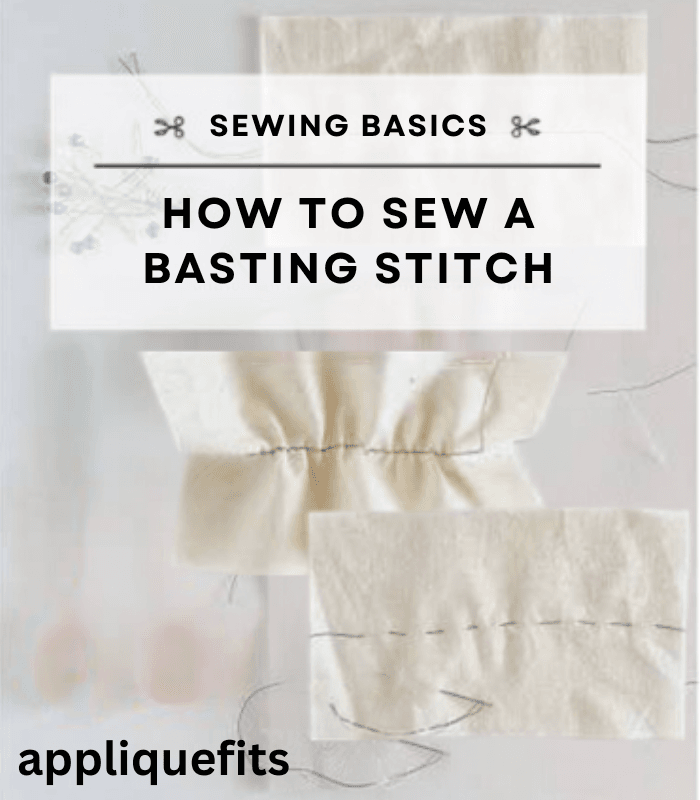
The seam that shifts under a presser foot, the zipper that ends up half a centimeter off, the gather that bunches unevenly — all three trace back to the same skipped step. Basting is temporary by design, which is exactly why beginners treat it as optional. It isn’t. It’s the control variable that keeps everything else in a project where it’s supposed to be.
Table of Contents
Why Baste Before Sewing?
Basting keeps fabric layers from shifting under the presser foot, allows a fit check before committing to a permanent seam, and holds slippery or bulky fabric exactly where it needs to be. Zippers, set-in sleeves, gathers, quilting — all of it depends on this step happening first.
Method 1: Hand Basting
The most controlled method, and the standard for delicate fabric, fitting adjustments, or precise placement like zippers.
- Thread a needle with a single strand of thread — basting thread or regular sewing thread both work — and knot the end.
- Starting from the wrong side of the fabric, bring the needle up through both layers.
- Sew a long running stitch, roughly 1/4 to 1/2 inch per stitch, along the seam line or placement area.
- Keep stitches loose enough to remove easily; skip the backstitch at the end, since this work is temporary by design.
- Once the permanent stitching is done, snip the knot and pull the basting thread out.
Method 2: Machine Basting
Faster than hand basting, and the right call for long, straight seams that don’t need precise, adjustable control.
- Set the machine’s stitch length to its longest setting, usually 4–5mm.
- Loosen the top tension slightly if the stitches will later be pulled for gathering.
- Sew along the seam line as normal, leaving a few extra inches of thread at both ends.
- Skip the backstitch — it makes basting stitches far harder to remove later.
Method 3: Pin Basting
The fastest method, suited to simple, straightforward seams.
- Place pins perpendicular to the seam line, spaced every 2–3 inches.
- Insert each pin so the point comes back out the same side, ready to pull as sewing approaches it.
- Remove pins before the needle reaches them — never sew directly over one, which can damage the needle or the machine.
Method 4: Basting Spray (for Quilting)
A temporary adhesive spray, standard in quilting for holding the quilt sandwich together without pins or stitching.
- Work in a well-ventilated area, backing fabric right-side down.
- Mist the surface lightly with basting spray.
- Smooth the batting on top, pressing out air bubbles and wrinkles.
- Spray the batting lightly, lay the quilt top right-side up over it, smooth into place.
- Let the layers set for a moment before quilting begins.
Method 5: Fusible Basting Tape
A narrow strip of fusible adhesive activated with a hot iron — useful for hems, zippers, or appliqué placement.
- Position the tape between the two layers being joined temporarily.
- Press with a hot iron, following the tape’s own instructions for temperature and time.
- Sew the permanent seam through the fused area as normal.
Choosing the Right Basting Method
- Delicate or slippery fabric (silk, satin): hand basting, for maximum control
- Zippers and precise placement: hand basting or fusible tape
- Long straight seams: machine basting or pin basting
- Quilt layers: basting spray, pin basting, or hand basting with safety pins
- Gathering fabric: machine basting with loosened tension
Tips for Successful Basting
- Use a contrasting thread color for hand or machine basting, so it’s easy to spot and remove.
- Baste from the center of a seam outward on garments, which stops fabric from shifting unevenly.
- Test on a scrap before committing to a full seam, especially with unfamiliar fabric.
- Remove all basting stitches, pins, or spray residue once a project’s finished, unless the pattern says otherwise.
Final Thoughts
Basting fabric is a small extra step that prevents a disproportionate number of sewing failures — shifted seams, misaligned zippers, uneven gathers. Pick the method that fits the project, and treat it as a standard part of the process, not a shortcut to skip when time is tight.