

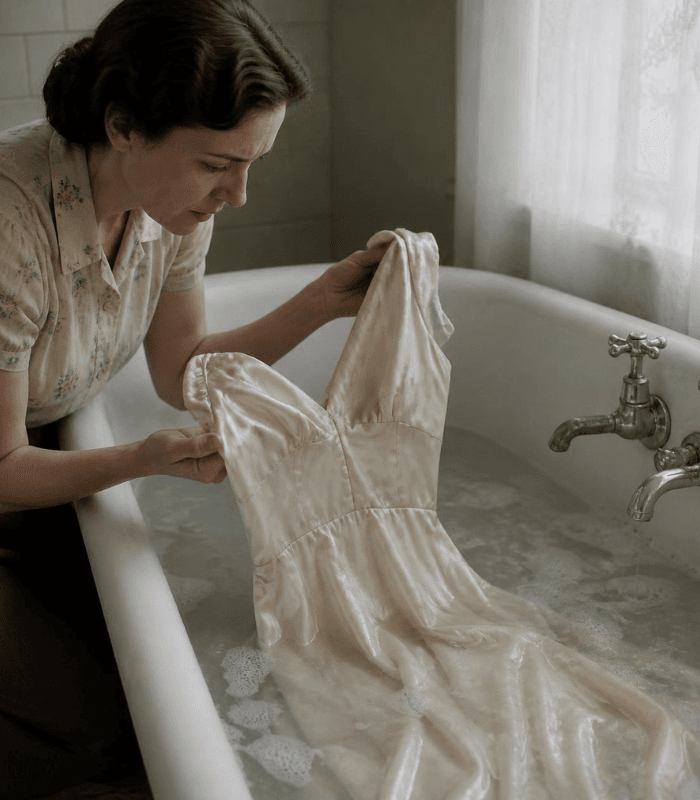
I ruined a dress.
Not just any dress—a 1950s charmeuse piece my grandmother left me. Ivory. Pristine. And I destroyed it in my bathtub on a Saturday afternoon because I thought silk was silk, and all silk needed was soap and water.
I was wrong. Spectacularly, heartbreakingly wrong.
That moment changed everything about how I approach fabric, design, and textile care. It’s why I’m writing this now. Because if my mistake can save you from making the same one, it’s worth admitting.
Table of Contents
The Day I Learned Nothing
Here’s what I did that day: I filled my tub with warm water, added regular laundry detergent (because it smells good and “cleans well”), and submerged that charmeuse dress like I was washing jeans.
The silk immediately lost its luster. The fabric became dull, almost lifeless. I tried rinsing. I tried vinegar. Nothing brought back that beautiful sheen. I’d stripped the natural oils right out of the fiber in about five minutes.
That dress became my most expensive education.
I spent weeks researching afterward, reading textile conservation papers, watching videos from people who actually know what they’re doing. I learned that silk is a protein fiber—completely different from cotton or synthetics. It’s strong, but it’s also delicate in ways I hadn’t respected.
Understanding Why Silk Is So Specific
Silk’s beauty comes from its structure. Those protein fibers reflect light in a way that creates that unmistakable sheen. But that same delicate structure means silk responds badly to heat, harsh chemicals, and rough handling.
When I finally sat down to understand silk properly—not just fix my mistake, but really understand it—I realized how much I didn’t know. I didn’t know that warm water damages silk. I didn’t know that regular detergent strips oils. I didn’t know that even the way you handle wet silk matters.
Charmeuse fabric specifically taught me this. Charmeuse silk has that lustrous finish because of how it’s woven. It’s gorgeous. It’s also finicky. Water spots show. Handling marks show. Everything shows. It’s beautiful and unforgiving at the same time.
My grandmother had owned her charmeuse dresses for decades. They weren’t just fabric to her—they were memories. And I’d failed them.
Hand Washing Silk (The Right Way)
After I destroyed that dress, I needed to fix the situation. I bought proper silk care products. I tested them on lesser pieces. And slowly, I developed a method that actually works.
Here’s what I do now when I hand wash silk—and I mean actually hand wash it, not the bathtub method I tried:
Use cool water. Not room temperature. Cool. I fill a basin with water that feels refreshing on my wrist, then I add a silk-specific detergent. Not regular soap. Not woolite. Something made for silk.
I submerge the garment gently. I swish—not scrub, not agitate. Just swish. For maybe three to five minutes. That’s it. Short and gentle.
Then I rinse. Multiple times. Until the water runs clear. This matters more than you’d think. Soap residue makes silk dull and stiff.
The squeeze is important too. I don’t wring. I don’t twist. I hold it over the water and gently press, letting gravity do the work. Then I lay it flat on a clean towel to air dry.
Does silk shrink when washed? It can, if you use hot water or rough handling. With cool water and gentleness, I’ve washed silk garments dozens of times without noticeable shrinking. But I always test on something less precious first. That’s just smart.
When Charmeuse Needs Special Attention
I learned about charmeuse the hard way, and then I learned it again.
Charmeuse fabric is different from other silk. The way it’s woven, the way it catches light—it’s stunning. But that same quality means it shows everything. A water mark from improper washing. A coffee spill left sitting. Even dust shows on charmeuse.
Years after ruining my grandmother’s dress, I was working on a custom appliqué project using charmeuse silk. I was nervous. I spilled coffee. One drop, right on the front.
I panicked for exactly two seconds, then I acted. I blotted gently with a damp cloth using cool water. I didn’t rub. I didn’t panic-wash. I just blotted and let it air dry.
It worked. The stain disappeared.
That’s when I truly understood: with charmeuse and all delicate silk, speed matters more than method. Fresh accidents can be handled. Set stains become permanent problems.
Now I spot clean charmeuse immediately. I use a silk cleaner formulated to preserve that lustrous finish. I never use harsh products. And I respect the fabric’s temperament while I’m working with it.
Dry Cleaning Silk: When I Finally Accept Defeat
There was a moment—years into this journey—when I had to admit something: I can’t do everything at home.
I’d acquired a 1940s charmeuse coat. Beautiful. Complicated. Stained with something I couldn’t identify. I tried spot cleaning. I tried being patient. Nothing worked.
I finally took it to a cleaner who specializes in vintage pieces. I was intimidated. I thought they’d judge me for not knowing how to handle it myself. Instead, they explained something I hadn’t understood: some fabrics need professional care. Not because you’re incompetent, but because certain stains require solvents and expertise I simply don’t have.
They told me that repeated dry cleaning with harsh chemicals can damage old silk. But proper dry cleaning by someone who understands textile conservation? That’s different. That’s preservation.
So here’s my honest take: can silk be dry cleaned? Yes. Should it always be? No. Hand wash when you can. Use professional cleaning when you need to. The key is finding someone who understands delicate vintage fabrics and cares about preserving them, not just removing stains quickly.
Storage: My Biggest Regret
The worst textile tragedy of my life wasn’t about washing. It was about storing.
When my grandmother’s estate was settled, all her clothing came to me in boxes. I was thrilled. I was also clueless. I stored those boxes in my basement—dark, I thought, so that was safe. Wrong again.
After a few years, I finally went through them. Several pieces had mold. Actual, visible mold. The damage was permanent. Some pieces were unsalvageable.
I sat on my basement floor with ruined vintage clothing in my lap and I cried. Because I’d killed them through neglect.
That’s when I learned about proper storage. Basements are damp. Attics are hot. Direct sunlight fades silk. Plastic bags trap moisture. Everything I’d done wrong, I’d done through pure ignorance.
Now? My vintage collection lives in a climate-controlled closet. I use acid-free tissue paper. I fold gently or store flat. I keep cedar blocks to deter insects. I check monthly. It sounds obsessive. But after losing pieces to mold, it feels like basic respect.
Vintage clothing—sweaters, hoodies, dresses, everything—needs cool, dry, dark storage. Not in your guest room that gets hot. Not in your basement. Not in plastic bags. Somewhere climate-controlled with good air circulation.
Silk Shattering: When Preservation Becomes Emergency
I have a slip from the 1920s. It’s delicate. I’ve handled it maybe three times because I’m terrified of it.
Last year, I finally tried to unfold it carefully. The silk literally started to crumble in my hands. It had become brittle. Aged. Beyond the point where regular care could help.
That’s silk shattering. It’s what happens when vintage silk sits in poor storage long enough. The fiber structure breaks down. It becomes fragile. Handling becomes dangerous.
I learned then that textile conservation isn’t just fancy talk. It’s real. It’s necessary. That 1920s slip is now stored in acid-free tissue, in a dark closet, untouched. If I ever needed it restored, I’d hire a textile conservator—someone who actually understands how to handle severely aged silk.
The point is: you can prevent shattering by storing properly now. But you can’t reverse it once it happens.
The Mistakes I Made (And You Can Avoid)
I’ve made every rookie mistake possible.
Warm water on charmeuse. Don’t do it. The finish disappears.
Regular detergent on vintage silk. Don’t do it. You’re stripping the fabric’s natural qualities.
Procrastinating on stains. This is the one that kills me every time. A wine splash on silk needs immediate attention. Waiting even a few hours makes it set. I learned this the hard way and I’m begging you not to repeat it.
Storing silk in plastic bags. The moisture trap is real. Mold grows. Fabrics die.
Assuming all silk is the same. Charmeuse needs different care than mulberry silk or silk chiffon. Check the care label. Respect what the fabric is telling you.
Being too rough when wet. Wet silk is vulnerable. Every squeeze, every wring, every rough movement damages the fiber. Treat it like you’re handling something precious, because you are.