
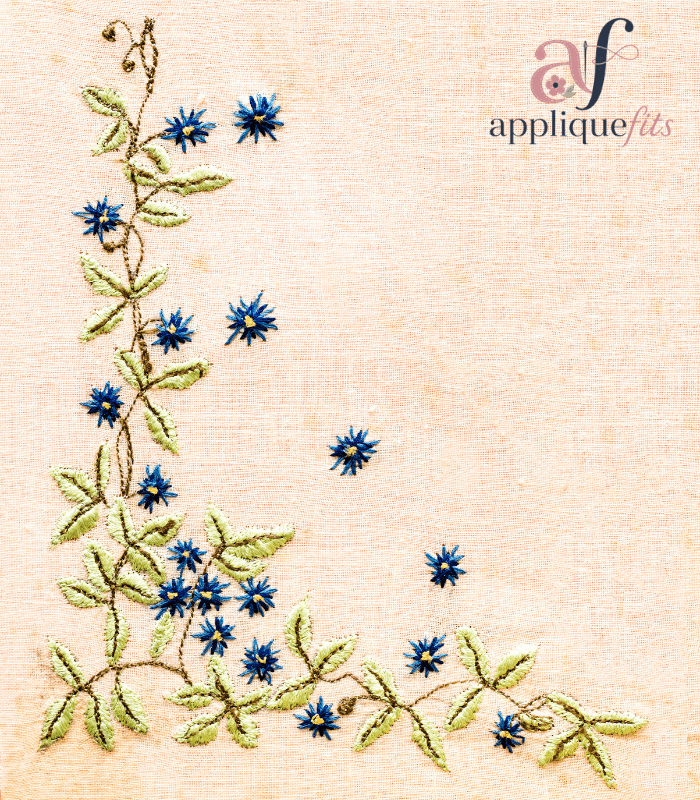
I was terrible at drawing borders. Seven years ago, I sketched a floral border for my daughter’s cushion. Halfway through stitching, I realized it looked like a toddler drew it—lopsided, uneven, wobbly. I wanted to throw it away.
My quilting friend suggested printable patterns. Skeptical but desperate, I printed a simple border pattern, transferred it, and started stitching. Within an hour: professional results. Perfect symmetry. Even spacing. I was hooked.
I’ve now completed 200+ projects. Using free hand embroidery patterns isn’t cheating—it’s smart design. It frees me from the anxiety of drawing perfectly so I can focus on what I actually love: stitching.
Table of Contents
My Free Hand Embroidery Patterns
50 – Geometric & Abstract Patterns
- Minimalist Geometric 1: A simple, repeating border of delicate chevrons and dots.
- Architectural Art Deco: Symmetrical, repeating fan and arch motifs inspired by Art Deco architecture.
- Modern Abstract Lines: A clean pattern of flowing, interconnected curved lines and small circles.
- Tessellated Squares: Interlocking square and rectangle patterns creating a simple, continuous border.
- Simplified Diamond Chain: A classic chain-link border pattern made of repeating diamonds.
- Minimalist Herringbone: A clean, stacked V-shape pattern.
- Concentric Circles: Overlapping and concentric circle motifs.
- Abstract Swirl: A delicate, single-line continuous swirl pattern.
- Geometric Snowflake: Small, simple, repeating geometric snowflake elements.
- Modern Chevron and Star: A line of alternating chevrons and small stars.
- Tessellated Rhombus: Overlapping rhombus shapes.
- Minimalist Arrow: A clean, repeating arrow motif pointing right.
- Simple Box Chain: Repeating, connected squares.
- Modern Radial Line: Concentric arcs with fine radiating lines.
- Abstract Triangle: A border of intersecting triangles.
- Minimalist Dot: An ultra-simple line of connected dots.
- Simple Octagon: Repeating octagon shapes.
- Geometric Fan: Simple, stylized geometric fan patterns.
- Minimalist Lattice: A clean diagonal lattice grid.
- Abstract Ribbon: A single flowing abstract line.
- Simplistic Cross: Repeating small cross shapes.
- Modern Zig-Zag: Clean zig-zag line.
- Geometric Floral Abstract: Abstracted, simple petal shapes made of lines.
- Simplified Starfish: Repeating, geometric starfish outlines.
- Abstract Puzzle: Interlocking abstract shapes.
- Minimalist Key: A border based on a simple ‘key’ motif (Grecian-inspired).
- Geometric Wave: Repeating, stylized geometric wave shapes.
- Minimalist Starburst: Simple radial lines.
- Abstract Diamond Lattice: Diagonal lines creating diamonds, with dots at the intersections.
- Simple Hexagon: Continuous pattern of connected hexagons.
- Modern Crescent Moon: Repeating crescent moons and small dots.
- Geometric Leaf Abstract: Stylized leaf shapes using geometry.
- Simple Wave Crest: Minimalist repeating cresting wave pattern.
- Abstract Interlocking Ring: Linked circles with a modern feel.
- Minimalist Pinwheel: Simple four-blade pinwheel pattern.
- Modern Woven Text: Minimalist overlapping diagonal and horizontal lines.
- Geometric Sun: Simple, radiating line sunburst.
- Minimalist Cloud: Stylized, geometric cloud outlines.
- Simple Diamond Dash: A line of dashes forming diamond patterns.
- Modern Star: Simple, geometric star outlines.
- Abstract Pebble: A clean line of irregular, flowing ‘pebble’ shapes.
- Minimalist Arc: Clean, repeating arcs.
- Simple Interlocking Triangle: Connected triangles forming a clean border.
- Geometric Mountain: Repeating, minimal stylized peaks.
- Minimalist Radial Star: Small circles with radiating dashes.
- Abstract Swell: Flowing, irregular wavy lines.
- Simple Diamond Trellis: Minimalist diagonal lines creating diamonds.
- Geometric Crown: Repeating, minimalist crown outlines.
- Modern Sprout: Simple, abstracted leaf and sprout elements.
- Minimalist Circle Dash: A line of small circles and dashes.
50 – Classic Floral & Botanical Patterns
- Traditional Floral 1: Repeating roses, small leaves, and graceful curlicues in a classic Victorian style.
- Simple Vine: A continuous, delicate winding vine with small, simple leaves.
- Modern Meadow Floral: A playful border of stylized, modern flowers and small grasses.
- English Countryside Garden: Dainty wildflowers, daisies, and small berries entwined.
- Detailed Leaf and Berry: Alternating clusters of oak leaves and small berries.
- Tulip Garden: repeating, stylized tulips and long leaves.
- Simple Daisy Chain: repeating connected daisies.
- Classic Acanthus Leaf: Formal, stylized Acanthus leaf scrollwork.
- Lavender Field: Minimalist sprigs of repeating lavender.
- Modern Rose: Simplified, stylized geometric roses.
- Botanical Fern: repeating delicate fern fronds.
- Simply Vine Leaf: Winding vine with single leaves.
- Wildflower Medley: Dainty composition of several simple wildflower types.
- Classic Victorian Floral: Ornate, continuous Victorian floral motifs.
- Cherry Blossom: Simple, repeating clusters of cherry blossoms and branches.
- Minimalist Leaf: A clean line of stylized leaves.
- Traditional Wreath: Repeating small, simple flower and leaf wreaths.
- Modern Geometric Botanical: Abstracted flowers and leaves made of clean lines.
- Ivy Tendril: A continuous, repeating winding ivy branch with leaves.
- Classic Carnation: Stylized carnations in a traditional border.
- Dainty Bellflower: Continuous line of small, hanging bell-shaped flowers.
- Simple Rosebud: Repeating clusters of small roses and buds.
- Botanical Grass: Minimalist line of repeating grass and small reed motifs.
- Clover Border: Continuous border of connected four-leaf clovers and dots.
- Art Nouveau Floral: Elegant, stylized Art Nouveau floral lines.
- Dainty Posy: Small, delicate bouquets repeating.
- Simple Poppy: stylized outline poppies.
- Leaf and Tendril: Flowing vine with alternating leaves and delicate spirals.
- Classic Lily: Stylized, repeating lily flowers and long stems.
- Simple Sunflower: Minimalist, stylized sunflowers.
- Modern Meadow Grass: delicate, irregular grass and seed heads.
- Wild Fern Frond: Continuous winding fern branches.
- Simplified Orchid: Stylized outline orchids in a border.
- Detailed Victorian Garland: and ornate garland of flowers and leaves.
- Simple Acorn and Oak Leaf: Repeating acorn and leaf clusters.
- Modern Floral Arc: Stylized flowers flowing along a gentle arc.
- Delicate Bramble: continuous, winding thorny branches with berries.
- Classic Chrysanthemum: Ornate, continuous border of stylized mums.
- Botanical Reed: Simple line of repeating reeds and dots.
- Dainty Violet: Repeating small violet flowers and leaves.
- Stylized Bluebell: continuous line of bell flowers and graceful leaves.
- Simple Tulip: repeats simple, modern tulip outlines.
- Leaf and Curl: Simplified leaves and spiral tendrils.
- Elegant Swirl and Leaf: graceful, ornate swirls accented with simple leaves.
- Modern Aster: Minimalist stylized Aster flowers.
- Traditional Laurel Wreath: Continuing, formal laurel branches.
- Wild Iris: Simple, repeating iris flowers.
- Botanical Stem: A line of repeating flower stems and leaves (flowers removed).
- Detailed Flower Medley: Dense border of assorted simple line-art flowers.
- Classic Scroll and Blossom: Formal scrolls accented with simple flower heads.
50 – Animals, Nature & Motifs
- Classic Bird Motif: Small, repeating line-art birds on branches with small leaves.
- Delicate Butterfly Border: Stylized outline butterflies fluttering along a continuous line.
- Mythical Creature 1 (Dragon): Simplified, repeating small dragon motifs and simple swirls.
- Woodland Creatures: Small, simplified outlines of a fox, rabbit, squirrel, and deer repeating.
- Simplistic Elephant: Repeating, simplified elephant silhouettes.
- Stylized Peacock: Ornate, repeating stylized peacock feather motifs.
- Simple Fish Border: stylized outline fish in a simple repeating wave.
- Classic Bumblebee: Repeating bees and small dotted flight paths.
- Sea Creature Medley: Simplified starfish, seahorse, shell, and coral repeating.
- Modern Bird: Abstracted, minimalist bird outlines.
- Classic Lion Motif: Continuous, repeating small stylized lion heads and dots.
- Dainty Insect: Repeating dragonflies, beetles, and bees.
- Simple Squirrel: repeating small outline squirrels.
- Stylized Wave: continuous, repeating stylized wave patterns (Hokusai-inspired).
- Woodland Mushroom: Repeating cluster of stylized mushrooms and leaves.
- Minimalist Butterfly: simplified, clean line butterflies.
- Classic Dolphin: Continuous line of leaping dolphins and waves.
- Modern Fox: abstract, simplified fox heads.
- Wild Animal Paws: simple repeating animal paw prints.
- Stylized Feather: repeating detailed line-art feathers.
- Classic Stag Head: Repeating small stag heads and dots.
- Dainty Shell Border: Repeating scallops, conchs, and simple shells.
- Simple Bear: repeating small outline bears.
- Botanical Bird: birds interwoven with simple leaf patterns.
- Minimalist Elephant: abstract, simplified elephant figures.
- Classic Swan: repeating stylized swans and ripples.
- Modern Seahorse: simplified outline seahorses.
- Detailed Insect: a collection of diverse insects in line art.
- Wildcat Paw Print: simple repeating cat paw patterns.
- Stylized Starfish: repeating starfish and bubble motifs.
- Classic Eagle: continuous line of small eagles.
- Simple Owl: repeating simplified owls.
- Butterfly and Flower: butterflies fluttering around simple flowers.
- Modern Woodland: abstracted tree and animal outlines.
- Detailed Fish: a school of varied line-art fish.
- Classic Turtle: repeating simplified turtles.
- Dainty Insect Swarm: delicate, repeating tiny insect patterns.
- Minimalist Fox: extremely simplified fox silhouettes.
- Classic Serpent: continuous, winding small snake motifs.
- Stylized Peacock Tail: continuous pattern based on a peacock tail.
- Simple Crab: repeating small outline crabs.
- Woodland Fern and Fauna: woodland animals combined with simple ferns.
- Mythical Creature 2 (Griffin): simplified repeating small griffin figures.
- Detailed Bird: varied types of line-art birds in a border.
- Modern Bumblebee: extremely simplified bee outlines.
- Classic Sea Horse: detailed, repeating sea horse figures.
- Simple Jellyfish: repeating small outline jellyfish and bubbles.
- Dainty Mammal Medley: assortment of small woodland mammals.
- Stylized Feather Arc: feathers flowing along a curve.
- Classic Bear Head: repeating simplified bear heads and dots.
50 – Traditional Folk & Cultural Motifs
- Grecian Key Traditional: The classic, continuous ‘Meander’ pattern.
- Traditional Celtic Knotwork: Repeating, intricate Celtic knot border patterns.
- Mexican Folk Art (Otomi-inspired): stylized animals and flowers, simplified for clean lines.
- Ornate Slavic Embroidery: Complex, continuous patterns of traditional geometric motifs.
- Native American (Geometric Swirls): simplified designs of connected abstract swirls and arrows.
- Japanese Asanoha: the classic repeating hemp leaf geometric pattern.
- Traditional Moroccan Tile: repeating geometric and star motifs from tiles.
- Scandinavian Folk (Dala Horse): simplified Dala horse outlines and traditional motifs.
- Indian Paisley Motif: Continuous, repeating simplified paisley patterns.
- Traditional Chinese Cloud: repeating stylized Chinese cloud motifs.
- Ornate Viking Knot: Complex interlocking Viking art motifs.
- Grecian Wave Traditional: the classic Vitruvian scroll or wave crest pattern.
- Ukrainian Embroidery (Vyshyvanka): classic, complex geometric patterns simplified to line art.
- Simple Celtic Chain: repeating, basic Celtic knot chain link.
- Mexican Day of the Dead: repeating stylized sugar skulls and dots.
- Japanese Shippou (Seven Treasures): repeating connected circle pattern.
- Traditional Islamic Geometric: complex star and polygon patterns simplified.
- Scandinavian Floral (Rosemaling): stylized scroll and floral motifs.
- Simplistic Paisley: extremely simplified outline paisley shapes.
- Traditional Korean Dancheong: simplified, traditional architectural painting patterns.
- Viking Dragon Knot: continuous, simplified dragon motif knotwork.
- Grecian Star Traditional: classical repeating star motifs.
- Simplistic Slavic: basic traditional Slavic geometric borders.
- Native American (Woven Inspired): simplified basket-weave patterns.
- Traditional Japanese Fan: repeating stylized folding fan shapes.
- Ornate Celtic Cross: repeating Celtic cross patterns.
- Mexican Folk Bird: stylized Otomi birds and plants.
- Traditional Chinese Dragon: simplified repeating dragon motifs.
- Indian Traditional Mandala: simplified repeating mandala elements in a border.
- Simple Viking Scroll: winding, linear Viking art.
- Grecian Fret Traditional: alternative classic Greek border pattern.
- Scandinavian Heart: simple Dala horse and heart motifs.
- Traditional Moroccan Arches: repeating stylized arches and star motifs.
- Japanese Seigaiha (Blue Ocean Waves): the classic repeating arc wave pattern.
- Simple Islamic Trellis: basic geometric trellis work.
- Ornate Slavic Folk: complex traditional Slavic floral/geometric designs.
- Viking Serpent Knot: complex continuous serpent knotwork.
- Grecian Bead Traditional: a continuous border of stylized beads and rods.
- Native American Feather: simplified repeating feather patterns.
- Traditional Chinese Knot: stylized Chinese ‘Good Luck’ knots repeating.
- Indian Traditional Paisley Chain: continuous chain of paisley motifs.
- Simple Celtic Medley: a collection of basic Celtic motifs.
- Mexican Folk Flower: simplified Otomi-style flowers.
- Traditional Japanese Cherry Blossom: simplified Sakura flowers and branches in a traditional layout.
- Ornate Viking Ship: continuous, simplified repeating longship motifs.
- Grecian Palmette Traditional: classical radiating leaf motifs.
- Scandinavian Border: basic traditional Nordic geometric designs.
- Islamic Star Pattern: repeating geometric star motifs.
- Japanese Traditional Abstract: simplified traditional textile patterns.
- Viking Rune Border: a border composed of traditional runes.
Why Smart Embroiderers Use Printable Patterns
I’m excellent with a needle but terrible at drawing curves. Why fight that when talented designers have created beautiful embroidery border designs I can download?
Using printable embroidery designs doesn’t diminish artistry—it enhances it. Real skill is execution: choosing thread colors, creating beautiful stitches, bringing printed patterns to life.
I used to waste 4+ hours sketching, second-guessing, restarting failed projects. Now? Download, print, transfer, stitch—20 minutes total. That saved time goes into perfecting stitches and thread combinations.
With three kids, full-time work, and aging parents, every hour counts. Finished projects look better because I’m not stressed about design—I’m just stitching.
Where I Find Quality Patterns
Pinterest (80% of my patterns start here), embroidery blogs with finished examples, Etsy for designer templates. I’ve bought expensive pattern collections that gathered dust and found free embroidery patterns that became treasured projects.
My trick: search the pattern name plus “finished” or “stitched.” If dozens of people completed it successfully, it’s a winner. If nobody has, be skeptical.
Tools I Actually Use
- Printed pattern (regular paper first—save transfer paper for special projects)
- 100% cotton or linen fabric
- Embroidery hoop (wood, not plastic)
- Embroidery thread and needles
- Transfer pencil (Clover brand)
- Good scissors
- Window or lightbox
How to Transfer (My Method)
Window Method (Free): Tape pattern to sunny window, tape fabric over it, trace with transfer pencil. 100+ successful projects using this method.
Transfer Paper Method: For special projects, worth the investment for perfect accuracy.
The key: Print on regular paper first, verify size, tape securely (shifting is a nightmare), trace slowly, stitch immediately. Use cold water and gentle soap to wash marks out. Hot water sets them permanently—I learned that the hard way.
My Hard-Won Tips
Print three copies. First has errors. Second gets resized. Third you actually use.
Size matters most. Beautiful tiny patterns frustrate after two hours. I make borders 3-5 inches wide, always.
Thread weight isn’t optional. I used three strands on a two-strand pattern once—lumpy disaster. Understanding thread weight changed everything.
Tracing is sacred. Sloppy transfers become sloppy stitches. Invest time here.
Mistakes That Taught Me Everything
The Sharpie disaster: Permanent marker never washes out.
Sizing blunders: Printing at 30% made a 1.5-inch border impossible to stitch.
Impatience: Moving fabric mid-transfer meant unpicking hundreds of stitches. Five-minute mistake = six-hour fix.
Skill mismatch: Choosing advanced patterns before I was ready led to 40% completion before quitting.
I practice on fabric scraps first now. This one lesson saves everything.
For Beginners
My breakthrough was a simple running stitch border with dots and lines—three hours, beautiful results. I taught my niece the same pattern; she finished beautifully in a week.
Start with easy hand embroidery border designs using only backstitch and running stitch. Learning contour embroidery techniques helps follow lines smoothly. Finishing one simple project builds more confidence than abandoning three complex ones.
The Real Transformation
Seven years ago, I thought creativity meant drawing perfectly. Printable patterns taught me otherwise.
I’m a creator—through stitches, color choices, thread combinations, patience. The pattern is just permission to begin.
Over 200 projects later, printable embroidery border patterns turned a hobby I abandoned into my favorite creative outlet. If you hesitate because it feels like cheating, I get it. I did too. But the magic isn’t in drawing the design. It’s in bringing it to life.